• Skip to main content
  • Skip to primary sidebar
  • Skip to footer

Carolyne J Montgomery - Reader & Writer

Carolyne Reads and Writes

  • Home
  • About
    • Socials
      • Facebook
      • Instagram
  • Watermarked Series
  • Publications & More
    • Indie Bookstores

What I'm Reading

Dog Days of Summer

August 27, 2026 by Carolyne Montgomery Leave a Comment

It’s dry and hot and smoky out there today. Is it just me, or are summers becoming less enjoyable as the climate is fiercer and more dangerous? I’m huddled indoors today in the cool as I writing this.

August’s Installment of Watermarked

I’ve posted the eighth installment of my short story collection here. This is the story that started the whole project.

I was in a workshop run by Traci Skuce and came up with the characters, the two sisters, Brianna and Stéphanie. I hardly knew anything about writing but stumbled on anyway. On the advice of my writing partner at the workshop and poet, Cornelia Hoogland, I even did some research—visiting a recreational vehicle sales lot and inspecting the interiors of various motor homes. That’s the fun about writing fiction: learning the details about places and things that will populate your story.
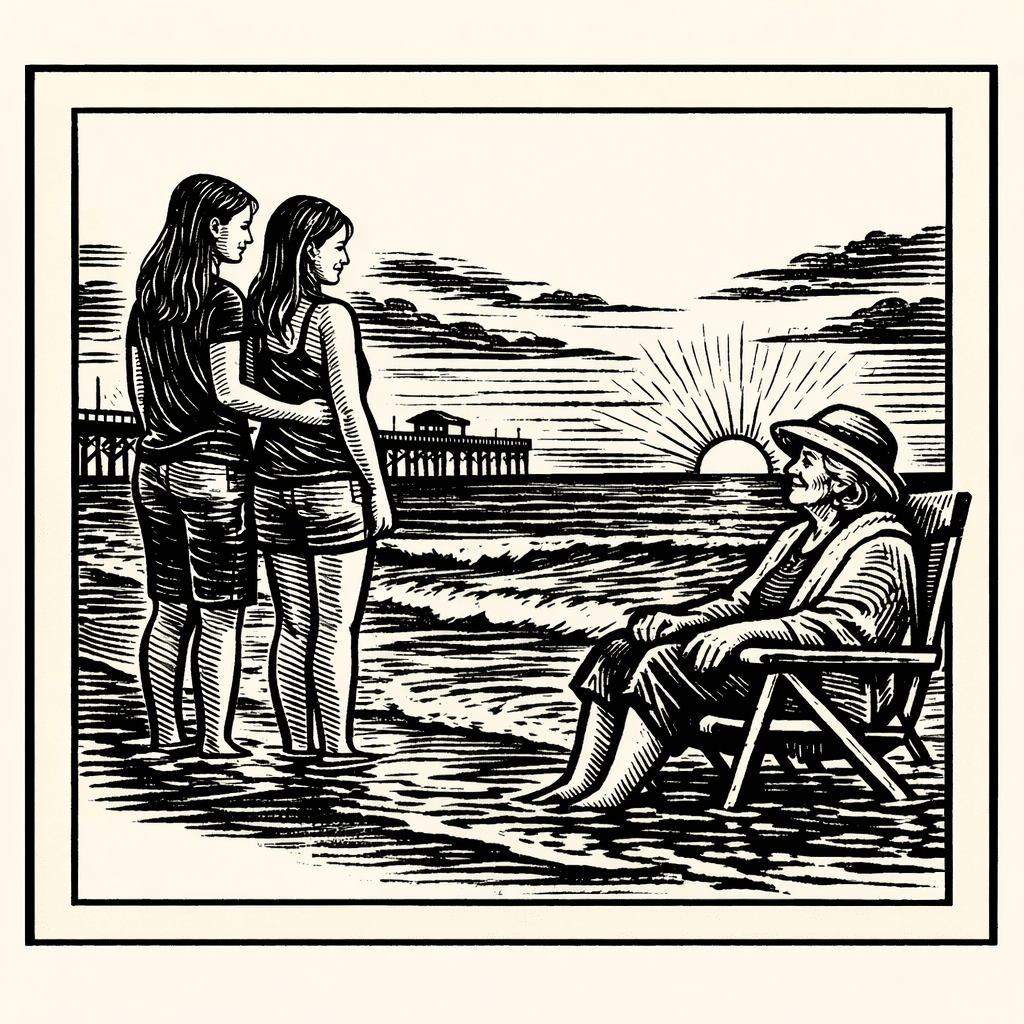
On Nan’s last wish road trip to Myrtle Beach, Brianna and Stéphanie learn of the illegitimate baby Nan gave up at birth, a loss which diminished her ability to love Claire adequately. Stéphanie challenges Brianna’s dominant role.

What I’m reading

I’m reading The Daffodil Days by Helen Bain, a tender, detailed portrait of the last months of the life of the poet Sylvia Plath, from July 1961 to December 1962. Her story is told from the perspectives of those around her in reverse chronological order. It’s the richness of details of life in early 1960’s England, where I lived as a child, that speak to me. That cold winter that started in December 1962. The clothing. The food. The way men and women were expected to behave.

Sylvia Plath was four years younger than my mother and “died” in February 1963 at age thirty. We’ve all heard the story. Gaslit by her husband the poet Ted Hughes, she died from cellular suffocation—carbon monoxide poisoning—after putting her head in a gas oven. Her children, Frieda, two years old and Nicholas, nine months old, were in another room in her apartment. Interestingly, Hugh’s “subsequent” romantic partner, Assia Wevill, also committed suicide after killing her child.

Oh Ted. Losing two partners to suicide? Careless?

The Odyssey – 2026 style

It’s hard to close without a comment about Christopher Nolen’s interpretation of The Odyssey. I watched it in the large reclining seats at the local theatre. (not IMAX) Vivid visual portrayals of violence distress me. My eyes were squeezed shut for more than a few moments. The sound track is a wonderful guide of when it is suitable to open them.

I haven’t read Emily Wilson’s 2017 translation. It’s now available in a critical edition from Norton. There is also an audio version available read by Claire Danes. There’s a find.

Emily Wilson’s article commenting on the movie caused a a bit of a furor.

“Many of the film’s implicit values directly contradict those of Homer’s poem.
Deception, warmongering, extramarital sex, cruelty to animals, abusing women and yearning for honour – all perfectly fine in the world of Homer – are, in this version, very bad.”

So a hyperbolic interpretation? I’m of the school where any attention to the classics is better than none. (as long as I can close my eyes when necessary)

I hope you enjoy the rest of the summer. For me, warmer swimming in the lake and the sea. Fresh corn and peaches. Light kit on the road bike. What are you doing?

Thanks for reading and I look forward to your comments.

Filed Under: Poetry, What I'm Reading Tagged With: Emily Wilson, Helen Bain, Sylvia Plath, The Odyssey, What I'm reading

Almost Midsummer

July 17, 2026 by Carolyne Montgomery

After days of drought and watering restrictions, the lawn is as hard as iron, and the perennials are drooping, with only the hardiest persisting. But, last night, the metal roof chimed with plump raindrops. Finally, a welcome storm.

WATERMARKED

This month’s short story installment is “Saving Things.”

It’s the story of Lucie, the graduate student, with whom Michael had an affair. It explores the enduring effects of her exploitation by one of her professors. The story is set in Halifax, and I learned a bit about East Coast whales while I was writing it. I hope you enjoy it.

What am I reading:

Who doesn’t love reading Ann Patchett. I’ve written about her book The Dutch House, before. Her latest book, Whistler has similar charms—family disruption, grudges, regrets, and misunderstandings. Accidents and scars, physical and emotional. Secrets revealed or not. Forgiveness. I loved it. I think it is a perfectly balanced read, but some say it is too sweet. Keep writing Ann.

What I am listening to:

I’m listening to Angel Down, the 2026 Pulitzer Prize winner. “Angel Down plunges you into the heart of World War I and weaves a polyphonic tale of survival, supernatural wonder, and moral conflict.”

Kirby Heyborne, the narrator, does an excellent job of navigating the single, cumulative-sentence work. He is also one of the 166 voices in the audio production of George Saunders ‘, Lincoln in the Bardo.

I can’t remember how I stumbled on this work—possibly from an NYT review or why I chose the audio format. But the truth is, it is so bizarre (over-the-top) that I think I would have found it unreadable in print format. It’s All Quiet on the Western Front meets distorted metaphysical speculative fiction. The vivid descriptions of the carnality of World War I ( and I suppose any war—I’m thinking of the deliberate ongoing destruction of Gaza, Ukraine and Iran) are laced with alliteration, obtuse, improbable and fantastic similes, metaphors and symbolism.

An unlikely degenerate band of five anti-heroes, one of whom is a young boy, and all that means in terms of caring and needing to be cared for, has the common purpose of surviving the craziness. But can they overcome their own desires to protect the angel they have found tangled in barbed wire in no-man’s land?

You may recognize the author, Daniel Kraus, who coauthored The Shape of Water with Guillermo del Toro, which was made into the Oscar–winning film starring Sally Hawkins.

I’m listening to Angel Down in small batches as I drive around town. It’s so powerful, it’s all I can take. Like all strange and extraordinary things, this novel won’t be for everybody.

What I’m Watching:

Sports media have saturated my life for the last several weeks—The FIFA World Cup, Roland Garros in Paris and then Wimbledon. It’s a good job I’m retired and was able to attend a few FIFA daytime watch parties to wave the Canadian flag. It was agonizing to see the wonderful Felix Auger-Aliassime being eventually defeated by the wily Djokovic after playing a nail-biting five-setter at the Wimbledon Quarterfinal.

What’s Coming Up:

The Denman Island Readers and Writers Festival opens next week with another outstanding line-up of authors and workshops. Seems like it gets better and better each year. I’m looking forward to Maria Reva’s workshop, “Creating Tension through Character Networks.” Maria Reva is the Canadian Ukrainian author of Endling and Good Citizens Need Not Fear. (reviewed here in previous posts)

I’m off now to inspect the garden for signs of recovery after that fabulous and much-needed rainstorm last night.

Thanks for reading

Carolyne

Filed Under: Literary Festivals, What I'm Reading, Writing Tagged With: Angel Down, Ann Patchett, Audiobooks, Interlinked Short Story Collection, Maria Reva

“The Lusty Month of May” (in the garden at least)

May 25, 2026 by Carolyne Montgomery

Watermarked

This month’s short story installment is “The Hummingbird,” a heavy story (trigger warnings for rape and anorexia) inspired by cautionary tales from my misspent adolescence. It’s the time-worn tale of a younger sister wanting to impress her older sister. It is one of the stronger ones in the collection. I hope you enjoy it.

Recognition for “Skywalking”

My short story, “Skywalking,” was e-published by the Victoria Writers’ Society in their publication, Island Writer, the Summer 26 edition. If you read the introduction by Valerie White, the editor, you’ll learn that there was a broad acceptance policy for this issue, but it’s nice to be recognized.

I like my two quirky characters, Harry and Edith, who meet in a charity shop in Victoria. Harry looks up to Edith but is puzzled by her choices and her expectations of him. (aren’t we all sometimes puzzled by people’s expectations of us?) Many thanks to Larry Bambrick, who advised me on the revisions.

The BC Masters Swimming Provincials in Kelowna

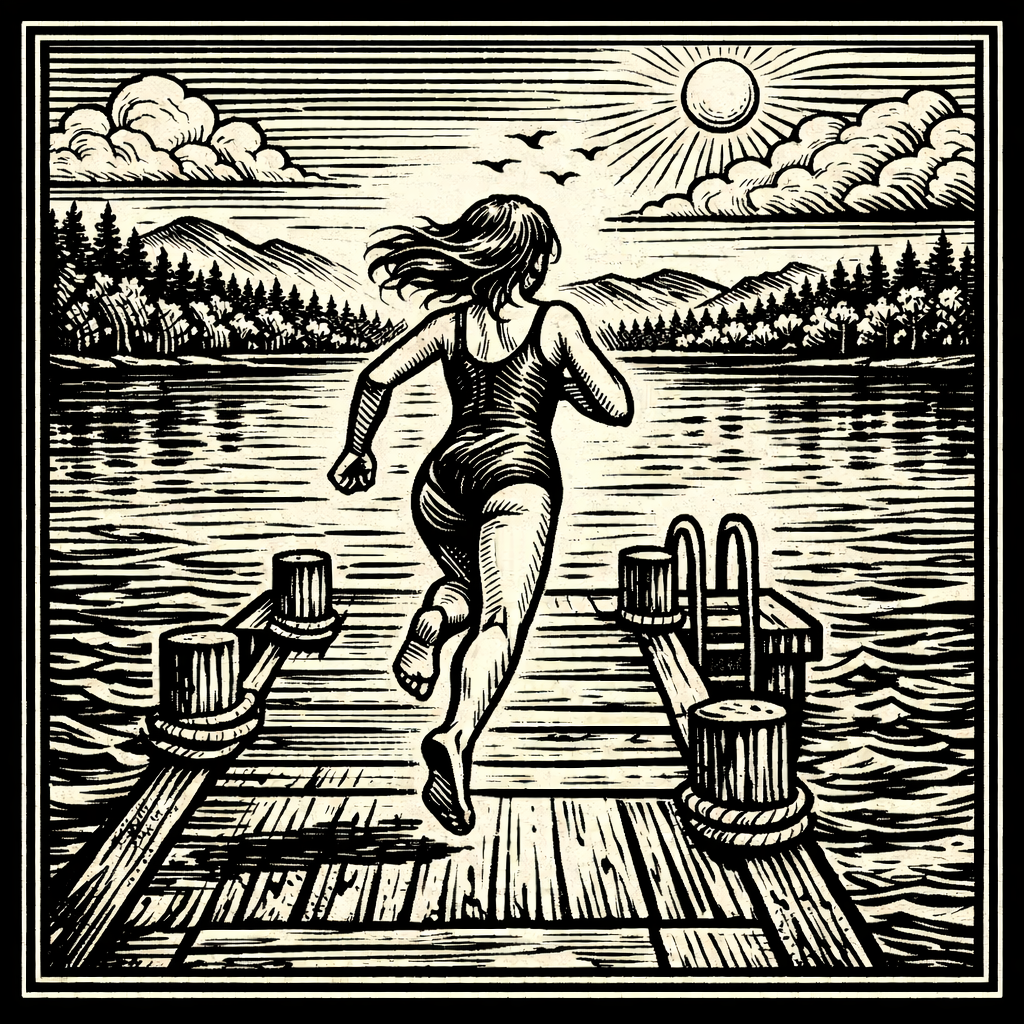
To mark turning seventy, I entered a swim meet. Like the slogan on the old Lululemon bags advised, “Do Something That Scares You…” It was slightly scary. I learned a lot at the three-day provincial event—when and how to warm up, where to leave my flip-flops and shirt, when to get up on the blocks and more. The experienced members of my team (The Sharks Masters) provided bottomless positive support. There was a lot of action, amazing athletes and a competitive vibe. I got to use the skills I’d gained by the time I hit the last event. There’s a lot more to learn, but yes, I’d do it again. Maybe as soon as November.

Reading and Writing

I’ve got a pile of short stories I should be revising. Instead, I’m negotiating with three fictional characters who might want to be in a novel. They’re busy considering the commitment to all those scenes and plot points and whether they want to change over the course of three hundred pages.

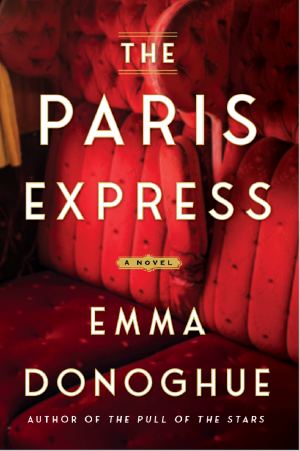
Meanwhile, I read Emma Donoghue’s Giller-nominated page-turner, The Paris Express. It’s a wonderful fin-de-siecle, clock-ticking, pot-boiler of a novel.

And now…

Back to the garden to catch up on all the pruning and planting I’ve delayed and deferred from last year.

See you in June, and thanks for reading.

Filed Under: Aging, Swimming, Watermarked Series, What I'm Reading, Writing Tagged With: Emma Donoghue, Interlinked Short Story Collection, Writing

Spring Is Sprung …

April 15, 2026 by Carolyne Montgomery

Spring is sprung, the grass is riz.
I wonder where the birdies is.
They say the birdies on the wing, but that’s absurd.
I always thought the wing was on the bird.

Anonymous

April is Poetry Month. When this anonymous ditty shows up in my brain, it is always in my mother’s voice, laden with her Scottish accent. I don’t remember her ever reciting the 3rd and 4th lines.

And along the lines of persistent mothers, Scottish or otherwise, I invite you to listen to Douglas Stuart (author of Shuggie Bain) reading his short story, “A Private View” in the April 20th, New Yorker—which breaks me even further, because of the Scottish voice and sprinking of particular expressions my mother used. “Would it kill you to …” or “A penny for your thoughts,” or “it’s high time you …” Not for the faint of heart.

Watermarked

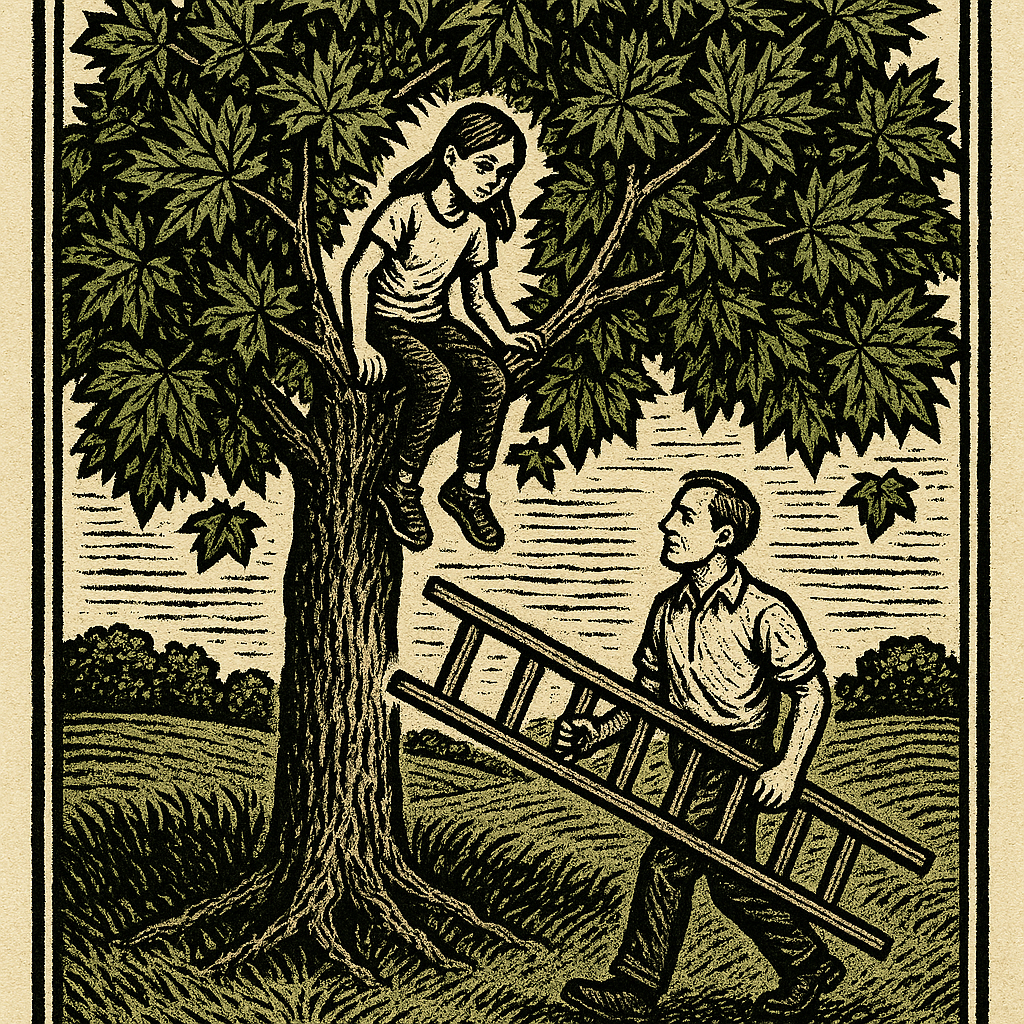
This month’s installment is “The Tree,” a story inspired by a Zoom free-writing circle. I can’t remember the prompt, but I got stuck on this image of a young girl, stuck in a tree and needing help she didn’t want to ask for—the value of free-writing. Danny Ramadan, the 2022 Haig-Brown Writer-in-Residence, gave me some tips. Several revisions later, here it is, installment four of my short story collection. It is one of my favourite ones. I hope you enjoy it.

Words on the Water

I had a terrific time at Words on the Water. Terrific venue at the Campbell River Maritime Heritage Centre. Maria Reva, a Canadian Ukrainian, shared how Ed Young’s 2019 piece, “The Last of Its Kind,” inspired her Booker-nominated, Endling—just got it from the library. You may know Ed as a prize-winning scientific writer for the Atlantic who has written many outstanding COVID pieces. In addition to hearing the amazing Michel Crummey and Vincent Lang, I met a few new-to-me authors.

Conor Kerr is a Canadian poet and author of Ukrainian-Métis heritage who claims he had to become a “fancy university boy” because he was too klutzy to work in the trades. (Frank feedback from his friends—don’t we love our friends who are willing to give frank feedback?) His Giller-nominated book, Prairie Edge, asks what would happen if, in the spirit of reconciliation and land reform, bison were reintroduced to the Edmonton river valley. It’s funny and sad and absurd. An eye-opener to existing under the pall of cultural prejudice. His latest book, a poetic novella, is Beaver Hills Forever and is on my to-read list.

“You could hear a pin drop” moment came when Tracey Lindberg, a Cree lawyer and author, read “A Hex for Colten”, a chapter from the POV of the boy, Promise and the confrontation with the NotAWarriors and Newest Tribe from her book, The Cree Word for Love, Sâkihitowin, illustrated by works from George Littlechild. Shame, remorse, and anger swirled in the silence of the wood-beamed hall. But Tracey has training in stand-up comedy. We were brought together again by her humility and grace–a lesson in seeing all people as part of humanity in all situations.

What am I reading?

I’ll be dipping into Endling by Maria Reva and Birdie, the book Tracey wrote before The Cree Word for Love, Sâkihitowin. What are you reading?

I’ll see you in May when I’ll have some stories about my first swim meet. Or, I might be too traumatized to share!

Thanks again for reading.

Filed Under: Literary Festivals, Poetry, Watermarked Series, What I'm Reading, Writing Tagged With: Conor Kerr, Douglas Stuart, Ed Young, George Littlechild, Maria Reva, Tracey Lindberg

Reflecting on Aging and Kathy Page’s Memoir

March 15, 2026 by Carolyne Montgomery

Watermarked

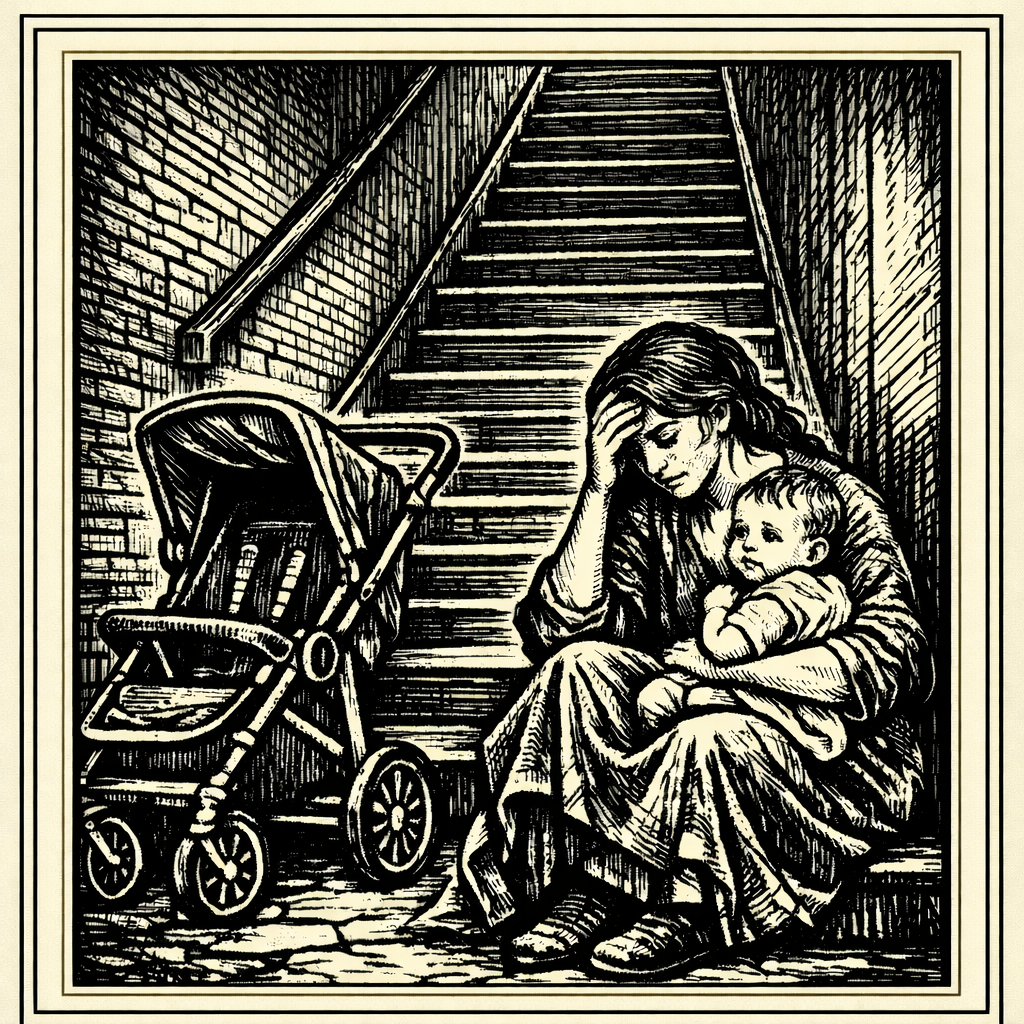
Welcome to the March edition of my short story collection, Watermarked. This month’s story, “Alterations,” is a tale of a grandmother wondering what she owes her daughter and her new grandchild. I hope you enjoy this installment. Please feel free to share it with anyone who might be interested.

Navigating the Challenges of Aging

Aging brings with it a well-known set of demands and challenges. Recently, I found myself disheartened by the time and energy required to address the various physical needs of getting older. My days now include regular appointments to optimize my vision and hearing. I’m wearing a brace for sports to support a knee ligament injury. I faithfully cooperate with cancer screenings of my breasts, bowels, and cervix. While I sometimes resent these responsibilities, I am grateful that retirement gives me more time and flexibility to attend to my health.

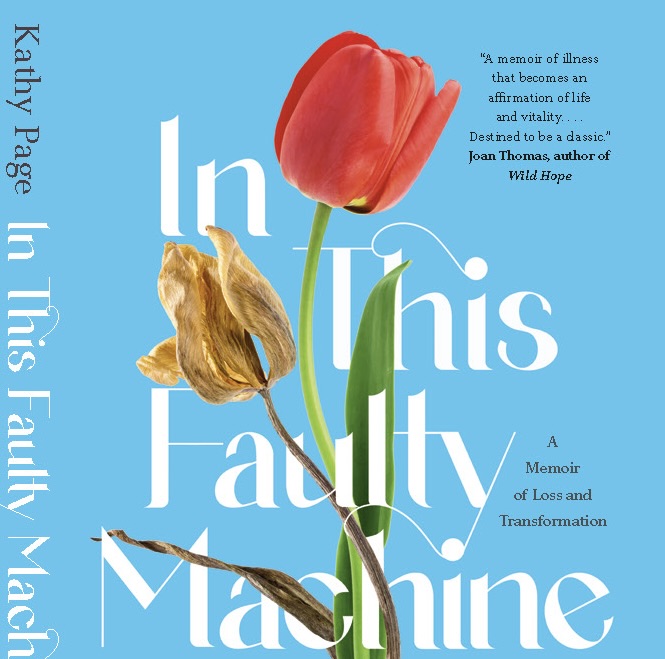
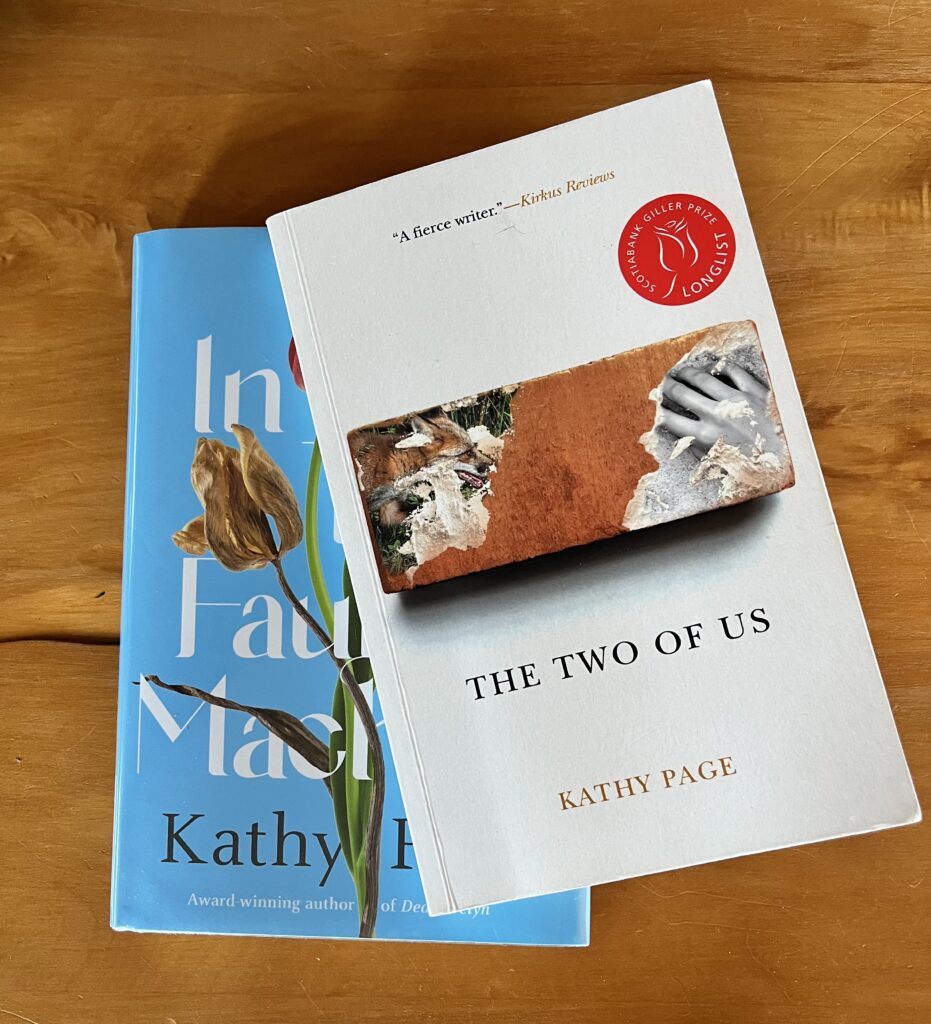
Kathy Page’s In This Faulty Machine

Last week, I picked up Kathy Page’s memoir, In This Faulty Machine. In her memoir, Page details her experiences transitioning from an accomplished writer and educator—having authored eleven books and most recently served as faculty at Nanaimo University—to a person living with Parkinson’s. (PWP) She recounts this transformation—the adaptations and losses—with candour, wit, and insight. The book is dedicated to her sister in New Zealand, who I assume, is a major source of support for her.

A few years ago, I met her at the Denman Island Readers and Writers Festival, and bought her short story collection, The Two of Us. This collection was recognized as a best book of 2016 and long-listed for the Giller Prize. In the title story, a pregnant English instructor is deeply affected by an elder student’s piece questioning the morality of bringing a child into an unpredictable and often harsh world—a warning delivered too late. The story raises the question of how to continue despite all we know and all we have yet to learn. For those who enjoy swimming, “Open Water” offers another compelling narrative: it follows a coach with a complicated past as he mentors a swimming prodigy and navigates the complexities of the prodigy’s family.

If you are familiar with Kathy Page’s fiction, you’ll know that her works are driven by character and relationships. Her novel Dear Evelyn won the 2018 Rogers Writers’ Trust Fiction Prize.

In This Faulty Machine, Page describes her transition from a vibrant, busy life—where she balanced her creative pursuits, academic responsibilities, and homesteading on Salt Spring Island—to adapting to her life as a PWP. The memoir, structured in twenty chapters, provides unvarnished, detailed observations about her transformation, deliberately avoiding the term “journey.

Page writes openly about her losses and the ongoing effort to find meaning, skilfully blending her clear-eyed perspective with humour. She provides context about the history and current medical understanding of Parkinson’s disease. She describes the difficulty of leaving her beloved home on Salt Spring Island and adjusting to a new home and life in Victoria. The book explores the realities of chronic illness, including a chapter on the rigours and indignities of managing severe constipation. Page considers the potential advantage of her loss of smell—anosmia—which was an early sign of her Parkinson’s.

Page grew up under the influence of a strong-willed, hyperbolic mother who influenced her writing style and her interest in conflict in relationships. One of the memoir’s most poignant moments is her relief at not having to share her diagnosis with her mother, knowing her mother would have blamed her for her illness, attributing it to some personal shortcoming. The complexities of the mother-daughter relationship endure, even after a mother’s passing.

Page takes a pragmatic look at concepts like positivity, meditation, and the search for meaning in the face of adversity. She admits that meditation is not for her. Her narrative includes frank accounts of the deaths of fellow members in her PWP group and explores the emotional and physical burdens that progressive chronic illness places on caregivers. In This Faulty Machine is essential reading for anyone (medical or otherwise) who cares for people with Parkinson’s disease.

A Word from Caroline Adderson

Caroline Adderson offers high praise for Page’s memoir, stating: “In This Faulty Machine is one of those rare books that compels you to rethink your life.”

Until Next Time

Happy reading and writing and rethinking your life. I look forward to any comments. I hope the comments section is working properly this month. I’m off to the Words on the Water conference in Campbell River this weekend. See you in April for the fourth installment of my collection.

Filed Under: Aging, What I'm Reading, Writing Tagged With: Aging, Kathy Page, Parkinson's, What I'm reading

It’s A Dickens

February 12, 2026 by Carolyne Montgomery

Watermarked

Welcome to the February edition of my short story collection, Watermarked. This month’s story, “Webbed Feet,” is a tale of an endangered bird, the marbled murrelet and Claire and Michael’s threatened marriage. I hope you enjoy this installment. Please feel free to share it with anyone who might be interested.

Dickensian Echoes in Recent Reading

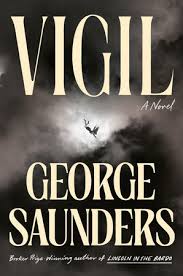
George Saunders’ Vigil

Many of you know that I’m a George Saunders fan, a member of his Substack Story Club and will tell anyone who will listen to read A Swim in the Pond in the Rain. Ezra Kline’s interview with Saunders discusses the moral dimensions, anger, ambition and sin in Vigil.

I tucked into a library copy of Vigil. At under two hundred pages, you could make the case that it’s more of a novella. Despite being number one on the New York Times best-seller list this week, it has received mixed reviews. If you enjoyed Lincoln in the Bardo, then Vigil may be your cup of tea.

Spoilers Follow

Vigil riffs on Charles Dickens novella, A Christmas Carol, which the Story Club did a close read of during Christmas 2024. The Ebenezer Scrooge character, an unlikeable protagonist, K.J. Boone,is a dying billionaire oil tycoon and climate denier. He is visited on his deathbed (not even in the best bedroom of his mansion) by spirits, including a repentant French inventor of the combustion engine who demands that Boone confront his past actions. In Vigil’s speculative world, guiding spirits function as a type of death doulas, returning to the earthly realm to comfort the dying as they transition, helping them acknowledge and repent for their sins. But despite a noisy cast of various spirits challenging the oil tycoon, there is little movement towards repentance.

The guiding spirit in Vigil is Jill “Doll” Blaine, a pro at the death-doula business, having guided over 300 souls to the other realm. How Victorian and a playfully Dickensian character name, invoking chillblains—the damp and cold and the sulfuric coal fires scorching the damp wool clothing and exposed skin placed before them.

The interesting part of the story for me was the backstory of Jill “Doll” Blaine, how and when she died. As she waits for her recalcitrant charge to die, she visits her old town and discovers some difficult-to-accept changes. She is tempted to punish the person responsible for her young adult death. These actions are prohibited in the speculative world’s rules for visiting spirits.

This is not a simple redemption, happily-ever-after story like A Christmas Carol, where, after the ghosts’ visitation, the transformed Ebenezer Scrooge makes amends. Can people be held responsible for their harmful actions if they believed they were right? How much compassion does an unrepentant person deserve? Give the book a try and see what you think.

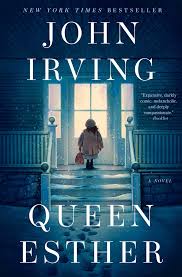
John Irving’s Queen Esther

Before Vigil, I read John Irving’s sixteenth novel, Queen Esther. Irving, another Dickens admirer, crafts a complex family saga centred on the coming-of-age of Adam Brewster and the mystery of his biological mother, Queen Esther. Themes of adoption, identity, anti-Semitism, and family structure echo Dickens’ influence.

Adam and his grandfather read alternating chapters of Great Expectations as a moral guide. Adam is a seeker like Pip. Like the Great Expectations character, Joe Gargery, Esther lurks in the background, steadfast in her Zionist ideology, influencing Adam’s expectations and identity.

While the coming-of-age struggles, quirky characters, and atypical families are classic John Irving (including wrestlers and wrestling), I found some of the elements tiresome—cafe playlists, the dog, the thugs. The plot centres on Adam fathering a child to avoid the American draft of the Vietnam War. The themes of abandonment, poverty and benefaction are eternal.

Barbara Kingsolver’s Demon Copperhead

Dickens most autobiographical book, David Copperfield, was revisited thematically in the coming-of-age journey of Damon Fields in Barbara Kingsolver’s Pulitzer Prize-winning Demon Copperhead. I’m sorry to say that I didn’t get past the oppressive hardships of the first one hundred pages. Perhaps I should try again?

But I was inspired to watch the 2020 film The Personal History of David Copperfield starring Dev Patel (as David Copperfield), Tilda Swinton (as Betsey Trotwood), and Hugh Laurie (as Mr Dick). Because who doesn’t love those actors?

A Quick Splash into the Dickens Pond (but not in the rain)

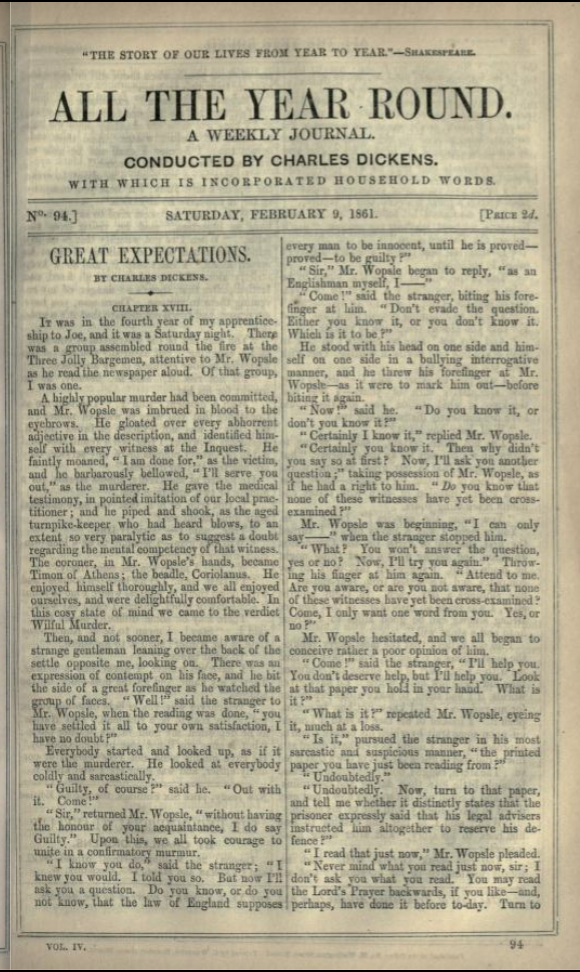
Dickens was a master of self-publishing and serialized storytelling. His journals Household Words and All the Year Round were hugely popular, becoming, in Dickens’s words, “a good property” that yielded “a good round profit.” Great Expectations, his thirteenth novel, was serialized in weekly installments in All the Year Round.

 He published A Christmas Carol, one of his five Christmas novellas, in a range from a collector-worthy, leather-bound, gold-embossed limited edition to mass-market prints.

Like many creatives, Dickens’ personal life was tarnished. At age 45, he fell in love with an eighteen-year-old actress and tried (unsuccessfully) to have his wife, Catherine, the mother of his ten children, institutionalized for a mental disorder. Can this misdeed be countered by his innumerable acts of philanthropy and activism for the basic rights of the poor? Can one separate the art from the artist?

As in Shakespeare, the humanity of the characters and conflicts in Dickens works continue to influence culture and literature in the English-speaking world and are always worth revisiting.

Until Next Time

Happy reading and writing. I look forward to any comments. See you in March for the third installment of my collection.

Filed Under: What I'm Reading, Writing Tagged With: Barbara Kingsolver, Demon Copperhead, Dickens, Irving, Queen Esther, Saunders, Vigil, Writing

  • Page 1
  • Page 2
  • Go to Next Page »

Primary Sidebar

Recent Posts

  • Dog Days of Summer
  • Chapter 8: The Road Trip
  • Almost Midsummer
  • Chapter 7: Saving Things
  • Living with Hockney: A Farewell

Archives

  • August 2026
  • July 2026
  • June 2026
  • May 2026
  • April 2026
  • March 2026
  • February 2026
  • January 2026
  • November 2025
  • September 2025
  • May 2025
  • December 2024
  • October 2024
  • July 2024
  • June 2024
  • May 2024
  • November 2023
  • October 2023
  • August 2023
  • November 2022
  • May 2022
  • March 2022
  • December 2021
  • October 2021
  • June 2021
  • April 2021
  • February 2021
  • December 2020
  • October 2020
  • July 2020
  • May 2020
  • March 2020
  • February 2020
  • January 2020
  • November 2019
  • October 2019
  • September 2019
  • July 2019
  • June 2019
  • May 2019
  • March 2019
  • January 2019
  • December 2018
  • October 2018
  • August 2018

Pages

  • A Swim in a Pond in the Rain – A Commentary
  • About Carolyne Jane Montgomery
  • Contact
  • Home
  • Independent Bookstores
  • Privacy Policy
  • Publications, Readings and Other Stuff
    • The Solstice Party
  • Signup

Copyright © 2026 · Carolyne Montgomery · All Rights Reserved | Support by Mastermynde