• Skip to main content
  • Skip to primary sidebar
  • Skip to footer

Carolyne J Montgomery - Reader & Writer

Carolyne Reads and Writes

  • Home
  • About
    • Socials
      • Facebook
      • Instagram
  • Watermarked Series
  • Publications & More
    • Indie Bookstores

Poetry

Dog Days of Summer

August 27, 2026 by Carolyne Montgomery Leave a Comment

It’s dry and hot and smoky out there today. Is it just me, or are summers becoming less enjoyable as the climate is fiercer and more dangerous? I’m huddled indoors today in the cool as I writing this.

August’s Installment of Watermarked

I’ve posted the eighth installment of my short story collection here. This is the story that started the whole project.

I was in a workshop run by Traci Skuce and came up with the characters, the two sisters, Brianna and Stéphanie. I hardly knew anything about writing but stumbled on anyway. On the advice of my writing partner at the workshop and poet, Cornelia Hoogland, I even did some research—visiting a recreational vehicle sales lot and inspecting the interiors of various motor homes. That’s the fun about writing fiction: learning the details about places and things that will populate your story.
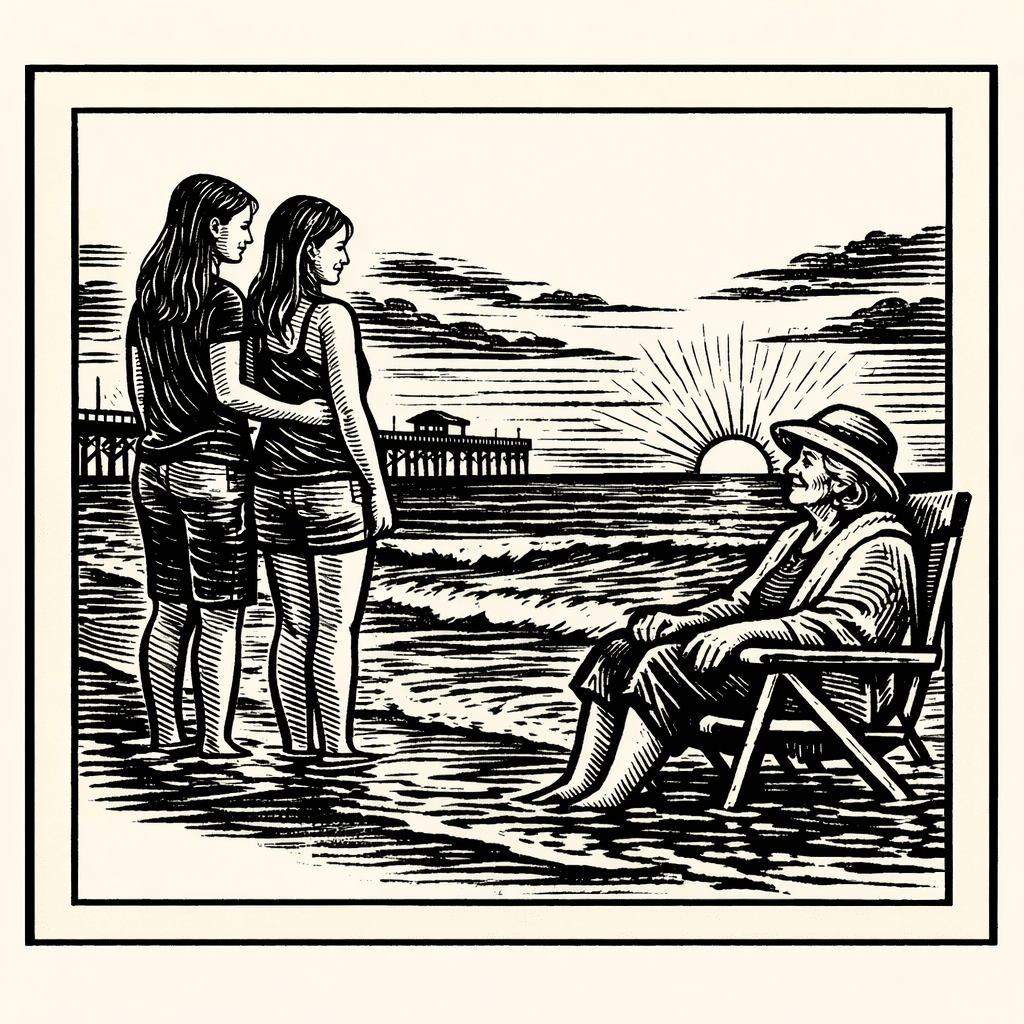
On Nan’s last wish road trip to Myrtle Beach, Brianna and Stéphanie learn of the illegitimate baby Nan gave up at birth, a loss which diminished her ability to love Claire adequately. Stéphanie challenges Brianna’s dominant role.

What I’m reading

I’m reading The Daffodil Days by Helen Bain, a tender, detailed portrait of the last months of the life of the poet Sylvia Plath, from July 1961 to December 1962. Her story is told from the perspectives of those around her in reverse chronological order. It’s the richness of details of life in early 1960’s England, where I lived as a child, that speak to me. That cold winter that started in December 1962. The clothing. The food. The way men and women were expected to behave.

Sylvia Plath was four years younger than my mother and “died” in February 1963 at age thirty. We’ve all heard the story. Gaslit by her husband the poet Ted Hughes, she died from cellular suffocation—carbon monoxide poisoning—after putting her head in a gas oven. Her children, Frieda, two years old and Nicholas, nine months old, were in another room in her apartment. Interestingly, Hugh’s “subsequent” romantic partner, Assia Wevill, also committed suicide after killing her child.

Oh Ted. Losing two partners to suicide? Careless?

The Odyssey – 2026 style

It’s hard to close without a comment about Christopher Nolen’s interpretation of The Odyssey. I watched it in the large reclining seats at the local theatre. (not IMAX) Vivid visual portrayals of violence distress me. My eyes were squeezed shut for more than a few moments. The sound track is a wonderful guide of when it is suitable to open them.

I haven’t read Emily Wilson’s 2017 translation. It’s now available in a critical edition from Norton. There is also an audio version available read by Claire Danes. There’s a find.

Emily Wilson’s article commenting on the movie caused a a bit of a furor.

“Many of the film’s implicit values directly contradict those of Homer’s poem.
Deception, warmongering, extramarital sex, cruelty to animals, abusing women and yearning for honour – all perfectly fine in the world of Homer – are, in this version, very bad.”

So a hyperbolic interpretation? I’m of the school where any attention to the classics is better than none. (as long as I can close my eyes when necessary)

I hope you enjoy the rest of the summer. For me, warmer swimming in the lake and the sea. Fresh corn and peaches. Light kit on the road bike. What are you doing?

Thanks for reading and I look forward to your comments.
Filed Under: Poetry, What I'm Reading Tagged With: Emily Wilson, Helen Bain, Sylvia Plath, The Odyssey, What I'm reading

Spring Is Sprung …

April 15, 2026 by Carolyne Montgomery

Spring is sprung, the grass is riz.
I wonder where the birdies is.
They say the birdies on the wing, but that’s absurd.
I always thought the wing was on the bird.

Anonymous

April is Poetry Month. When this anonymous ditty shows up in my brain, it is always in my mother’s voice, laden with her Scottish accent. I don’t remember her ever reciting the 3rd and 4th lines.

And along the lines of persistent mothers, Scottish or otherwise, I invite you to listen to Douglas Stuart (author of Shuggie Bain) reading his short story, “A Private View” in the April 20th, New Yorker—which breaks me even further, because of the Scottish voice and sprinking of particular expressions my mother used. “Would it kill you to …” or “A penny for your thoughts,” or “it’s high time you …” Not for the faint of heart.

Watermarked

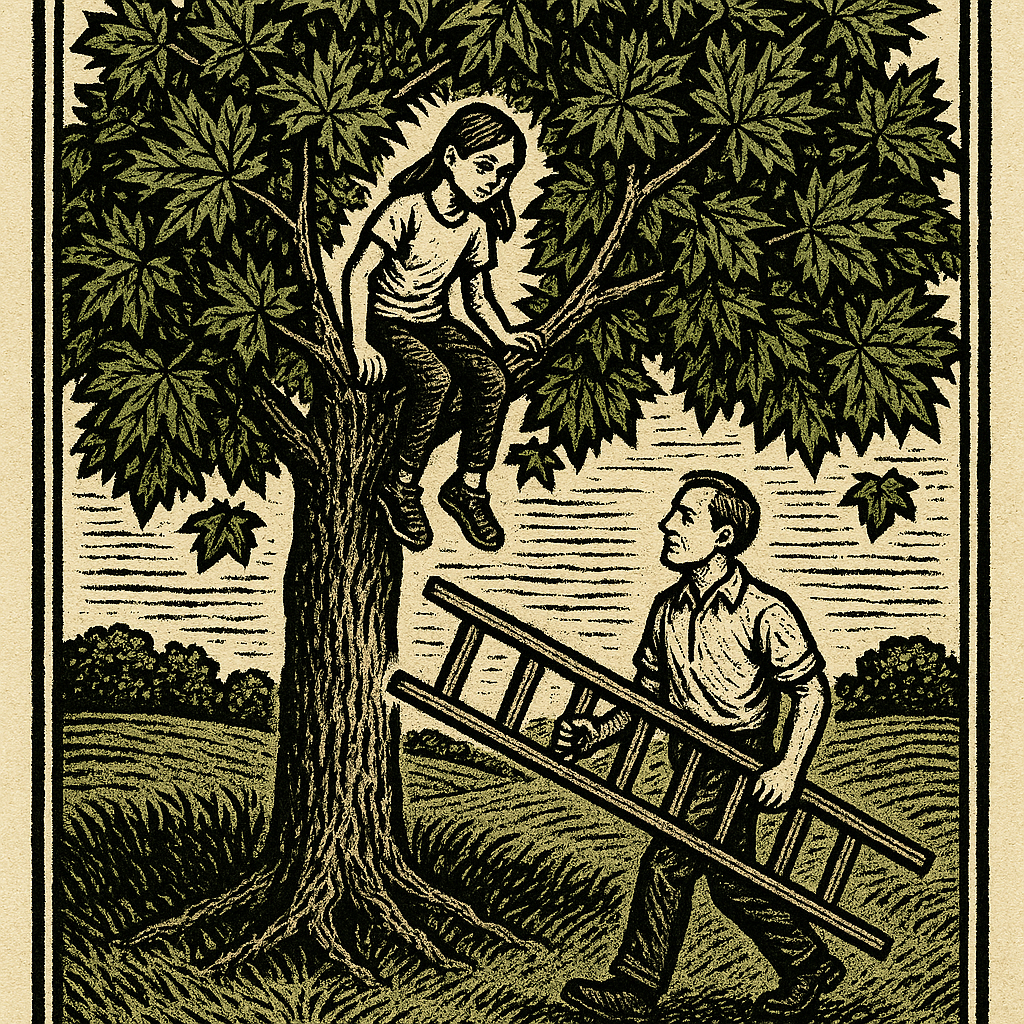
This month’s installment is “The Tree,” a story inspired by a Zoom free-writing circle. I can’t remember the prompt, but I got stuck on this image of a young girl, stuck in a tree and needing help she didn’t want to ask for—the value of free-writing. Danny Ramadan, the 2022 Haig-Brown Writer-in-Residence, gave me some tips. Several revisions later, here it is, installment four of my short story collection. It is one of my favourite ones. I hope you enjoy it.

Words on the Water

I had a terrific time at Words on the Water. Terrific venue at the Campbell River Maritime Heritage Centre. Maria Reva, a Canadian Ukrainian, shared how Ed Young’s 2019 piece, “The Last of Its Kind,” inspired her Booker-nominated, Endling—just got it from the library. You may know Ed as a prize-winning scientific writer for the Atlantic who has written many outstanding COVID pieces. In addition to hearing the amazing Michel Crummey and Vincent Lang, I met a few new-to-me authors.

Conor Kerr is a Canadian poet and author of Ukrainian-Métis heritage who claims he had to become a “fancy university boy” because he was too klutzy to work in the trades. (Frank feedback from his friends—don’t we love our friends who are willing to give frank feedback?) His Giller-nominated book, Prairie Edge, asks what would happen if, in the spirit of reconciliation and land reform, bison were reintroduced to the Edmonton river valley. It’s funny and sad and absurd. An eye-opener to existing under the pall of cultural prejudice. His latest book, a poetic novella, is Beaver Hills Forever and is on my to-read list.

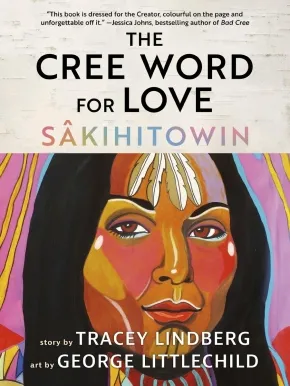
“You could hear a pin drop” moment came when Tracey Lindberg, a Cree lawyer and author, read “A Hex for Colten”, a chapter from the POV of the boy, Promise and the confrontation with the NotAWarriors and Newest Tribe from her book, The Cree Word for Love, Sâkihitowin, illustrated by works from George Littlechild. Shame, remorse, and anger swirled in the silence of the wood-beamed hall. But Tracey has training in stand-up comedy. We were brought together again by her humility and grace–a lesson in seeing all people as part of humanity in all situations.

What am I reading?

I’ll be dipping into Endling by Maria Reva and Birdie, the book Tracey wrote before The Cree Word for Love, Sâkihitowin. What are you reading?

I’ll see you in May when I’ll have some stories about my first swim meet. Or, I might be too traumatized to share!

Thanks again for reading.

Filed Under: Literary Festivals, Poetry, Watermarked Series, What I'm Reading, Writing Tagged With: Conor Kerr, Douglas Stuart, Ed Young, George Littlechild, Maria Reva, Tracey Lindberg

Finding Your Soul Speed: The Power of Poetry Memorization

May 8, 2025 by Carolyne Montgomery

What a chaotic six months—struggling through winter, health issues with loved ones and my injuries. These are things that require redefinition of self, priorities, and goals. I’ve been distressed by National and International politics. My confidence in the meaning and value of my writing is wavering. Rejection is the norm in this business. Any self-doubt is poison.

But now, the days are longer and the elections are over. And perhaps a knee brace may permit a return to racket sports. (Pickleball anyway) And although my motivation for writing is the lowest since I started this blog, I have been reading.

In the dark and wet of January, I forced myself to memorize a poem, a villanelle—Robert Frost, “Stopping by the Woods on a Snowy Evening”. It’s likely you memorized it in school. Whose woods these are, I think I know… Classic iambic tetrameter.

The Lost Soul

I printed a copy and folded it into my jacket pocket. As I went for evening walks, I tortured my brittle brain with recall. What rhymes with shake? Oh yes, mistake. See the woods? No! Watch the woods. The woods or his woods. Longest night or evening? I had to go slowly. I had to pay attention to every detail. My walks had more rhythm and more purpose. I was calmer, filled with the rhythm and sounds of this classic poem.

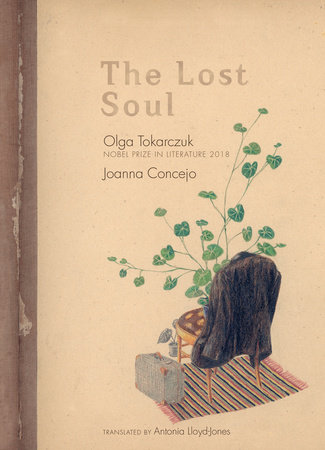
A while ago, I wrote about the Nobel Prize-winning author, Olga Tokarczuk. She wrote a lovely book, The Lost Soul (illustrated by Joanna Concejo and translated by Antonia Lloyd-Jones).

The premise is that a cause of unhappiness, dissatisfaction is when there is a mismatch between the pace of the brain and body and the pace of the soul. The soul moves slowly. I often insist that my brain and body move quickly. Was walking and memorizing poetry forcing me to slow dow?

Last month, along with many subscribers of The New York Times, we learned “Recuerdo” by Enda St. Vincent Millay. We were very tired, we were very merry, we had gone back and forth all night on the ferry.

There were videos of writers including St. Vincent Millay, Lauren Groff and Ann Patchett reading the poem for further inspiration.

At the end of the five-day course, you could upload a video of your recitation. (which I didn’t, but performance of poetry could be a next step) And once again, studying and memorizing “Recuerdo”, made me calmer and happier—nourished by the rhythm and details of the stanzas.

Ah! Slow down. Pay attention to your soul. Think and move at a speed that suits your soul. It seems that my soul likes the speed of not only reading poetry but learning it. My brain likes the pace of learning every detail. My heart likes knowing I carry the piece everywhere I go

I’m understanding more about what my soul needs—what my soul speed is and how it fits in with the rest of me, my brain and my body. How’s your soul doing? What’s your soul speed?

If you are looking for more inspiration and guidance about poems to memorize and how to recapture the fading art of memorization, consider the Academy of American Poets, Committed to Memory, where there are some suggestions. You can revisit the ones you learned years ago and also subscribe to Poem-a-Day.

Thanks for reading.

Filed Under: Poetry Tagged With: Memorization, Olga Tokarczuk, Poetry, Soul, St Vicent Millay, Writing

Primary Sidebar

Recent Posts

  • Dog Days of Summer
  • Chapter 8: The Road Trip
  • Almost Midsummer
  • Chapter 7: Saving Things
  • Living with Hockney: A Farewell

Archives

  • August 2026
  • July 2026
  • June 2026
  • May 2026
  • April 2026
  • March 2026
  • February 2026
  • January 2026
  • November 2025
  • September 2025
  • May 2025
  • December 2024
  • October 2024
  • July 2024
  • June 2024
  • May 2024
  • November 2023
  • October 2023
  • August 2023
  • November 2022
  • May 2022
  • March 2022
  • December 2021
  • October 2021
  • June 2021
  • April 2021
  • February 2021
  • December 2020
  • October 2020
  • July 2020
  • May 2020
  • March 2020
  • February 2020
  • January 2020
  • November 2019
  • October 2019
  • September 2019
  • July 2019
  • June 2019
  • May 2019
  • March 2019
  • January 2019
  • December 2018
  • October 2018
  • August 2018

Pages

  • A Swim in a Pond in the Rain – A Commentary
  • About Carolyne Jane Montgomery
  • Contact
  • Home
  • Independent Bookstores
  • Privacy Policy
  • Publications, Readings and Other Stuff
    • The Solstice Party
  • Signup

Copyright © 2026 · Carolyne Montgomery · All Rights Reserved | Support by Mastermynde