What a chaotic six months—struggling through winter, health issues with loved ones and my injuries. These are things that require redefinition of self, priorities, and goals. I’ve been distressed by National and International politics. My confidence in the meaning and value of my writing is wavering. Rejection is the norm in this business. Any self-doubt is poison.
But now, the days are longer and the elections are over. And perhaps a knee brace may permit a return to racket sports. (Pickleball anyway) And although my motivation for writing is the lowest since I started this blog, I have been reading.
In the dark and wet of January, I forced myself to memorize a poem, a villanelle—Robert Frost, “Stopping by the Woods on a Snowy Evening”. It’s likely you memorized it in school. Whose woods these are, I think I know… Classic iambic tetrameter.
I printed a copy and folded it into my jacket pocket. As I went for evening walks, I tortured my brittle brain with recall. What rhymes with shake? Oh yes, mistake. See the woods? No! Watch the woods. The woods or his woods. Longest night or evening? I had to go slowly. I had to pay attention to every detail. My walks had more rhythm and more purpose. I was calmer, filled with the rhythm and sounds of this classic poem.
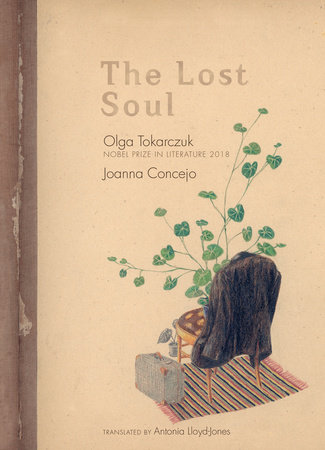
A while ago, I wrote about the Nobel Prize-winning author, Olga Tokarczuk. She wrote a lovely book, The Lost Soul (illustrated by Joanna Concejo and translated by Antonia Lloyd-Jones).
The premise is that a cause of unhappiness, dissatisfaction is when there is a mismatch between the pace of the brain and body and the pace of the soul. The soul moves slowly. I often insist that my brain and body move quickly. Was walking and memorizing poetry forcing me to slow dow?

Last month, along with many subscribers of The New York Times, we learned “Recuerdo” by Enda St. Vincent Millay. We were very tired, we were very merry, we had gone back and forth all night on the ferry.
There were videos of writers including St. Vincent Millay, Lauren Groff and Ann Patchett reading the poem for further inspiration.
At the end of the five-day course, you could upload a video of your recitation. (which I didn’t, but performance of poetry could be a next step) And once again, studying and memorizing “Recuerdo”, made me calmer and happier—nourished by the rhythm and details of the stanzas.
Ah! Slow down. Pay attention to your soul. Think and move at a speed that suits your soul. It seems that my soul likes the speed of not only reading poetry but learning it. My brain likes the pace of learning every detail. My heart likes knowing I carry the piece everywhere I go
I’m understanding more about what my soul needs—what my soul speed is and how it fits in with the rest of me, my brain and my body. How’s your soul doing? What’s your soul speed?
If you are looking for more inspiration and guidance about poems to memorize and how to recapture the fading art of memorization, consider the Academy of American Poets, Committed to Memory, where there are some suggestions. You can revisit the ones you learned years ago and also subscribe to Poem-a-Day.
Thanks for reading.
Interested in soul speed. It always feels good to slow down when life gets too geared up.
Last year I took a poetry-writing course. In one assignment, we were asked to make a new poem of “Stopping by Woods…”, keeping the last word of each line intact. Here’s mine:
In fall the chill returns, I know
from seasons past, and though
the shift in nature’s plan is here,
the glacier dons its coat of snow.
The shift is coming quickly, queer,
not as expected, not as near,
but then the overbrimming lake
is much of a surprise this year.
Loved the challenge. Judy
Lovely Judy. And a fabulous exercise. Thanks for sharing.
The moment is now.
Thanks Deb!
Poetry is fascinating. I think we don’t call pop music poetry because we…. denigrate poetry? Or maybe it’s because we don’t want to elevate “pop”. But I think pop songs are just poetry put to music. And if the poetry isn’t always complicated… the rhythms and rhymes sink into your brain and stay with you… I love being able to recite long passages of songs I heard in my youth… that pull back a certain mood and time and place. Magical. Thanks for writing!
And for my brain, often lyrics set to music ( is that a song?) are more easily memorized. And I do love a good repetative chorus!
Life’s challenges spring forth reflection, for me as well. That and an obsessive need to declutter, to make room for the changes to come. Then the dust settles and new routines emerge with each deep breath rising and letting go. This spring it has been gardening. First, the declutter of a million maple volunteers scattered – everywhere!. Each pull feels like the same satisfaction I get from popping a menacing pimple. Weird – I know.! Next comes the planting of new finds, mostly from my neighbours garden – gifts not stolen. And lastly it is mulch – oh how I love mulch, as it hides all imperfections. (I wish fashion had a mulch equivalent). And time keeps ticking on and on unstoppable even for a moment.
I like the idea of memorizing poetry. Usually it is day dreams and conversations in my head that keeps my brain occupied while I garden. Maybe I’ll switch that up and bring along a poem instead – work on my delivery.
Soul speed seems to find its way to the bottom of the list. Exercise, sweep, errands and cat cuddles keep swirling at the top of the heap – no time for “other” things. However, I will think about soul speed and how best to make space for what that might mean – for me.
Thanks for your blog! I enjoyed that!
Thanks Susan. Yes we do fill up our days with busy and often (but not always) necessary tasks. Its my theory that ones soul speed is variable and one needs to pay attention when to what is the best speed for you in the moment.
Stopping By Woods On A Snowy Evening is the only poem I know by heart. In my 20s I saw a film at the Hay River cinema – completely forgettable except for the final lines of this poem which I found very moving. I memorized it and, along with pieces from various Shakespeare plays, and singing the alphabet backwards, use it when cycling up steep hills.
Thanks Helen. Always inspirational to have memorized poetry to help one cycle up steep hills.