• Skip to main content
  • Skip to primary sidebar
  • Skip to footer

Carolyne J Montgomery - Reader & Writer

Carolyne Reads and Writes

  • Home
  • About
    • Socials
      • Facebook
      • Instagram
  • Watermarked Series
  • Publications & More
    • Indie Bookstores

Archives for August 2026

Dog Days of Summer

August 27, 2026 by Carolyne Montgomery Leave a Comment

It’s dry and hot and smoky out there today. Is it just me, or are summers becoming less enjoyable as the climate is fiercer and more dangerous? I’m huddled indoors today in the cool as I writing this.

August’s Installment of Watermarked

I’ve posted the eighth installment of my short story collection here. This is the story that started the whole project.

I was in a workshop run by Traci Skuce and came up with the characters, the two sisters, Brianna and Stéphanie. I hardly knew anything about writing but stumbled on anyway. On the advice of my writing partner at the workshop and poet, Cornelia Hoogland, I even did some research—visiting a recreational vehicle sales lot and inspecting the interiors of various motor homes. That’s the fun about writing fiction: learning the details about places and things that will populate your story.
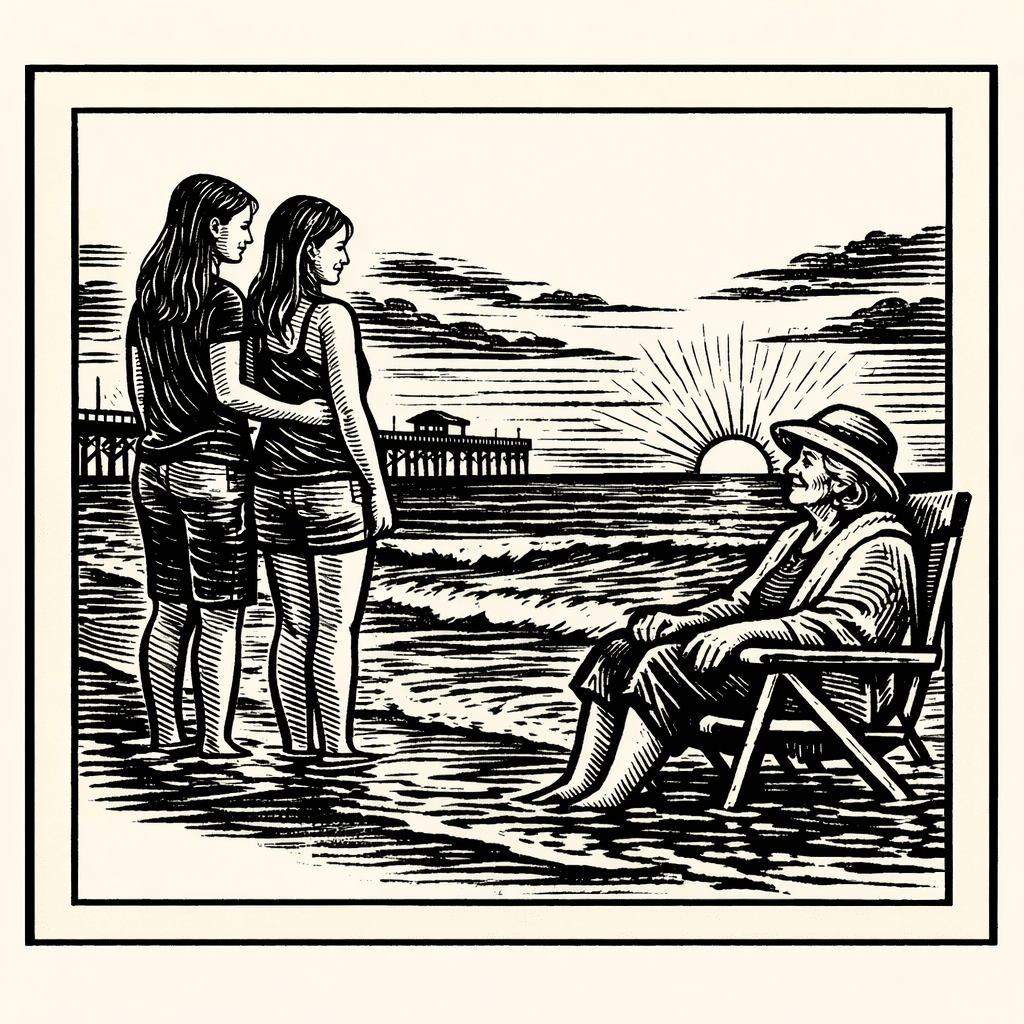
On Nan’s last wish road trip to Myrtle Beach, Brianna and Stéphanie learn of the illegitimate baby Nan gave up at birth, a loss which diminished her ability to love Claire adequately. Stéphanie challenges Brianna’s dominant role.

What I’m reading

I’m reading The Daffodil Days by Helen Bain, a tender, detailed portrait of the last months of the life of the poet Sylvia Plath, from July 1961 to December 1962. Her story is told from the perspectives of those around her in reverse chronological order. It’s the richness of details of life in early 1960’s England, where I lived as a child, that speak to me. That cold winter that started in December 1962. The clothing. The food. The way men and women were expected to behave.

Sylvia Plath was four years younger than my mother and “died” in February 1963 at age thirty. We’ve all heard the story. Gaslit by her husband the poet Ted Hughes, she died from cellular suffocation—carbon monoxide poisoning—after putting her head in a gas oven. Her children, Frieda, two years old and Nicholas, nine months old, were in another room in her apartment. Interestingly, Hugh’s “subsequent” romantic partner, Assia Wevill, also committed suicide after killing her child.

Oh Ted. Losing two partners to suicide? Careless?

The Odyssey – 2026 style

It’s hard to close without a comment about Christopher Nolen’s interpretation of The Odyssey. I watched it in the large reclining seats at the local theatre. (not IMAX) Vivid visual portrayals of violence distress me. My eyes were squeezed shut for more than a few moments. The sound track is a wonderful guide of when it is suitable to open them.

I haven’t read Emily Wilson’s 2017 translation. It’s now available in a critical edition from Norton. There is also an audio version available read by Claire Danes. There’s a find.

Emily Wilson’s article commenting on the movie caused a a bit of a furor.

“Many of the film’s implicit values directly contradict those of Homer’s poem.
Deception, warmongering, extramarital sex, cruelty to animals, abusing women and yearning for honour – all perfectly fine in the world of Homer – are, in this version, very bad.”

So a hyperbolic interpretation? I’m of the school where any attention to the classics is better than none. (as long as I can close my eyes when necessary)

I hope you enjoy the rest of the summer. For me, warmer swimming in the lake and the sea. Fresh corn and peaches. Light kit on the road bike. What are you doing?

Thanks for reading and I look forward to your comments.

Filed Under: Poetry, What I'm Reading Tagged With: Emily Wilson, Helen Bain, Sylvia Plath, The Odyssey, What I'm reading

Chapter 8: The Road Trip

August 15, 2026 by Carolyne Montgomery Leave a Comment

On Nan’s last wish road trip to Myrtle Beach, Brianna and Stéphanie learn of the illegitimate baby Nan gave up at birth, a loss which diminished her ability to love Claire adequately. Stéphanie challenges Brianna’s dominant role.

The Road Trip

Nan shuffled around inside the RV, staying upright by grasping the counters. She was eighty-three with newly diagnosed, incurable pancreatic cancer. Two days ago, she declared her wish to go to Orlando. She’d refused to fly, so Brianna, her granddaughter, had rented the RV to drive the two thousand kilometres from Montreal to Florida. 

Nan’s flowery toiletries bag was plump with vials of her painkillers and sleeping pills. “I’ve hidden the best meds under the cushions. You never know what will happen at the border,” she said to her two granddaughters.

Two days before, Stéphanie, Brianna’s younger sister, completed the online Blue Cross forms on the computer in her mom’s office. “What about health insurance, for you, Nan?”

“Cancer. They won’t approve me. I’ll do without. But don’t tell your mom. If I get sicker, we come home.”

“I’m not on board for that, Nan,” said Stéphanie.

“Chill!” Brianna said pushing Stéphanie back into her chair. “Finish our forms. Don’t worry about Nan’s.”

“Mom will kill us if she finds out we didn’t get insurance for Nan.”

But Mom wasn’t coming with them. She’d be at her migratory bird meeting in Ottawa. That was why Brianna knew about the Hudsonian Godwit, a shorebird that migrates from the Mackenzie Delta to Tierra del Fuego, much further than an RV trip to Florida. 

Dad would have been up for the whole adventure. The thought of him caught Brianna off guard. He’d died suddenly nearly a year ago. He’d been her ally. He’d taught her how to split wood as soon as she could manage the half-axe and to drive his jeep when she turned sixteen. He would have been proud of her for taking on this adventure with Nan.

Nan pressed her face up against the office window. Outside, the purple asters at the edge of the brown lawn bloomed. Her voice was quiet and frail. “When your mom, Claire was little, we were so poor I told her that Disneyland was only for sick kids, kids with cancer.” Her thick, pewter braid swung over her rounded back. “Well, I’m not a kid but I’ve sure got cancer. Let’s go before it’s too late.”

By the time they’d driven through Brossard, Nan, nestled under the lilac waffle blanket on the pull-out bed, was snoring lightly like a snoozing cat. Her sallow skin sagged from her jaw. 

Brianna drove, glued in the right-hand lane of the freeway. She couldn’t depend on Stéphanie to check the left-hand mirror for traffic. Transport trucks whizzed by them. Changing into the righthand lane scared her. When she dared take her hand off the wheel, she tugged at her cut-off shorts that were creeping up into her crotch. Her body was grimy and sticky. She should have paid more attention when the guy at the rental place showed her how to work the A/C. 

Stéphanie sat with her long legs folded underneath her nodding to the music from her earbuds. Her tanned chest was wrapped in a violet tube top. “Would Nan notice if we drove around the townships for a while and camped near Sherbrooke?”

Brianna flashed a dark look at her. “We said we are going to Orlando and that’s what we’re doing.”

“Sorry. I’m in. We’re in this together.”

Even before Stéphanie was hospitalized with anorexia when she was fourteen, Mom and Nan had always given Stéphanie more attention. She was the sunny, more beautiful one. Brianna’s A’s, swimming ribbons and mom-yessing only added up to her having more responsibilities. She’d been the one who walked Stéphanie to school, made sure she had her lunch and, in winter, didn’t lose her hat or mittens.

Yesterday at dinner, Brianna made the macaroni and cheese, filled the dishwasher, and scraped the sticky pan, while Claire, seated at the kitchen table, carried on about her work stuff—The Conservation Trust meeting that night and her keynote speaker engagement in Ottawa on the weekend. Stéphanie nodded like she was listening but was texting her friends.

Two hours later, they pulled up to the American border. They inched past the flashing sign indicating a ten-minute wait and towards the booth. The officer was a young woman, intimidating in her uniform and likely armed. “Purpose of your trip,” she asked, scanning their three faces and the interior of the RV.

“We’re taking our grandmother to Disney World for a week. It’s a last-wish trip.” Brianna forced a smile. She was pretty sure Nan had brought along her THC gummies and it would be a drag if they got searched.

“Rental Vehicle? I’ll need the papers and your passports.” The officer’s expression remained stony as she examined the passports, the RV rental contract and whatever was on the computer screen in her booth. They waited in silence. Finally, she said, “Have a safe trip, ladies.”

“Hello U.S.A.,” Stéphanie exclaimed as the RV lurched away from the crossing into New York State.

After a long day of interstate freeway driving, they arrived at the Walmart Super Centre in Emporia, Virginia, where the camping and Wi-Fi were free. RVs and long-haul rigs clustered about the parking lot like prairie wagons.

Brianna squinted into the evening sun as she carried twelve Corona in an insulated bag and the two salad kits across the tarmac. She’d left Stéphanie in the RV in charge of their snoring grandmother.

Brianna yanked open the flimsy door of the RV. The smell of stale Dominos, Subway and of Nan’s Depends wafted out. She knelt on the worn linoleum floor and opened the mini-fridge door. It stank like a bar at closing time. Brianna understood the spilt beer but who kept cigarettes in the fridge? She stuffed the salad kits inside. Mom would have been disgusted by all the plastic. She’d have figured out a way to make a salad from scratch.

“More fun than dating, eh, Stéph?” Briana asked, showing the Corona cooler to her. They were both between boyfriends, so the idea of a road trip seemed even more like fun.

“No kidding. Beer please.”

“First let’s get Nan to the Walmart washroom.”

Nan was curled up asleep on the bed contraption. Brianna woke her up.

“Come on Nan, put your arms around our shoulders. Let’s get you to the restroom before it closes.” Brianna braced her left hand on her right forearm and gripped Stéphanie’s left forearm with her right hand. Stéph’s hands were moist. She crossed her arms in the same under-and-over pattern and grasped Brianna’s arms. “Check?” said Brianna.

“Check,” replied Stéphanie.

They scooped Nan onto the solid square of their arms. Her near weightlessness startled Brianna. Were they holding Nan up or stopping her from floating away?

Brianna’s nose wrinkled at the dense ammonia odour that cancelled out Nan’s familiar Noxzema scent. They see-sawed through the doorway and inched her down the steps of the RV.

Nan blinked into the glaring light. “Careful girls!” She giggled and kicked her legs in the air as they floated her across the shimmering asphalt. Their flip-flops slapped beneath them.

“Everybody OK?” Brianna asked.

“I need to pee too.” Stéphanie laughed. 

Brianna wondered if she understood how sick Nan was.

The September sun was setting over the Walmart sign when Brianna had finished setting up the three camp chairs in the shade of the pull-out canopy. The girls lowered Nan into her chair.

“Mom’s gonna take this Corona bag and label it with her fat Sharpie the second we get home, so re-usable, so collapsible,” Stéphanie said. She lowered herself into the chair beside Nan and pulled out three beer.

They sat bathed in the white hiss of the traffic on the I-95. The scent of honeysuckle from the garden centre of the Walmart wafted over them. If Claire were here, she’d be identifying the chirping birds roosting in the potted shrubs.

“You know girls, your mom and I weren’t very close,” Nan said, the beer fizzing over her fingers and onto the tarmac.

Brianna leaned towards her to hear her better.

“Your mother never knew her dad.” Nan picked at the seam on her new stretch pants. She’d given up sewing her clothes because of her back pain. “I know your mom is having a tough time since your dad died. But I raised Claire alone for years. She wasn’t even two when Alain got killed in Cypress. I never understood why he volunteered for the Peace Corps.”

The girls nodded indulgently at the well-worn tale. Nan fiddled with the folds in the streaky orange chiffon scarf tied about her head. Brianna cracked open a second beer.

“But look at how happy she is now, with two beautiful daughters. Saving owls and caribou. Does she do polar bears?

“I don’t think so, Nan. She’s into migrating creatures,” Brianna said. And happy? Nan had left out the part about Mom’s seven-year separation from Dad before he died.

“All that travelling—Costa Rica, Argentina, the Arctic. She left you girls with me all those times. But she took my advice and married a rich man. Remember that girls, it’s just as easy to fall in love with a rich man.”

That hadn’t worked out so well for Mom. Despite inheriting his father’s fortune, Dad had hated spending money. As far as Brianna knew, since her dad had moved out, Mom had supported herself on her university salary. They’d never separated legally.

That night, the towering parking lot lights burned through the flimsy curtains of the RV casting shadows over Nan who was snoring like a logger at a sawing competition—knocked out by pain pills or sleeping pills or gummies or whatever else she’d taken.

“So glad you broke up with Pascal,” Brianna said to Stéphanie, recalling his glassy, bloodshot eyes and his goofy walk.

Stéphanie looked up from painting her toenails. “Yeah, we were stuck. What was I doing with a thirty-five-year-old, smoking, gaming, baggage handler who lived in his mom’s basement? But he did have a great sense of humour.”

“Like the time he brought over that stuffed owl for Mom?”

“How was he supposed to know it was endangered? It had been in his basement for years.” Stéphanie readjusted her toe-separators. “I’m thinking of going back to school. There’ll be money once Dad’s estate is settled.”

“Jesus, Stéph, convincing Mom to pay for tuition is going to be tough. Imagine explaining Journalism school to her. Nothing we’ll want to study will ever be as important to her as the science stuff she and Dad were into.”

Stéphanie reached her arms around Brianna and nuzzled her nose against the skin behind Brianna’s ear. “We’ll be fine.”

“But everything seems so exhausting and chaotic. When Mom was my age, she’d finished her master’s. All I have is a high school diploma and flight attendant training.”

“Lighten up Bree. We have a lot of responsibility at our jobs. We’re both bilingual. Dealing with difficult passengers. Great first responder skills. We’ve seen lots of Canada and Europe. I’m bidding for Delhi next.”

“I guess,” said Bree.

“Have you ever thought that it’s because of you, Mom gets to be who she is? It’s you who does all the caring around here. You mother me, you mother Mom and you have to mother yourself. It’s made you fierce.”

Fierce? The word clanged inside Brianna’s head. Fierce. No. She was exhausted. It was exhausting remembering the things that Stéph didn’t and worrying about what would upset Mom next. But there were places inside her hardening up, becoming more brittle, like if she tripped, she’d shatter into a spiky mess of unfixable fragments.

“Stop being my mom, Brianna. You don’t have to take care of me anymore. Let me help take care of you.”

“Like let you drive?”

“Ouch. I didn’t fail my road test on purpose.”

“That doesn’t change the fact that I’m the only one who can drive on this trip.” Brianna was tired of making excuses for Stéphanie like Mom and Nan did. Ever since her anorexia, she got a pass for everything while Brianna got dumped on. But even now, Brianna still worried about Stéph’s eating.

“Well, you can barely work your phone.” Stéphanie said.

“Not while I’m driving.” But it was true. Stéph was better at working her phone.

“Can we please stop fighting? We’re going to wake up Nan.”

The next morning, Brianna steered the RV onto the I-95 heading south. Another day of tarmac, white lines, and guardrails. She was desperate for a coffee. Even if they drove all day, it would be midnight before they reached Orlando.

“I didn’t think it would be like this. I figured it would be more fun,” Stéphanie said from the front passenger seat. She yawned and stretched her arms above her head. “It stinks in here. I feel sick.”

“Oh Stéph, you always got car sick. You’d get pale and quiet, then whammo. Remember that trip to Gaspé Bay—the day you pucked all over your T-shirt and Mom made you ride with the dog towel wrapped around your bare chest? And since you’re not driving, you’ve gotta’ keep talking to me and watch that right-hand mirror. Either change the radio station or put on some of your music.”

“Nah. Let’s play Alphabet Disney Princesses. A to Z. You start.”

“Ariel,” she said checking the rearview mirror.

“Belle, whoops no. Aurora,” said Stéphanie.

Bree’s thoughts drifted. She was nine and Stéph was seven. They’d gone to the park on an unexpected sunny March day and met a girl with three genuine Disney princess dolls. They’d played until dusk but left their puffy jackets on the picnic table. Mom made them go back in the dark to find them, but they were gone. Because Brianna was the eldest and should have been more responsible, Mom had confiscated her piggybank money to help pay for new ones. 

“Stéph. Remember that day, we met that girl with the princess dolls in the park?”

“Snow White, Cinderella and Sleeping Beauty—so special in their sparkling tulle and lamé gowns and those little glittery shoes.”

“And how badly we wanted to have dolls like that.”

“I tried to give Mom my money—to help pay for those puffies,” said Stéphanie. “She refused it and told me not to tell you.”

Brianna sighed. “What about the year you were sick and moved in with Nan. We’d curl up on the couch.” Brianna remembered wrapping herself around Stéphanie’s bony body as if her warmth could make her better. They soothed themselves by watching those happily-ever-after princess movies.

Nan poked her gaunt face between the two captain’s chairs. “Good morning girls. How are we this morning? I’m starving.”

Brianna hadn’t seen her eat as much as a popcorn kernel yet.

“Where’s the nearest pancake house?”

“Hold up, Nan. We can’t stop for pancakes if we’re going to make it to Orlando today.”

“I want to get pancakes like we did when you girls were little.”

Even when Mom was home from her trips, she dumped them at Nan’s on Sundays, and they’d go to that pancake place on Sherbrooke Street. 

Stéphanie pulled out her phone. “There’s a place near here. Two more exits.”

Thirty minutes later, they slid onto the cool red plastic seats of a booth at the Pancake Palace, surrounded by the smells of coffee and bacon. Folk snuck glances at them—a jaundiced crone accompanied by two frizzy-haired, rumpled young women.

Stéphanie and Nan giggled, flooding the stacks of pancakes in syrup. One order would have been plenty for all of them. Brianna slurped three cups of coffee and constructed a gently curving tower out of the nine empty plastic creamers.

“Why don’t we go to Myrtle Beach?” Nan said, bouncing her finger on the cartoon map on the paper placemat.

“Four hours away,” said Stéphanie. “Google says we’ll be on the beach for sunset.” She held up her phone showing Brianna the route. “I’ll book a campsite at the state park.”

The burning in Brianna’s neck eased a bit. She wouldn’t have to drive for sixteen hours straight.

Nan woke up as the RV crunched onto the gravel driveway of Myrtle Beach State Park campground. “Let’s get your hat on Nan, it’s bright out here.” Brianna stuffed the water bottles and the blanket into the backpack. Stéphanie strapped the folding camp chair on her back and locked her arms onto Brianna’s. They lifted Nan onto the seat made by their arms.

“Check?” said Brianna.”

“Check,” replied Stéphanie.

They carried Nan’s scrawny body along the gravel path, between the swaying beach grasses. They kicked off their flip-flops and their feet sank into the coarse sand. Stéphanie unfolded the chair where the ocean lapped against the shore, and they lowered Nan into it. Wavelets licked at her ankles.

The stout timbers of a long fishing pier, silhouetted by the setting sun, paraded into the ocean. The rippling periwinkles and quicksilvers of the water fused at the horizon where the sky was stained with flaming streaks.

“This is heaven,” Nan sighed. “Myrtle is a symbol of love. You can never get enough love.”

Brianna and Stéphanie wriggled their toes, magnified and wobbly under the water.

“I was eighteen, with smooth skin and strong arms like you two.” Nan paused to catch her breath. “When I got pregnant.” She let out a rattling sigh.

Brianna glanced at Stéphanie. Pregnant—this was a new story.

“I was a counter girl in the glove department of Ogilvie’s, my first job. I loved him. It was my first time and I didn’t know any better.”

Married man I bet, thought Brianna recalling her ex-boyfriend, the pilot.

Nan leaned forward and drew in a breath. Her headscarf billowed about her neck. “I was sent away to the nuns—Les Soeurs Grises.”

Brianna pictured the nuns in their dismal grey habits with their dull Catholic minds creeping about their granite fortress on Sherbrooke Street.

“They said my baby needed a proper family, a family that would give him a better life.” A raspy spasm of coughing interrupted her.

Stéphanie stroked her back while she caught her breath.

Nan hunched forward and sipped in some air. “He was a boy, but I never got to see him. I named him Daniel. His birthday was June 24th.

“You’re kidding, right,” Stéphanie interrupted. “Does Mom know she has a brother out there? I have an uncle I haven’t met?”

Brianna launched her shut-up-for-now look.

Nan’s eyes glistened. Her breathing was laboured. She fussed with her scarf. “Your mother doesn’t know. I meant to tell her. There was never a good time.”

“That was the early sixties. No Morgentaler, no pill, no Plan B,” Stéphanie said, running out of steam.

Brianna snapped her eyes at her—this is where we need to listen.

“Promise me you won’t ever tell her she has a brother out there.” Nan stopped. The screeching of gulls drowned out the sound of her gasping breaths. “I know I held back some love from your mom, just in case…”

Fragmented thoughts darted around Brianna’s brain. Nan had rationed her love for her daughter, so she’d have some for her son? What had that done to Mom? Or to her and Stéphanie? They’d received only carefully limited love? What about her right to be a loving daughter when her mother didn’t allow it? 

Nan would go ahead and die. She and Stéphanie would be saddled with this unfair promise. She stared up at the circling, screaming gulls. The sun accelerated as it plummeted from the sky and sliced through the ocean’s edge. The air filled with the scent of pine and creosote.

It was after midnight when Brianna woke to the sound of the surf from the beach. She and Stéphanie were spooned together in the darkness. Brianna, ‘tho she was shorter, was always the big spoon, her body thicker and softer against Stéphanie’s angular one. When they were little, this was how they had waited, whispering, and wondering if Mom would come and kiss them goodnight—all that waiting.

She strained to hear Nan’s irregular gasping and snuffling. Nothing. The sighing surf crowded into the space that had been Nan’s breathing. She counted for two full minutes. Still nothing. She touched Stéphanie’s shoulder and whispered, “Wake up Stéph. I think she’s dead.”

“How can you know that?” Stéphanie’s body stiffened against hers.

“I can’t hear her breathing.”

“Should we check her pulse?” Stéphanie’s voice cracked.

Brianna sucked in a breath. “She’s dead, Stéph.” The words dropped into the darkness. They lay together, rigid and silent in the unwavering rhythm of the surf. And then Stéphanie’s fingertips brushed against hers.

“Think she knew she wouldn’t make it to Disney World?”

Brianna tightened her hand around Stéphanie’s. “I’ve heard that. Dying people deciding when they leave.”

“Maybe tonight was enough—the beach, the sunset, the three of us? Better than Disney World.” Stéphanie said in a whispery, wet voice. 

Brianna blinked into the grey shapes developing out of the darkness. She let go of Stéphanie’s hand and groped for the light. “We should check Nan,” she said dully.

Nan was lying on her back. A slack smile creased her mottled face. Her crêpey eyelids draped over her closed eyes. Her arthritic hands were warm but there was no pulse at her wrist. Stéphanie touched her index finger to her lips and then placed it lightly on Nan’s blue ones. She arranged the blanket around her face. “It’s like she did this on purpose, passing away on this narrow bed with us so close to her in this tiny RV.”

“She wanted to avoid seeing Mom again. Mom wouldn’t forgive her if she told her about Daniel. What would that be like, to be judged for something that happened so long ago?” She reached over and hugged Stéphanie. Neither cried.

“You don’t know that, Brianna.”

“I don’t know what I know right now.”

“We should call Mom now,” Stéphanie said.

“It won’t change anything. We need to figure out what to tell her. Let’s go home.”

“Are you crazy? We can’t drive across the border with a dead person in the back of an RV. We should go to the police.”

“Think of all the questions. The paperwork. Let’s do it this way.” And Brianna thought about her dad, that he would do the same thing.

“What if it doesn’t work? We’ll end up in jail,” said Stéphanie but she was already moving into the passenger seat.

They stopped at the first rest station to get ice. “Can’t do it Stéph. You have to,” Bree said.

Stéphanie positioned the weeping blocks of ice around Nan’s body and arranged the blanket over them. Her fingertips tangled in Nan’s coarse hair. She reached over and patted the loose tendrils of grey hair back into place against her forehead.

Brianna tested ways to tell her mother that Nan had died—Mom, sorry, we should’ve turned around after the first day. She imagined her mother’s granite face. And what if she told her mom about Nan’s baby? Would that fix anything? Would her mother wonder why Nan hadn’t told her before? And then, as they buckled up their seatbelts, Stéphanie started crying, a noisy, messy crying.

“Stéphanie, not now. I can’t worry about the border, figure out how to tell Mom about Nan, listen to your crying and drive. We’ll cry when we get home, when it’s not night and I’m not driving on the Interstate.”

Stéphanie reached out and touched her hand.

They reached the border crossing in Vermont after midnight the next day. The RV smelt like sweaty old T-shirts. The lilac blanket shrouded the still shape of Nan’s body. Don’t panic, please do not panic, Brianna intoned silently as she licked the soft pearls of sweat from her upper lip.

The Canadian border officer was older, older than her dad. Blinking in the fluorescent glare of the overhead lights, Brianna passed him the three passports, the navy jackets fingerprinted with her sweat. Brianna’s cheeks burned. Stéphanie sat quietly, her hair falling over her face.

“How long have you been away?” He smiled and his tone was pleasant.

“Two and a half days. We took our grandmother to Myrtle Beach. She’s been ill and wanted a short holiday.” The false tone of her voice scared her and inside her chest, her heart was exploding.

“Anything to declare?”

“No,” she squeaked, her lips tightening around the O.

“Where are you heading?”

“Home, Montreal, our mother’s house.” She braced her vibrating hands on the steering wheel. The beam of his flashlight flooded the back of the RV illuminating the bundle huddled on the small couch.

“She’s sleeping, sir.”

He panned the flashlight around the rest of the interior. And slowly, he stowed his flashlight and turned to the computer screen in his booth. The blood rushing to Brianna’s brain drowned out all other sounds. What was he doing that was taking so long? She wiped her hands on her thighs and re-gripped the steering wheel.

Finally, he looked up, tapped the passports together on the counter and handed them to her. “OK girls. You get her home safely now.”

Brianna turned the key in the ignition, but the engine didn’t start.

“Put your foot on the brake. Then start it,” Stéphanie whispered.

After the choking stall, they lurched forward into Canada.

“I’m calling Mom now,” Stéphanie said as she pulled out her phone. “I‘ll do the talking.”

Brianna glanced at the orange glow of the border crossing shrinking behind them in the rear-view mirror. A long sigh whistled out of her mouth.

It was two weeks after Nan’s death. Mom was slouched on a stool at the kitchen counter. Her eyes were rimmed with red. The counter was strewn with aluminum trays of partially eaten casseroles, empty wine bottles and an untouched fruit basket. 

Stéphanie, her face in her laptop, was distracted, checking out journalism courses. “Don’t tell Mom about the baby,” she’d insisted. “Some secrets are necessary. Less pain for everybody.”

Brianna made her mom a cup of tea. “Darjeeling, you like it,” she said as she placed the mug in her mom’s hands.

“I was a terrible daughter,” Mom said starting to cry for the third time that morning. “I was selfish. I took Nan for granted.” Tears plopped into the mug.

“You did your best. We’re all doing our best.” Brianna rested her hand on her mom’s forearm and considered the cost of keeping Nan’s secret. Which sorrow would linger longer—the loss of Nan or the pain of not telling Mom about baby Daniel? Her Mom pushed her hand away.

“I was afraid of her the whole time I was growing up. The whole time when she was doing so much with so little.” Mom straightened her posture.“Is there any sugar?”

Brianna heaped two spoonfuls of sugar into her mom’s mug. Would it help Mom to know that Nan had withheld her love in the hope of finding her first baby? Could Brianna console her mom while omitting the one thing that needed to be said?

“I could have been a better daughter.” Mom sipped her tea noisily.

“It’s a two-way street, Mom. It’s hard to love someone who won’t receive it,” said Brianna.

She saw the gap more clearly—the space between Nan and Mom but also the gap between her mom and herself. Brianna’s fixing and striving didn’t narrow the gap—wouldn’t make her mom more loving. And neither would be telling Mom about Nan’s baby.

Brianna saw that she was a good enough daughter—the best one she was allowed to be. She deserved as much care and kindness as she gave her mom. She’d continue loving her mom knowing she’d never receive much in return.

But for now, she’d clean up the mess on the counter and make lunch. “How about I make some grilled cheese sandwiches?” she said, collecting the take-out containers and pushing them into the garbage bin.

Filed Under: Watermarked Series, Writing Tagged With: Interlinked Short Story Collection, Writing

Primary Sidebar

Recent Posts

  • Dog Days of Summer
  • Chapter 8: The Road Trip
  • Almost Midsummer
  • Chapter 7: Saving Things
  • Living with Hockney: A Farewell

Archives

  • August 2026
  • July 2026
  • June 2026
  • May 2026
  • April 2026
  • March 2026
  • February 2026
  • January 2026
  • November 2025
  • September 2025
  • May 2025
  • December 2024
  • October 2024
  • July 2024
  • June 2024
  • May 2024
  • November 2023
  • October 2023
  • August 2023
  • November 2022
  • May 2022
  • March 2022
  • December 2021
  • October 2021
  • June 2021
  • April 2021
  • February 2021
  • December 2020
  • October 2020
  • July 2020
  • May 2020
  • March 2020
  • February 2020
  • January 2020
  • November 2019
  • October 2019
  • September 2019
  • July 2019
  • June 2019
  • May 2019
  • March 2019
  • January 2019
  • December 2018
  • October 2018
  • August 2018

Pages

  • A Swim in a Pond in the Rain – A Commentary
  • About Carolyne Jane Montgomery
  • Contact
  • Home
  • Independent Bookstores
  • Privacy Policy
  • Publications, Readings and Other Stuff
    • The Solstice Party
  • Signup

Copyright © 2026 · Carolyne Montgomery · All Rights Reserved | Support by Mastermynde