There is a particular grief that comes when an artist who has brought you joy is gone. It’s not the same as losing someone you knew—it’s stranger than that, more diffuse. When David Bowie died, it felt like a creative frequency disappearing from the air—the loss of a connection to my younger self.
David Hockney died on Thursday, June 11th, 2026, peacefully at home in London, one month short of his 89th birthday. The art world has lost one of its most important figures. The media are awash with tributes, and I have lost something harder to describe.
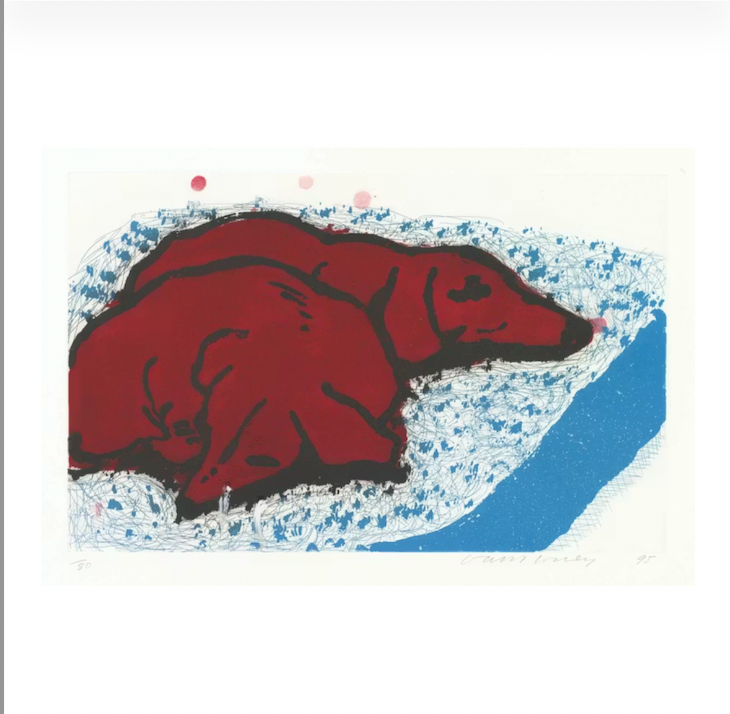
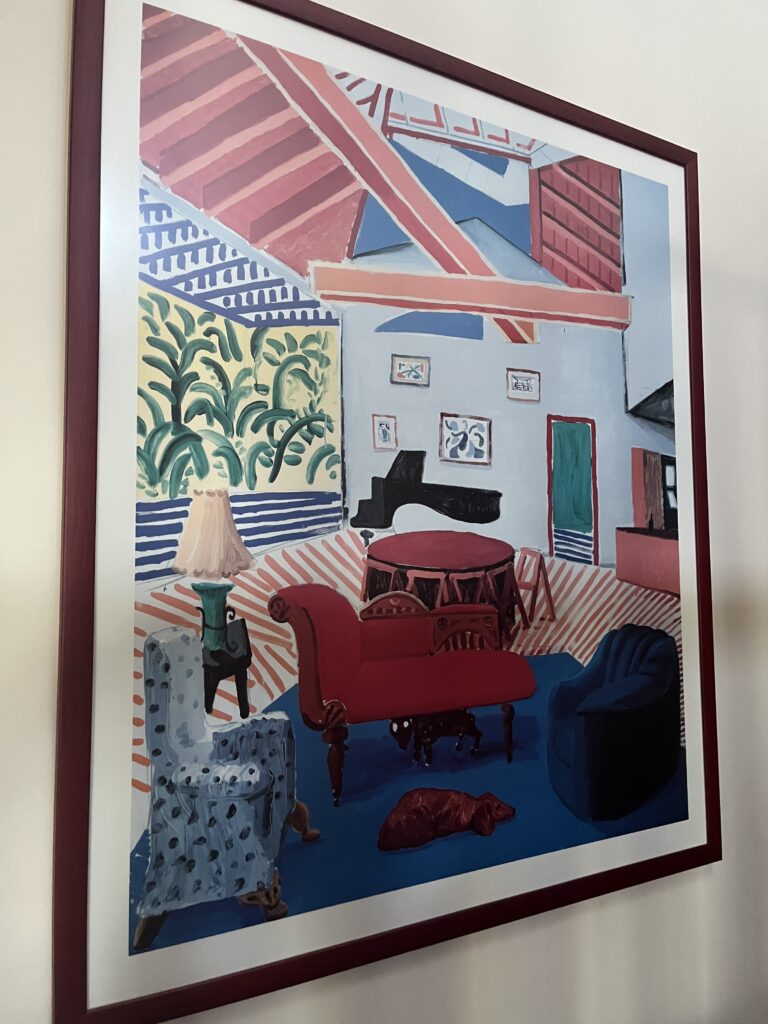
In my thirties, I bought a print of Montcalm Interior with 2 Dogs at the Art Gallery of Ontario. (or was it at the Musée de Beaux Arts?) I had enough money to get it properly framed—a maroon wooden frame and conservation glass. The print has been with me in several homes, a divorce, a procession of cats and one dog, the arrivals and departures of children, and all the other ordinary upheavals of my life. It’s still with me. Some things stay the same.
Painted in 1988, Montcalm Interior with 2 Dogs is a large, warmly lit domestic scene from Hockney’s California period. His two beloved dachshunds, Stanley and Boodgie, are central to the composition. Their relaxed poses radiate comfort and ease. Hockney painted his dogs with the same seriousness he brought to swimming pools and portraits. A dog dozing in afternoon light was as worthy of attention as anything else in the world.
His use of colour was extraordinary—bold, contrasting acrylic hues creating depth and dimension, the vibrant palette shaped by the Californian light he loved. Montcalm Interior communicates something simple: this is home. This is what a life looks like from the inside.
Born in Bradford, Yorkshire, in 1937, he was proud of his working-class origins. He arrived at the Royal College of Art in London and immediately made his mark, painting his experiences with total conviction. He moved through the world with a brave, unapologetic clarity—openly gay at a time when homosexuality was illegal in Britain. His homosexuality was woven into his work, in the tenderness of the portraits, in the bodies splashing into pools, in the intimacy of his interiors.
As artist Tracey Emin said this week, he was “a proud chain-smoking homosexual, who flew the flag higher than any other British artist.”
His creativity and curiosity led him to opera and stage design, expansive landscapes, immersive art experiences and a profusion of iPad art. During COVID, while in Normandy, he created the optimism of Spring Cannot Be Cancelled, a collection of correspondence with Martin Gayford.
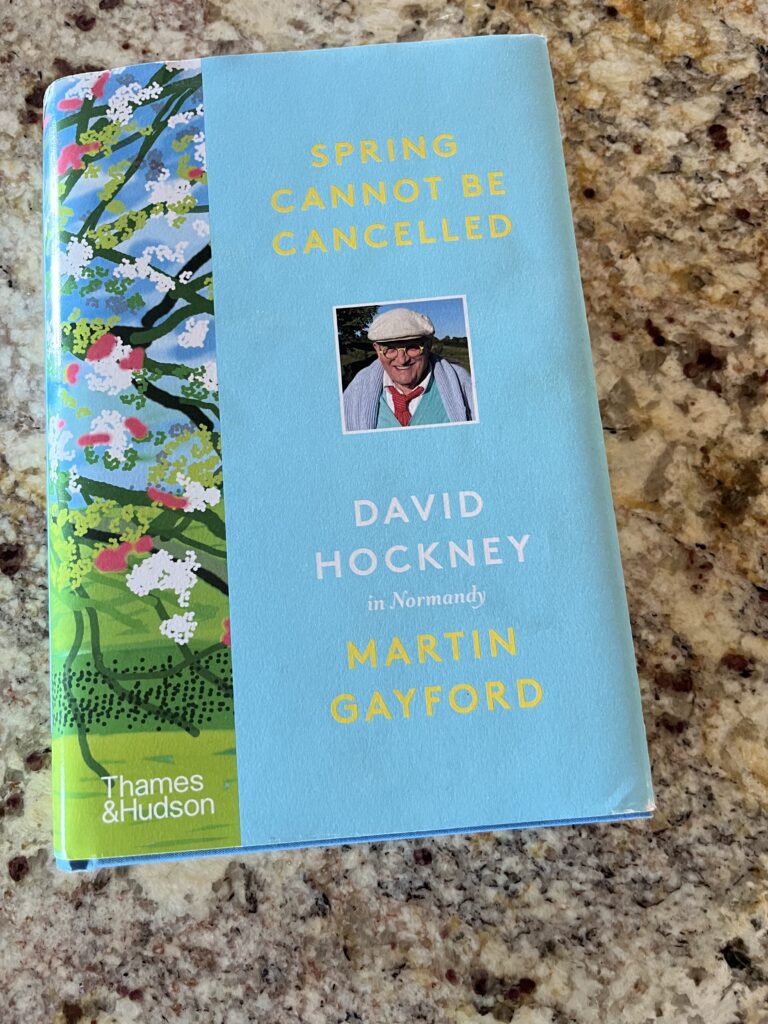
He was, at his core, a humanist. His signature phrase was Love Life—and he showed it, in every brushstroke.
My print at the bottom of the stairs is more than it was before: not just a beautiful thing, but a memento of the person who looked at the world with more love and curiosity than most.
Thank you, David.
WATERMARKED
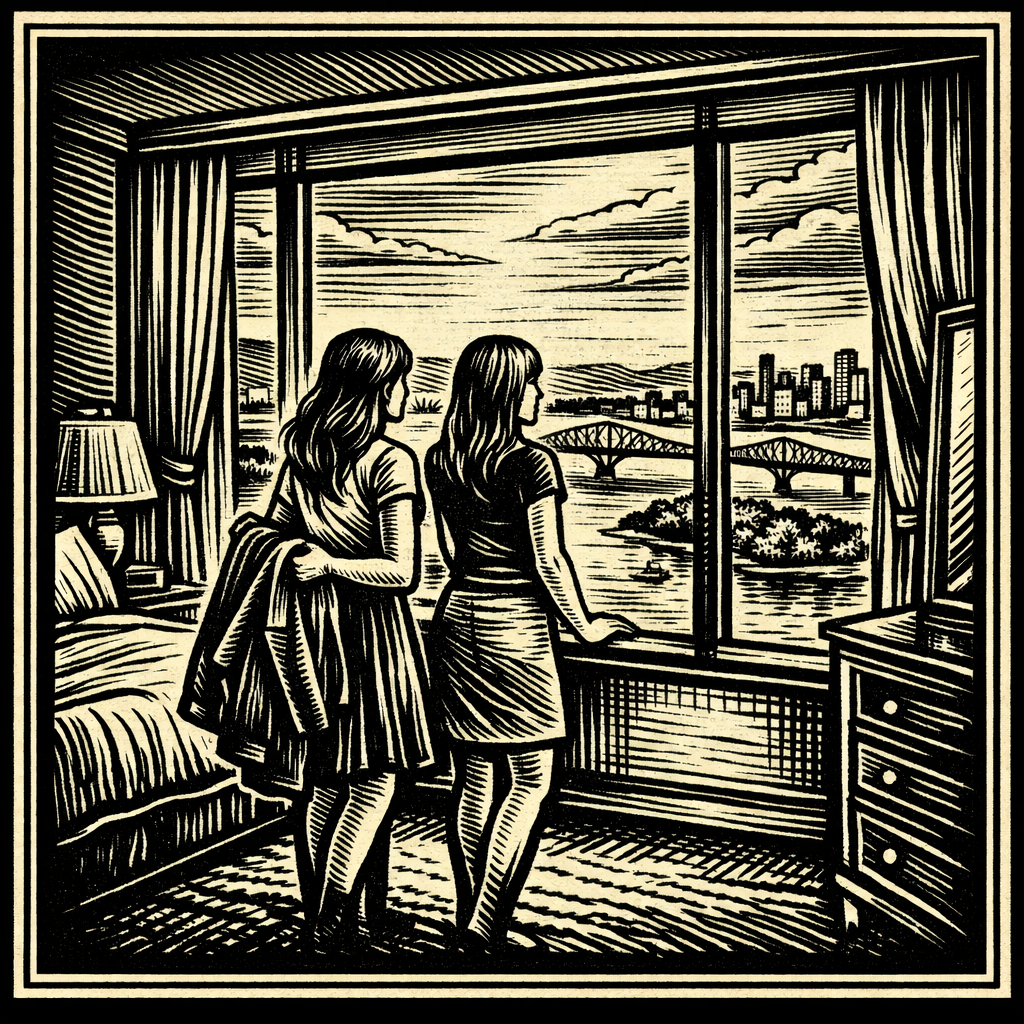
This month’s short story installment is “No One Will Be Looking At You.” Another heavy story as the sisters, Brianna and Stéphanie, cope with the death of their father and a secret is revealed. I hope you enjoy it.
Thanks for reading
I look forward to any comments. Any stories of your lost heroic figures and the reason they were of importance to you? If you think someone might enjoy this blog and my series of short stories, please share the link with them.
Thanks for this moving tribute, Carolyn. Such a loss.
Thanks Sharon and very interesting Substack project you are doing.
Truly beautiful art. Your essay was both informative and a tribute to his work. Thanks Carolyne.
Thanks Judy.