• Skip to main content
  • Skip to primary sidebar
  • Skip to footer

Carolyne J Montgomery - Reader & Writer

Carolyne Reads and Writes

  • Home
  • About
    • Socials
      • Facebook
      • Instagram
  • Watermarked Series
  • Publications & More
    • Indie Bookstores

Writing

Chapter 2: Webbed Feet

February 12, 2026 by Carolyne Montgomery Leave a Comment

Ten years later, Claire and Michael are married and working in the biology faculty at the University of Victoria. After the death of his father, Michael wants to start a family. Claire fears that the asymmetrical responsibilities of parenthood will thwart her academic ambitions as a migratory bird researcher. She is tempted to have an affair with her summer student, a former logger, during a field trip to the West Coast of Vancouver Island as they search for a rare nest of the endangered Marbled Murrelet. r

Webbed Feet

It was a Saturday afternoon in July. The bedside phone rang. Claire didn’t want to pick up. Had to be Michael, her husband, calling from Toronto. For the last five days, she’d been tripping over the jeans and T-shirt he’d dropped on the floor in the bedroom before rushing off to Ontario. Two weeks ago, his father had been found dead on the floor in his cottage, his favourite place in the world. He was in his late sixties. He’d had a second stroke, lethal this time.

After the tenth ring, she gave in and picked up. “How was the service?” she asked, slumping to the floor against the bed frame, beside the backpack she’d been loading. She flicked her damp hair from the back of her neck. Claire was going on a field trip to Carmanah-Waldran Park. Her summer student had seen a marbled murrelet nest there last spring. It was a rare opportunity to see if a pair had nested there this year.

“Dreadful.” Michael’s voice was small and distant.

The celebration of life was yesterday. She imagined him scrunching up his face, not to cry. If he cried, she’d cry, and that would be awkward. “Tell me,” she said.

“I’m at Uncle’s. I signed the papers to give the company over. I’m off the hook. He’s buying me out. And he’ll sell the house too.”

His father and uncle had built a generic pharmaceutical business from nothing. The family’s expectation was that Michael would join the company and run it. They ignored his zoology degree, his masters, his doctorate, and that, like Claire, he was faculty at U. Vic. But now his dad was dead, and Michael was free.

“When it’s all settled, we’ll have more than enough money for a house. A big house with a garden.”

There was a long pause.

“Money to start a family.”

Claire winced. They’d had that discussion. They’d had it before they married and again before they moved to Victoria. No kids. They’d confirmed it when they’d set up their apartment, a shared office and one bedroom. She’d replaced her IUD three months ago.

“I’ve got to go, Michael. Meeting Gavin in an hour. Remember the marbled murrelet nest?” 

Gavin, her summer student, was an actual logger but was completing his zoology degree in chunks. He and his dad, a retired logger, had spent many summers working in the forests of the Carmanah Valley. Last year, after large-scale environmental protests to preserve old-growth acreage, the Upper Carmanah was made into a provincial park. With the spiking of trees and the sabotage of heavy equipment by the preservationists, he’d decided to switch teams. Less dangerous, he’d said.

“Gavin. Right. Sorry to miss it.” Michael cared about the nest sighting as much as she did. The murrelet was an endangered, webbed-footed shorebird. It nested in moss-lined tree bowls in the branches of old-growth trees. Claire’s group was collecting data on the locations and characteristics of the nesting sites. Shrinking old-growth habitat made the nests even harder to find.

“Gotta go, Michael. Gotta finish packing.”

“Claire, I mean it about a baby…”

Claire pressed the off button on the handset. She was thirty-three and didn’t want a genetic surprise package complicating her life. Michael’s biological clock was shrieking like a smoke alarm with a low battery, but would Michael be doing the childcare?

Her stomach tightened as she considered her responsibilities in the next few weeks—fieldwork and teaching a summer course. A research grant application was due in two weeks. She wanted an early promotion from Assistant Professor to Associate. “Having money isn’t a good enough reason to have a child, Michael,” she shouted, kicking his T-shirt against the wall. “Kids don’t fix things, they make them more difficult.” And when she’d calmed herself, she did what she should have done five days ago. She picked up his clothes and put them in the laundry hamper.

Three hours later, Claire and Gavin bounced along a logging road in the biology department’s Land Cruiser. This was the first time they’d gone on a field trip together.

Claire was relieved that Gavin had agreed to drive. She’d be useless if they got a flat on the rutted road studded with jagged rocks. Claire imagined the momentum of a truck loaded with giant logs hurtling down the narrow road towards them. There was an occasional pull-out but otherwise it looked like they’d end up in the ditch. “Think we’ll run into a loaded truck?” 

“No logging on Saturdays, and even if it was mid-week, logging can’t be done late in the day in a dry summer like this. Too much risk of sparking and fires. Wish the tourists and campers in the parks were as careful as loggers are in preventing forest fires,” he said, wrenching the steering wheel to avoid another deep pothole.

“Tourists use this road?”

“Sure, they do. Tree huggers. Windsurfers on Nitinat Lake. Where we’re camping tonight.” He glanced at her with his gold-speckled brown eyes before darting his gaze towards the next pothole.

He was a big man, fuller than Michael, with dinner-plate-sized yet dexterous hands. Gavin had the muscular physique earned by working in the forests, where strength mattered, and carelessness could kill a friend. Claire figured he was forty-ish. Seen a lot and done a lot more than she had.

They pulled into the crowded campsite, dotted with a neon rainbow of tents, sails and boards. Not what Claire was expecting.

“The Pacheedaht First Nation runs the campground. It’s their land. We’ll set up camp away from the lake, fewer windsurfers but maybe more tree-huggers.”

Gavin pitched his dome tent at the southern border of the campground. Had he winked at her when they decided that pitching her tent wasn’t necessary for one night?

Beside them was an old-fashioned canvas cabin tent belonging to a family of two hippie-looking parents and two nearly naked toddlers. Camping with two kids in cloth diapers—a nightmare. They were mycology researchers from the University of Oregon who’d come here to catalogue some of the rare fungi and lichens of the old-growth habitat.

“How do you do it?” she asked, gesturing at the kids.

“You need a sense of humour about everything,” Arthur, the guy, said.

“You make do. You run out of stuff, and nothing ever goes as planned,” Amy, his wife, added as she smeared the grime off the eldest kid’s face with an already soiled cloth. 

“But hey, what a cool place to be tired and dirty in,” Arthur said, scooping up the younger kid. “Off to bed. This big bear is taking you to his cave, ” he growled. The kid shrieked and giggled.

Hmmm. Not how she liked to do things. 

Gavin warmed up the chili he’d brought on his well-used camp stove. Claire had mentioned that she was an unreliable cook, and he’d volunteered to bring dinner. Her fork clinked against the enamelled metal bowl as they ate sitting on a bench overlooking the lake.

“Tomorrow, I’ll take you to the hemlock that Dad and I saw last fall. It’s at the edge of the Walbran preserve beside the logging company setting,” Gavin said, scraping his plate.

“Setting?”

“Setting or opening. It’s what the logging industry calls a clearcut.”

“Got it.” Claire felt stupid, but he’d seen her confusion and was kind.

“Brought my climbing gear. If we find a nest, I’ll climb up and take pictures.”

“It’s illegal to climb trees that are potential nesting sites during the fledgling season,” Claire said.

“Yup, and each time you climb an old giant in spurs, you gotta have a good reason. They can be unstable, full of hidden rot. Not something I ever do lightly. But if we think we’ll learn something valuable, it’s worth it.”

Less than two hundred nests had been described, so finding another one would be valuable.

 “It was 1975, and I was eighteen, starting to spend the summer with my dad in the forest, when the first nest was found in Northern California. Been crazy about the little guys ever since,” Gavin said.

The absurdity of being a webbed-footed shorebird nesting fifty kilometres inland. She pictured the large moss-covered branch where the murrelet pair would incubate a solitary egg.

As they watched the sunset, Gavin told her about his four-year-old daughter, Anna. His ex-wife had custody. A wife. A child. Divorced. Another broken family. Claire had a thousand questions. When to keep or stop a marriage? How to risk having a child? She said nothing.

The next morning was cool and damp, the tent-fly dripping with a heavy dew. They left the campsite in darkness, tiptoeing past their sleeping neighbours. They had an hour to hike to the tree before sunrise at five-thirty. With any luck, they’d spot the adult murrelets leaving the nest or returning to it. The parents fed the fledglings the small fish they caught at the shore.

Claire’s research group was preparing a report to petition the BC government to protect the old-growth habitat. The marbled murrelet wasn’t the only species of concern. There were lizards, banana slugs and others dependent on these ancient forests. As the path narrowed, her headlight flickered on the rough bark of the elderly giants.

“Headlamp off, Claire. Let your eyes adjust to the dark. You’ll see more, and we won’t disturb the critters.” She scrolled through the strobe function and all the rest before she found the off button. Smooth. She wanted him to think of her as capable, a respected teacher and academic who was comfortable with being in the field. She panted as she scuttled along the spongy forest floor behind Gavin’s sure strides. Past the huckleberry and the salmonberry bushes and past the sword ferns. Her hiking boots felt flimsy as she sank into the decaying debris with each step. The distant gurgle of a stream penetrated the silence. She inhaled the earthy smell of the decaying forest.

Had she and Gavin had a moment last night? She’d been too buzzed to fall asleep curled up in her sleeping bag on her side of the tent. And when he rustled into his bag beside her, his shoulder brushed against her upper arm. She’d lain awake, listening to his breathing, her skin vibrating where he’d touched her. There was the musky scent of dope. A secret nightcap. But if he’d offered, she’d have refused. She disapproved of smoking of any sort. She carefully maintained the space between them. Finally, she sank into sleep accompanied by the drone of the mosquitoes and the scent of her bug spray.

Shadowy strands of lichen drooping from the trees lined the narrow path. Gavin led her along a narrower deer path where the undergrowth thinned to a few ferns. The mosses muffled their footsteps.

Gavin paused in a clearing by the creek bed they’d been following. The forest was studded with massive, moss-covered cedar trunks, fallen warriors who’d served their time. The rotting trunks nursed new tree shoots, ferns, and strangely striped and rippled fungi. He looked back at her. “Not much farther. You can make out some hemlocks just south of this debris.”

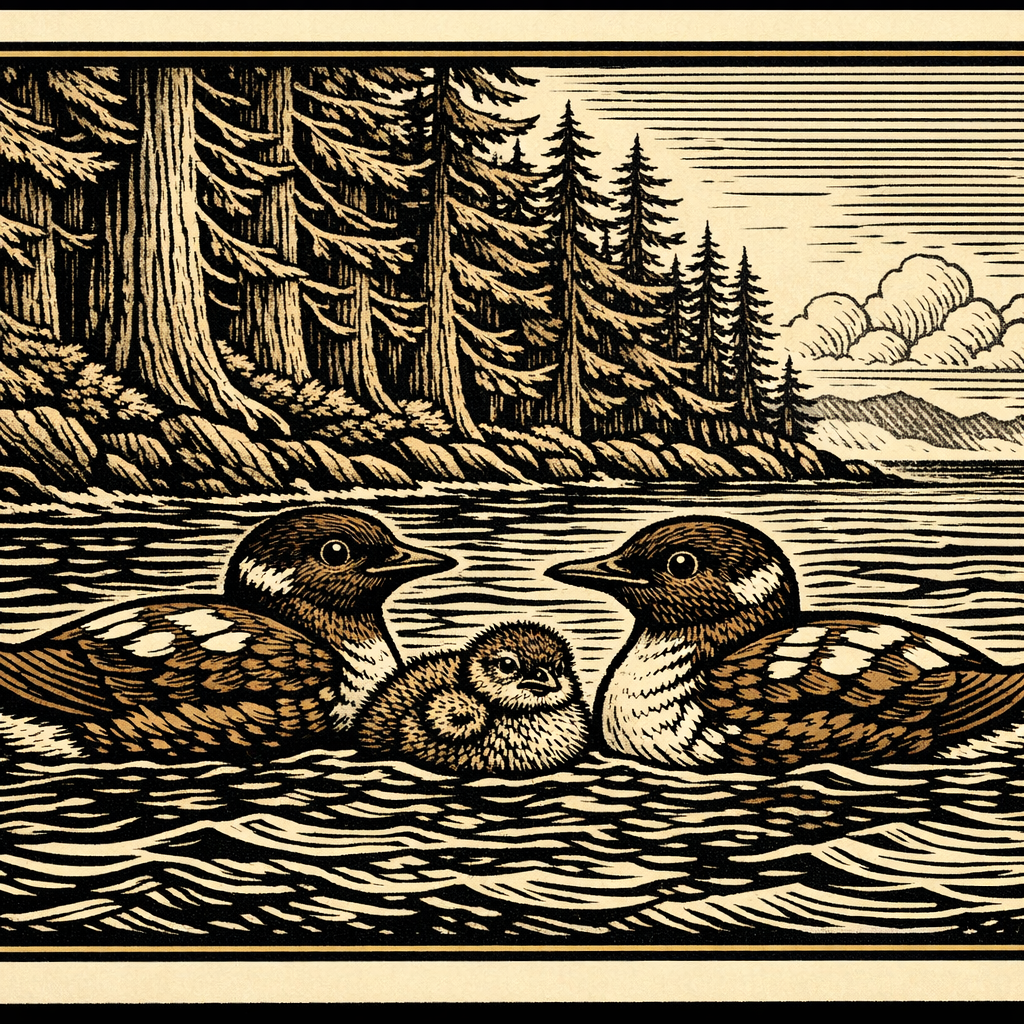
Claire strained to hear the short, sharp keer-keer—the call of the murrelet. She’d first heard the call during the banding project in May on the coast—pairs of chubby, mottled birds bobbing on the surf, their webbed feet paddling beneath them. She took a gulp from her Nalgene bottle, wishing she’d brought more water. Her thighs were burning, and sweat dripped down her back. She inhaled the thick, moist air. Gavin looked relaxed, carrying all his climbing gear as if he was cruising the mall to buy a birthday card.

“How can you be so sure?”

“The angle of the slopes and how high we are in the valley. The species adjacencies–cedar, hemlock, spruce, and the mighty Doug fir, the tree of ship masts.” He held up a wax-paper-wrapped sandwich he’d pulled out of his pack. “Peanut butter and honey?” The smile on his toffee-coloured face was broad and inviting. 

“You’re a saint. Was about to gnaw off my arm.” She’d been so distracted when Gavin had picked her up, that she’d forgotten her sack of granola bars and trail mix on the kitchen counter. She leant forward, grazing her lips against his fingers as she bit into the sandwich. Her lips burned as the rest of her shivered in the dampness of her sweat.

She hadn’t had sex in over a month. These days, she and Michael got the job done but it had become an occasional and boring morning ritual. Michael was as bored as she was. How did the couple with the two toddlers manage their sex lives when making do is the norm? Gavin’s voice interrupted her thoughts.

He pointed upwards. “About twenty-five meters up this slope.”  He squatted down and gathered up his gear. Claire scurried after him, breathing heavily as they climbed up the valley from the creek bed. Dim columns of amber light filtered through the opening canopy. The mossy carpet of the forest floor was a thousand shades of green. But she was struggling, falling behind as she clambered over or squeezed under the large, fallen trees.

“Stop. Picture time.” She fumbled with her camera and focused on a wavy coral fungus glowing in the breaking dawn. So beautiful. So complex.

“Up there. Look.” He pointed at a gnarled giant.

The tree was too tall to identify the distinctive tilted crown of a hemlock. She didn’t dare ask. High up was a large horizontal branch, separate from the others. An easy landing pad for those webbed-footed fliers. How high she couldn’t guess, but all the papers said typically one hundred and fifty feet.

They drew closer to the deeply furled bark of the massive trunk. The broad, moss-covered branch was perfect—like the nest locations her colleagues described on the Sunshine Coast. Gavin stopped at the base of the tree.

“There, Claire. Look.” He pointed at the spongy ground.

She startled. The stiff body of a fluffy ginger-coloured fledgling lay there, its webbed feet sticking up into the air. Her heart crumpled in her chest. Gravity, thought Claire, staring at the precious thing. The chick was a few weeks old, the plumage too immature for it to have made that crucial first flight to the ocean. Were grieving parents watching them from the nest, or was this baby already forgotten?

Gavin touched her shoulder. “Want me to climb up?”

“Don’t. We’d be trespassing. It’s their home.” Her voice was quiet but pleading.

“I can get up there in minutes.” He was holding her shoulder more firmly. And she liked it.

“No. It’s wrong. Get the GPS coordinates. We’ll come back next year.”

“Easy enough, but I’m disappointed not to have you watch me climb.” The fine lines around his eyes deepened as he smiled at her.

“There’ll be another time.” She moved out from under his touch. What chance did that little bird with its stupid webbed feet have? Without rehearsal, the fledgling had to fly from its nest to the shoreline, miles away, to fish, to eat, to live. The expanding patches of clearcuts were encroaching on its home. And if the crows and jays didn’t destroy the egg or fledgling in the forest, plastic fishing debris or oil spills could kill it in the ocean. “It’s all so unlikely. Improbable that any chick survives.”

“You have to believe in the wisdom of Mother Nature,” Gavin said. He looked up at the trunk of the massive tree. “I’ll take some pictures, and then we’ll collect the specimen,” she said.

Claire fumbled with her camera. relying on the autofocus as she took the requisite photos of the bird and the tree. Gavin knelt beside the corpse and pulled a plastic bag out of his jacket pocket. He cradled the chick in the palm of his massive hand for a second before depositing it into the sample bag.

“Mother Nature’s a real bitch,” she said.

“You’re mad because you expect things to be fair.” He got up and reached forward to touch her shoulder. It would have been comforting.

“Guess you found out about unfairness with your daughter,” she said as she pulled back.

“Ouch. Low blow.” He stood still with an indulgent look on his face, like he was used to petty swipes from angry women. “Yes. Unfair. I had to move on. Need help with your pack? ”

“No, I’ve got it.” Her shoulders were tight, and her skin chafed. She’d have loved his help.

It was harder hiking out than it had been hiking in. Claire struggled to keep up with Gavin’s unwavering stride and her mouth was dry. She’d run out of water but didn’t want to let him know. She lost her footing several times as they picked their way back down to the valley floor. Next time, she’d bring hiking poles and extra socks.

The image of the still, stiff fledgling, resting on the forest floor, distressed her. A dead baby. All that breeding and brooding for nothing. And the harsh necessity of the fledgling’s flight to the shore for survival. Gavin had been disappointed when she’d insisted he shouldn’t climb the old hemlock. Maybe he should have. She could have published a brief report if she’d taken a picture of the nest. She’d been cruel to bring up Gavin’s separation from his daughter. They reached the camp in time to drive back out along the logging road and home. They didn’t talk much.

It was late on Sunday night when Claire got back to the apartment in Victoria. She had her summer course to teach in the morning. She took a cool shower and crawled naked into bed. It was too hot for a T-shirt. The phone rang.

“Can’t sleep. You.”

“We just got back. It was so sad, Michael. We found a dead fledgling. All that energy and effort of the parents to end up with a dead baby, fallen out of the nest.”

“It’s Mother Nature, Claire.”

“She’s a right bitch. I don’t think I could ever do it.”

“Do what Claire.”

“Risk it all. Pregnancy, delivery and then raising a child. I don’t get how my mother ever did it.”

“Couples find a way. It’s done out of love, Claire.”

“Easy for you to say, Michael. It’s me who’d be stuck with the consequences—physically, professionally.”

She imagined being pregnant at work, overhearing vulgar asides about Michael’s virility, and unpleasant expressions—showing and expecting. She’d have to endure unwanted advice, touching and worse, unwanted side-lining at work. Did her contract even have maternity benefits? Neither of her two female colleagues had children.

“I can’t argue with that, Claire. But only we can decide if it’s right for us to have a baby.”

How do couples decide the right thing, the right amount, or the right time for either partner to be giving or receiving? Did she owe Michael? And there wasn’t anything—not her research, not her colleagues and not her students—that she was willing to give up. “I’m just upset about the murrelet and life. It’s not fair,” she said.

“I know. Let’s talk in the morning.”

As she hung up the phone, she glanced at the bedside table. Ten o’clock. Not too late to call Gavin and make sure he’d put the fledgling in the correct research freezer. She’d get a PCR—DNA analysis on the specimen. This could be a publication.
Filed Under: Watermarked Series, Writing Tagged With: Interlinked Short Story Collection, Writing

It’s A Dickens

February 12, 2026 by Carolyne Montgomery Leave a Comment

Watermarked

Welcome to the February edition of my short story collection, Watermarked. This month’s story, “Webbed Feet,” is a tale of an endangered bird, the marbled murrelet and Claire and Michael’s threatened marriage. I hope you enjoy this installment. Please feel free to share it with anyone who might be interested.

Dickensian Echoes in Recent Reading

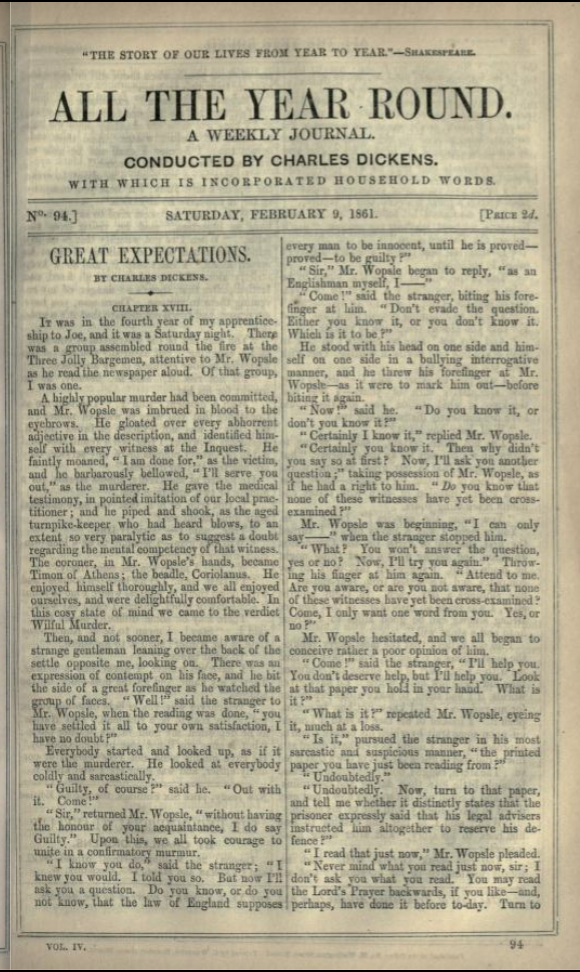
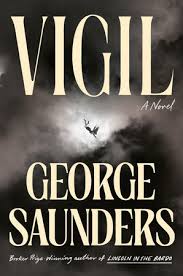
George Saunders’ Vigil

Many of you know that I’m a George Saunders fan, a member of his Substack Story Club and will tell anyone who will listen to read A Swim in the Pond in the Rain. Ezra Kline’s interview with Saunders discusses the moral dimensions, anger, ambition and sin in Vigil.

I tucked into a library copy of Vigil. At under two hundred pages, you could make the case that it’s more of a novella. Despite being number one on the New York Times best-seller list this week, it has received mixed reviews. If you enjoyed Lincoln in the Bardo, then Vigil may be your cup of tea.

Spoilers Follow

Vigil riffs on Charles Dickens novella, A Christmas Carol, which the Story Club did a close read of during Christmas 2024. The Ebenezer Scrooge character, an unlikeable protagonist, K.J. Boone,is a dying billionaire oil tycoon and climate denier. He is visited on his deathbed (not even in the best bedroom of his mansion) by spirits, including a repentant French inventor of the combustion engine who demands that Boone confront his past actions. In Vigil’s speculative world, guiding spirits function as a type of death doulas, returning to the earthly realm to comfort the dying as they transition, helping them acknowledge and repent for their sins. But despite a noisy cast of various spirits challenging the oil tycoon, there is little movement towards repentance.

The guiding spirit in Vigil is Jill “Doll” Blaine, a pro at the death-doula business, having guided over 300 souls to the other realm. How Victorian and a playfully Dickensian character name, invoking chillblains—the damp and cold and the sulfuric coal fires scorching the damp wool clothing and exposed skin placed before them.

The interesting part of the story for me was the backstory of Jill “Doll” Blaine, how and when she died. As she waits for her recalcitrant charge to die, she visits her old town and discovers some difficult-to-accept changes. She is tempted to punish the person responsible for her young adult death. These actions are prohibited in the speculative world’s rules for visiting spirits.

This is not a simple redemption, happily-ever-after story like A Christmas Carol, where, after the ghosts’ visitation, the transformed Ebenezer Scrooge makes amends. Can people be held responsible for their harmful actions if they believed they were right? How much compassion does an unrepentant person deserve? Give the book a try and see what you think.

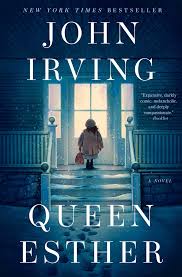
John Irving’s Queen Esther

Before Vigil, I read John Irving’s sixteenth novel, Queen Esther. Irving, another Dickens admirer, crafts a complex family saga centred on the coming-of-age of Adam Brewster and the mystery of his biological mother, Queen Esther. Themes of adoption, identity, anti-Semitism, and family structure echo Dickens’ influence.

Adam and his grandfather read alternating chapters of Great Expectations as a moral guide. Adam is a seeker like Pip. Like the Great Expectations character, Joe Gargery, Esther lurks in the background, steadfast in her Zionist ideology, influencing Adam’s expectations and identity.

While the coming-of-age struggles, quirky characters, and atypical families are classic John Irving (including wrestlers and wrestling), I found some of the elements tiresome—cafe playlists, the dog, the thugs. The plot centres on Adam fathering a child to avoid the American draft of the Vietnam War. The themes of abandonment, poverty and benefaction are eternal.

Barbara Kingsolver’s Demon Copperhead

Dickens most autobiographical book, David Copperfield, was revisited thematically in the coming-of-age journey of Damon Fields in Barbara Kingsolver’s Pulitzer Prize-winning Demon Copperhead. I’m sorry to say that I didn’t get past the oppressive hardships of the first one hundred pages. Perhaps I should try again?

But I was inspired to watch the 2020 film The Personal History of David Copperfield starring Dev Patel (as David Copperfield), Tilda Swinton (as Betsey Trotwood), and Hugh Laurie (as Mr Dick). Because who doesn’t love those actors?

A Quick Splash into the Dickens Pond (but not in the rain)

Dickens was a master of self-publishing and serialized storytelling. His journals Household Words and All the Year Round were hugely popular, becoming, in Dickens’s words, “a good property” that yielded “a good round profit.” Great Expectations, his thirteenth novel, was serialized in weekly installments in All the Year Round.

 He published A Christmas Carol, one of his five Christmas novellas, in a range from a collector-worthy, leather-bound, gold-embossed limited edition to mass-market prints.

Like many creatives, Dickens’ personal life was tarnished. At age 45, he fell in love with an eighteen-year-old actress and tried (unsuccessfully) to have his wife, Catherine, the mother of his ten children, institutionalized for a mental disorder. Can this misdeed be countered by his innumerable acts of philanthropy and activism for the basic rights of the poor? Can one separate the art from the artist?

As in Shakespeare, the humanity of the characters and conflicts in Dickens works continue to influence culture and literature in the English-speaking world and are always worth revisiting.

Until Next Time

Happy reading and writing. I look forward to any comments. See you in March for the third installment of my colllection.

Filed Under: Uncategorized, What I'm Reading, Writing Tagged With: Barbara Kingsolver, Demon Copperhead, Dickens, Irving, Queen Esther, Saunders, Vigil, Writing

Watermarked Series

January 12, 2026 by Carolyne Montgomery

Chapter 1: The August Regatta

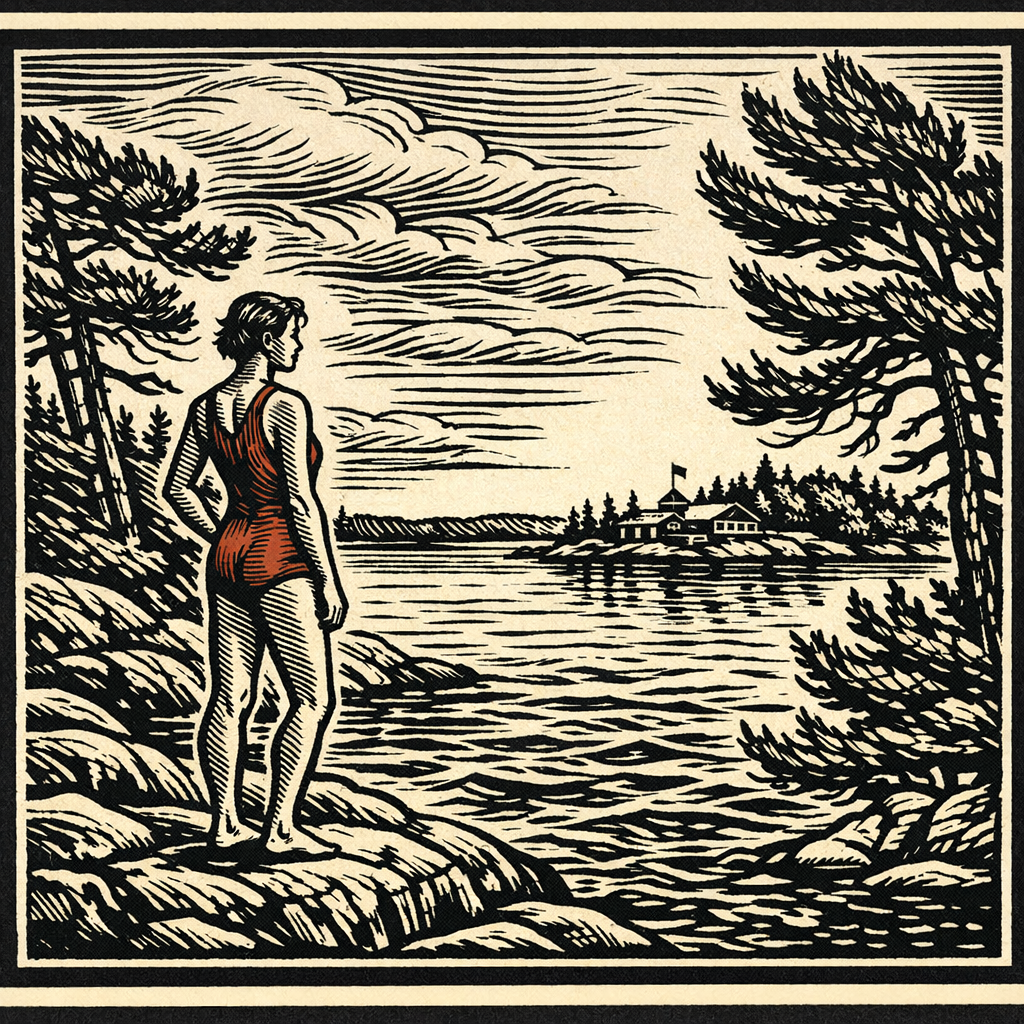
Swimmer at Point au Baril

Claire, a scholarship-dependent varsity swimmer, falls in love with her TA, Michael. She’s attracted to his kindness and wealth but repelled by his entitlement when he pushes her to compete in the annual regatta at Point-Au-Baril. She vows to remain independent of him.

The August Regatta

Claire stood on the granite outcropping overlooking the rippled bay and tugged at the bottom of her bathing suit. Her boyfriend, Michael, had insisted she compete in the Pointe-to-Pointe swim of the club’s August Regatta. A small breeze had come up. Goosebumps erupted over her arms and legs. She’d have brought her warm-up coat, but was already too conspicuous with her swim team cap and suit.

This morning, just after sunrise, she’d plunged off the cottage dock into the glossy water and swum for herself—no coaches, no clocks, no competition—only her body slipping through the velvet cool.

She swung her arms to loosen her shoulders and surveyed the cluster of young women milling around—a patchwork of bikinis, sturdy one-pieces, sleek wet suits, even a flashy tri-suit. Claire had trained hard these last three years to stay on the swim team. If she got cut, that would be it for university. Did any of these chittering ladies have that kind of pressure? No, they likely lounged about in unpaid summer internships, took gap years and yoga retreats in Bali.

The morning sun lit up the jagged points of the pines on the opposite point. She scanned the string of orange buoys marking the two-kilometer distance. If she got out in front, she expected to win and in a big way.

When Claire was nine, her mother insisted she join the local swim club. “You’re better than all those girls,” her mother said, pushing her out the door. But those girls were kind to her, sharing their fruit leather snacks with her and lending her goggles when hers were lost. She knew not to tell her mother how hard she struggled to get the best times. Instead, she concentrated on not losing her bus pass or the plastic wristwatch her mother had given her for her birthday.

On the July morning of her first meet, she shook more from fear than cold as she waited on the edge of the outdoor pool. She came first in her one-hundred-meter freestyle heat and then, surprising everyone especially herself, placed second in the final. A series of wins in high school led to the swimming scholarship from Guelph. Despite all those early mornings, all that training, she hadn’t been fast enough for Toronto or UBC.

“You got into university. No one cares which one.” her mother said.

Claire cared. The best swimmers were in British Columbia, and she hadn’t made it. 

But that was how she met Michael, in third year by the water fountain on the pool deck. Most mornings, he splashed away with his awkward cross-over stroke in the recreation lane. And when he didn’t show up, she missed him.

“You’re here a lot,” she said.

“My only good habit. Helps me think.”

Michael was scrawny like a crow in winter, unlike the muscular varsity swimmers. The week before, he’d offered Claire his spare towel without asking why she’d forgotten hers. It was obvious to her that he must have more good habits.

A few weeks after that, Claire skipped practice to go on her third-year ornithology course field trip. They piled out of the van at Long Point, on the shore of Lake Erie and Michael recognized her. “Hello, you.”

“Dryland workout today.” She pointed at the rutted puddle full of rotting leaves at her feet. He laughed. She zipped up her jacket and pulled her toque further down against the yowling wind. “Why are you here?”

“TA in ornithology. Doing my Masters. Kathleen, my mom, was a mad birder. I caught her obsession.”

Claire grinned. She hoped she hadn’t caught anything from her mother, especially not her fierceness or cruel criticisms. They tromped through the muck to a viewing platform overlooking the marsh. Despite wearing her thickest wool socks, her feet were freezing in her gumboots. Her assignment was to identify species of duck. Simple, but she didn’t know a Gadwall from a Wigeon. Other than a few gaudy drakes, the markings on most birds were confusing shades of brown.

“Look. Look there.” Michael grabbed her arm and shoved his binoculars at her. “Two Sandhill cranes. They’ve no business being here yet.”

Claire located the pair of prehistoric-looking birds in the grass stubble: two overfed grey-scale flamingos except for the crimson slash along the top of their heads—the biggest birds she’d ever seen.

On the drive back, Michael plunked down beside her in the van. Her hands and toes were freezing, and warmth radiated from his body. She wished he’d move even half an inch closer so their forearms might brush against each other. As Michael burbled on about the different crane species, Claire worried about her paper due in three days. How to get it done without sacrificing another practice? She needed to start taking her courses more seriously if she was going to get into grad school.

Michael walked her back to her dorm. “My binoculars. I must have left them at the platform,” he said searching his pack.

“Should we go back?” she asked.

“They’re waterproof. They’re excellent. Some lucky birder will pick them up.”

And for days afterward, Claire thought about it. The privilege of being able to abandon an expensive item like binoculars. No consequences for carelessness other than the hassle of shopping for new ones. 

In Grade Five, she’d left her soggy swimming bag on the bus. Her suit, her goggles and towel, lost. Her mother’s punishing silence for three days until a man phoned to say he’d found it.

Michael wasn’t afraid of losing things. He could afford to be good and generous. Claire wanted to be good and generous too, but even if she could afford those binoculars, she could never afford to give them away. She had to protect the little she owned: her fitness, her discipline, her determination.

After Friday afternoon dryland practice, Claire trudged to her usual carrel on the library’s second floor. Her Ecology professor had given her an extension on her paper. She was scribbling away on a yellow legal pad when she heard a rustling. She looked up. Michael.

“This is where you said you like to study.” There was an eagerness in his voice. “I’ve brought you a coffee.”

Their hands touched as he passed her the Styrofoam cup. She was almost twenty-one and this was the first time anyone had bought her a coffee.

Four months passed and last Tuesday they arrived at Point-au-Baril. She was marooned on a four-billion-year-old chunk of red and charcoal granite. But she’d befriended the waters of Georgian Bay and swam in it several times a day.

A mosaic of islands dotted the bay. Wind-tortured white pines gripped the pockets in the rocks with their gnarled roots. Each granite mound was capped with a weathered clapboard shack fortified by nostalgia and bug-spit. It didn’t make sense to Claire that these wealthy people loved their ramshackle huts. Boat-only access and hauling propane tanks energized them.

When they first arrived, Claire stood in front of the memory wall in Michael’s family cottage. Regatta photos from the past years covered the knotty pine. Gold and silver medallions dangling from faded red and white ribbons hung in clusters from crooked nails. Claire peered at the one framed picture–Kathleen, at the 1963 Pointe-to-Pointe swim of the annual regatta, standing beside by a laughing, toddler Michael. She wore a broad smile below her Jackie-O sunglasses, a vertically striped one-piece and her gold first-place medal. Claire learned that Kathleen won in her age-group every year until she got sick. 

Kathleen had passed away three years ago from ovarian cancer. Michael spoke of her as though she’d just gone outside to pick tomatoes from her summer garden. When she was too sick to travel to the cottage, Michael brought her pinecones, rose-speckled pebbles or a hawk’s feather to the hospice. He’d held the scraps up to her nose and she’d inhaled the scents of the bay. Claire loved how devoted he was to her memory. She wanted to love her mother that much.

Michael slipped beside Claire and took her hands. He grazed his lips against the soft skin behind her ear. “Tomorrow’s race is the third regatta without Kathleen,” he said. “You should join in. The Sumners have always come home with a medal or two.”

Claire ran her tongue across her teeth and swallowed. Join in? She wasn’t a Sumner, far from it. She didn’t belong. The Pointe-to-Pointe swim was not her tradition, it was his mother’s. She’d be trespassing. Trying to replace Kathleen. Trying to please Michael. Swimming was a job. She swam to win and to keep her place on the team, so her tuition got paid. “You do the swim if it’s so important to you?”

“Claire, you’ve seen me swim. One of Kathleen’s great disappointments.”

Claire squeezed her lips together. Michael and his regatta. Michael with his token summer job at his dad’s pharmaceutical company—a career waiting for him no matter what. He could afford to play all summer and fret about his goddam traditions. “I’ll think about it, Michael.” 

She needed to swim. She ran down the dock, dove into the smooth water and struck out toward the neighbouring island. A cascade of criticisms flooded her brain–too selfish, too stubborn, too insensitive. Her arms and legs moved rhythmically. With each stroke, her anger trickled from her body into the vastness of the bay. She thought about the unknown depths beneath her, so unlike the rigid dimensions and hard bottom of the pool. In the golden-green light, swirling bright bubbles trailed away from the tips of her fingers. She stopped, glanced back at Michael’s shrinking figure on the shore and waved to him. He blew her a kiss. Maybe he did understand how often she felt like she was underwater, holding her breath for too long.

She paddled back lazily and pulled herself onto the rocks, rocks as ancient as the oxygen she was breathing. She flattened her dripping back against the sun-warmed granite and stared into the sky. High cirrus clouds swept inshore from the expanse of Lake Huron, and rising swells smacked against the stone. A yellow maple leaf crinkled past her and tumbled into the waves. She pressed her hand onto a seam of rose-speckled quartz. The warmth and a benevolent hum from the rock penetrated her fingers. An unfamiliar relaxation seeped into her body. She woke when Michael called from the steps of the cottage, “Lunch is ready!”

After lunch, Claire found a dusty pair of binoculars on the windowsill. Probably Kathleen’s. She focused on a bird perching on a tree on the island she’d swum to.

“What do you think?” Michael asked as he placed his arm around her waist, careful not to disturb her view.

“Yellowbelly. Crested. And pointed beak.”

“Has to be a Great-Crested Flycatcher,” he said.

“Too bad we can’t hear the call from this far off.” She passed him the glasses.

“Yup. Totally a Flycatcher.” He picked up his notebook from the kitchen table to record the sighting. His notebook was the same as the scruffy, buff, field journals she’d seen on the bookshelf beside Kathleen’s battered Audubons. “Let’s take the canoe out later and see what else we can spot.” 

“Yes, the canoe. Quiet. Perfect.” She’d never been in one. And she could have told him that. He wouldn’t have minded. She was the one who cared that she’d never had the opportunity.

That night, they walked to the neighbours, the Wrights. Michael had chosen one of Kathleen’s flowered sundresses from the closet that still contained her things. “You’ll look great in this.”

The silky cotton swirled about Claire as she faked a pirouette. She’d never owned such a beautiful thing. “Will I need one of those?” She pointed at the jewel-coloured, woollen shawls hung neatly beside the dresses.

“Nah. It’s not that cold.”

They flip-flopped across the furrowed rocks to a long trestle table set with linens and china. An elderly stick of a woman in a billowing, embroidered caftan offered her hand. “Do call me Alice, dear.” She pointed Claire to a seat between two ruddy-faced men. Too far from either Michael or his childhood friend whose name she’d forgotten.

Claire thought about May, her best friend. She hadn’t heard from her since first year. After high school, May went straight to work in a Verdun credit union, got pregnant and married the father. In that last Christmas card, she’d announced she was pregnant again–twins. Even if they did get together–what would they talk about–that one summer they went to the YWCA day camp together or the nail polish they’d shoplifted from the Rossy?

The voices of her two bulky neighbours collided in front of her as they argued about a boating accident—rye, propellers, and rocks. She compressed herself into the chair and stared beyond their pantomiming arms at the deepening plums and indigos in the western sky. She regretted not grabbing a shawl.

Alice’s voice chimed over them. “Claire dear, where do your people come from?”

“Montreal. Verdun.”

The men pushed their folding chairs back and continued interrupting each other behind her.

“Then how on earth did you and Michael meet?” Alice Wright said, her unnaturally white teeth flashing in the candlelight.

“Birds. Zoology at Guelph. Michael is my TA.” She wasn’t going to get into the swimming scholarship bit.

Alice bent over and dropped a piece of her steak into the maw of the greying black lab collapsed over her Birkenstocks. “Good Blackie. Good dog.” She straightened up in her chair and fluttered her hands over the chunky amber necklace that drooped from her thin neck. “Birds. Of course, Kathleen was an expert birder, wasn’t she?”

A flitting bat distracted Claire and when she looked back over the weeping candles, Alice was talking to her neighbour.

Claire gulped her wine and thought about the upcoming Commonwealth Games in Brisbane. She hadn’t made the cut, but her teammate Anne had. Anne was a breaststroker and Claire was freestyle, harder to qualify in. Claire had never been invited to Anne’s place on Lake Joseph in the Muskokas but imagined it was like this but with grander homes and bigger boats.

With her times, Claire should start thinking less about swimming and more about the Masters in Ecology. She’d written letters to Waterloo, Dalhousie and even Concordia, where she could live with her mom. The summer job researching monarch butterfly habitat would help her application. But even with a TA position, she’d have to rely on pool jobs—teaching, coaching and guarding—to afford it.

It was darker now and the faces around the table were softer in the candlelight. Claire hugged her arms around her chest and tried not to shiver. Mrs. Wright announced it was time to change seats and that Claire would sit beside her. Her gold bracelets jangled as she served each of the twelve guests, a piece of berry pie meticulously topped with ice cream. She snapped off a piece of the piecrust from her plate and the slobbering dog snatched it out of her hand.

She turned to Claire. “You know dear, it was thirty years ago, Dennis brought me to this island and presented me to his parents at this very table.” The amber of her necklace glowed in the candlelight. “I was a spoiled, horse-mad, foolish girl with Olympic ambitions.” She gestured down the table at her husband, seated at the other end, but didn’t catch his eye. “Our marriage works because Dennis and I agree that he’s very good to me and that I’m very good to him.” Her voice hitched. She paused and sipped her seltzer water.

No wonder they agreed. They could afford cleaners, dog walkers and cooks. There was nothing left to argue about other than the dinner menu.

The chiming of the forks on the porcelain plates competed with the chorus of the crickets. Mrs. Wright cleared her throat. “Would anyone care for more pie?” 

Then Michael stood up and announced to everyone. “Claire’s swimming the Pointe-to-Pointe tomorrow. She’ll be awesome.”

Michael had promised that after dinner, they’d stay up and watch the last of the Perseids’ showers. He fetched sleeping bags from the cabin, and they lay down on the rock with a gap between them. Overhead, the Milky Way smeared itself across the sky and flaming arrows of asteroid fragments streaked passed them. Finally, she spoke. “I didn’t agree to swim.”

“It’s nothing for you.”

“You don’t know what’s nothing for me.” Once more she was being asked to perform but this time for her boyfriend’s satisfaction. “Let’s go back.”

Their headlamps flickered on the fool’s gold in the granite and the chirping insects. Slapping waves filled the silence as they walked to the cottage.

Claire and Michael lay back-to-back in bed, without touching. After a while, she burrowed her wet cheek against Michael’s back. Was she being unfair? Maybe it should be nothing for her? She swatted at the mosquito droning by her ear. “OK. I’ll do it. I’ll do it, but only if we agree that I’ll never have to do it again.”

“I don’t get it,” he said.

“I mean, if we’re still together next summer. Let’s not come here. Let’s go somewhere different.”

Michael rolled over and pulled her towards him. They lay there, arms and legs entangled in their familiar way. The dry summer smell of the cabin mingled with the scent of his skin.

“I’ve always come here,” Michael said.

“I know.”

He straightened his limbs and turned away. She didn’t reach for him but wondered if they would be together next year. She almost said something, but his breathing had become deeper and more regular.

The sun was higher now and the swimmers formed a line along the edge of the dock at the start line. Groups of spectators congregated at various points to watch the race. She searched for Michael and found his green canoe in the spotting flotilla—volunteers in canoes, kayaks and rowboats that kept track of stragglers and swimmers in trouble. 

Sparkles of light reflecting from minerals in the granite on the far point winked at her. She wished her mother had seen her race, even once. It was nearly nine o’clock. The muscles in the back of her neck stiffened the way they did at every event. She reminded herself of the promise she’d extracted from Michael last night. Her arms coiled into readiness as she strained to hear the starter’s pistol over the thudding of her heart.

Immediately, Claire was ahead, in front of the milling legs and arms behind her. She was alone with her body in the lake–no chlorine, no flip turns and no echoing shouts. The soapy touch of the water welcomed her arms and legs as she parted its rippled surface. It whispered to her. “You’re OK. You’re OK. You’re OK.”

And she would be OK if things didn’t always depend on winning. If she didn’t have to worry about floundering or drowning.

She glanced up to mark her position in the course and saw another swimmer accelerating past on her left. One hundred meters remained. Claire fired up every fibre of her muscles and sprinted forward. Water foamed around her as she gasped for breath, but the girl was stronger. The gap widened. Second place. Damn. Damn. Damn. Second.

She hauled her shaking body onto the rocks. No strength to stand. Cheering and clapping sounded around her. Michael wrapped the beach towel around her shoulders and helped her to her feet. “Kathleen would have been so proud…”

She stole a glance at the winner. “Who’s that, Michael?”

“Joanie K. From the North Islands. Did not expect to see her here. She trains at UCLA, likely to qualify for the L.A. Olympics.”

Claire clutched her arms tightly to her sides as the club president placed the ribboned medal over her head. She forced a polite smile and muttered a thank-you. She shook the hand of the winner and didn’t cry.

That afternoon, Claire led Michael to the place on the rocks where she’d been the day before. They lay down together and stared up at the scudding clouds. She took his fingers and flattened them against the seam of pink-speckled quartz. “Can you feel the hum, Michael?”

“Sure I can.”

But Claire could see that he couldn’t. He was just being agreeable. And she did love that part of him. Her heart slowed as the vibrations from the corrugated granite percolated through her body. The granite would endure on this shore, changing imperceptibly, for millennia.  She didn’t want that sameness. She was obliged to navigate onwards, like a migrating bird, to follow her instincts, her own way.

Filed Under: Watermarked Series, Writing Tagged With: Interlinked Short Story Collection, Writing

Finding Your Soul Speed: The Power of Poetry Memorization

May 8, 2025 by Carolyne Montgomery

What a chaotic six months—struggling through winter, health issues with loved ones and my injuries. These are things that require redefinition of self, priorities, and goals. I’ve been distressed by National and International politics. My confidence in the meaning and value of my writing is wavering. Rejection is the norm in this business. Any self-doubt is poison.

But now, the days are longer and the elections are over. And perhaps a knee brace may permit a return to racket sports. (Pickleball anyway) And although my motivation for writing is the lowest since I started this blog, I have been reading.

In the dark and wet of January, I forced myself to memorize a poem, a villanelle—Robert Frost, “Stopping by the Woods on a Snowy Evening”. It’s likely you memorized it in school. Whose woods these are, I think I know… Classic iambic tetrameter.

The Lost Soul

I printed a copy and folded it into my jacket pocket. As I went for evening walks, I tortured my brittle brain with recall. What rhymes with shake? Oh yes, mistake. See the woods? No! Watch the woods. The woods or his woods. Longest night or evening? I had to go slowly. I had to pay attention to every detail. My walks had more rhythm and more purpose. I was calmer, filled with the rhythm and sounds of this classic poem.

A while ago, I wrote about the Nobel Prize-winning author, Olga Tokarczuk. She wrote a lovely book, The Lost Soul (illustrated by Joanna Concejo and translated by Antonia Lloyd-Jones).

The premise is that a cause of unhappiness, dissatisfaction is when there is a mismatch between the pace of the brain and body and the pace of the soul. The soul moves slowly. I often insist that my brain and body move quickly. Was walking and memorizing poetry forcing me to slow dow?

Last month, along with many subscribers of The New York Times, we learned “Recuerdo” by Enda St. Vincent Millay. We were very tired, we were very merry, we had gone back and forth all night on the ferry.

There were videos of writers including St. Vincent Millay, Lauren Groff and Ann Patchett reading the poem for further inspiration.

At the end of the five-day course, you could upload a video of your recitation. (which I didn’t, but performance of poetry could be a next step) And once again, studying and memorizing “Recuerdo”, made me calmer and happier—nourished by the rhythm and details of the stanzas.

Ah! Slow down. Pay attention to your soul. Think and move at a speed that suits your soul. It seems that my soul likes the speed of not only reading poetry but learning it. My brain likes the pace of learning every detail. My heart likes knowing I carry the piece everywhere I go

I’m understanding more about what my soul needs—what my soul speed is and how it fits in with the rest of me, my brain and my body. How’s your soul doing? What’s your soul speed?

If you are looking for more inspiration and guidance about poems to memorize and how to recapture the fading art of memorization, consider the Academy of American Poets, Committed to Memory, where there are some suggestions. You can revisit the ones you learned years ago and also subscribe to Poem-a-Day.

Thanks for reading.

Filed Under: Poetry Tagged With: Memorization, Olga Tokarczuk, Poetry, Soul, St Vicent Millay, Writing

Open Secrets

July 10, 2024 by Carolyne Montgomery

Many of us were shaken this week, Andrea Robin Skinner, (ARS), revealed in a first-person piece in the Toronto Star, that she had been sexually abused as a nine-year-old when visiting her mother and stepfather, Alice Munro’s second husband, Gerald Fremlin in 1976.  And worse, when ARS told her parents, she received no support. 

I wondered what was up when Munro Books in Victoria (started by Jim Munro in 1963, but with independent owners since 2014) cancelled an Alice Munro celebration in support of ARS.  You can read their statement here.

In 2005, when ARS was in her thirties, Gerald Fremlin was charged with indecent assault and received two years probation in a court ruling in Clinton, Ontario.

After decades of isolation from her family in her late forties, after her divorce, ARS began therapy with The Gatehouse, a therapeutic centre for victims of childhood sexual abuse, in Etobicoke. The Gatehouse’s vision is “a future where those impacted by childhood sexual abuse can heal and reclaim their voices. Her piece survivor’s story from Oct 22nd, Andrea: To heal is truth and peace can be found here. There is also a video, So Let’s Talk About This, by ARS, crediting her sister Jenny Munro with production and Rebecca Garrett, who runs a media company, for camera, editing and direction. Subsequently, The Toronto Star published her story on July 7th. This article and several others by Deborah Dundas, Betsy Powel, Heather Mallick, Stephan Marche of the Star and Marsha Lederman of The Globe and Mail are behind paywalls.

The Writing versus the Writer

Learning that AM did not act to protect her daughter is a bitter pill to swallow. Can and should one separate the writer’s morality from the greatness of their work? 

While it would be a tragedy to erase her work from literary study, it is appropriate to examine what she wrote in light of this new knowledge—A mother who failed to protect her daughter and who remained married to the man who was abusing her youngest daughter. A mother, living with the knowledge that she failed to protect her daughter. A mother, whose actions led to her estrangement from her daughter. 

But why was Andrea not protected?

We can only speculate as to why AM made these choices. Fear? Fear of damage to her reputation and career? Fear of Financial loss? Fear of rejection or abuse by her husband?

Blame? Her daughter’s behaviour and not her husband’s. Blame the victim. 

Shame? And thus denial of the implications of the abuse?  

Impotence? A sense that she was powerless to change the situation?  

We don’t know AM’s story. Was she a victim of abuse? Is this an intergenerational story?

We can only speculate on the complicity of the CanLit world in protecting AM’s reputation. Who knew this secret but did nothing to help Andrea or AM?

Family matters—Fear, denial, diminishment, and impotence to justify doing nothing.

The literary community is re-examining her work, particularly the last story “Vandals”, published in her 1994 collection, Open Secrets. See Laura Miller’s piece, “The Writer and the Brute” in The Slate where she examines the story as possible atonement by AM.

Are there connections between the stories and the timeline of Andrea’s story? Are there clues as to why AM refused or could not help or protect her youngest daughter?

Our LIterary Heroines are not Saints

Sadly our literary heroines are not saints. We needily and blithely project our needs and wants onto them to be so.  There is a crushing sense of loss, betrayal and disappointment when they are found out to be fallible, flawed and messy like the rest of us.

I have deep compassion for Andrea Robin Skinner and her recovery journey after the immoral and unambiguous denial of her needs and safety by her family and society. I wish her, her siblings and her family all the best in their recovery journey.

And many thanks to my friends who forwarded me the various articles over the last few days.

A Letter to My Daughters

In 2013 after AM was awarded the Nobel Prize, I wrote a short piece about unexpected moral frailty. I’m sharing it below. Of course, it would have been different, if I knew then what I know now!

A-Letter-to-My-Daughters-Google-DocsDownload

Filed Under: Uncategorized Tagged With: Alice Munro, Social responsibility, Writing

Visualizing Positive Outcomes

September 24, 2019 by Carolyne Montgomery

I am back at my writing desk thanks to the relentless deluges of the past few days. It’s that wonderful time of the year when the moon is full when you can see it during the cloud break and the mornings are dark and cool. I have three modestly-sized burnt-orange pumpkins emerging from the withering canopy of vines. I am negotiating with the deer whether it is worthwhile planting a few daffodils or not. They look at me quizzically when I bring up the subject.

It is the time to atone for the indulgences of the summer. I have made a list of penances: The outdoor furniture must be cleaned and stored. My summer whites, after all, it is well past Labour Day need to be properly folded and put out of sight. It is time to find all the woollen, fleecy, puffy and waterproof items that were stuffed in old suitcases last Spring.

It is time to make a realistic plan to maintain all that hard-earned fitness from tennis, swimming and riding. Oh God, that might have to include spinning. It is time for the soups and stews that I never make in the Summer.

It is time to start finishing some of my short stories instead of just blasting out a new idea and abandoning it in a fetal form. It is time to start the harder work of revision and the follow-through of submission. It is time to set a realistic deadline for the completion of a collection of stories that can be discussed with a publisher. Sigh…

How to make all these things happen? Many of you have been enjoying the successes of our new national heroine, Bianca Andreescu – the teenaged winner of the Women’s US Open – who,  in a two-set thriller conquered (sorry for the battle metaphor here) Serena Williams who is completing her athletic-comeback campaign from her difficult childbirth. 

#shethenorth doesn’t really resonate with me so I call her Bianca Borealis. She is a nineteen-year-old athlete who didn’t qualify for last year’s US Open and is now ranked number five in the world. Her composure and maturity under both athletic and media pressures are extraordinary. She attributes her successes to her habit of visualization, the mental rehearsal of successful outcomes.

What exactly visualization means is variable and not as yet scientifically defined. Visualization can mean creating a multi-modal cognitive simulation (mental video) of something that is not actually happening but that you would like to accomplish in the future. Like writing, this can be done from the point-of-view of first person or the third. (where you are a spectator of your performance) 

 Performance characteristics that can be modified include such things such as how you actually do the whole task or a specific component of the task. Aidan Moran, an Irish psychologist lists the areas where visualization may improve task outcomes: learning, practising, planning, arousal control (anxiety), confidence, (reprogramming of negative beliefs), attention focusing, error correction, interpersonal issues and recovery and healing. While this video link is golf based, the concepts are generalizable to any area where you can set a target. I liked having to think about what is a positive routine versus a superstition. Some limited studies in specific sports (golf was easy to find) show increased confidence, more rapid and comprehensive mastery. The neurophysiological mechanism of these positive effects has not been defined but that has never held us up before. ( think about counselling psychology) Repetitive mental rehearsal of tasks can improve the actual performance in areas as diverse as surgery (simulator performance) or golf.

The keys to a successful practice are to be in a relaxed state and in a detailed and positive way rehearse and visualize a positive outcome. Like writing, the realistic state is achieved by using all five senses and to monitor for and substitute any negative emotions such as doubt, fear, and futility with feelings competence, confidence and purpose. It helps if your visualizations are underpinned by the extraordinary competencies that come from talent and years of practice. Bianca’s detailed and positive visualization allows her to use her competencies and not be shackled by self-doubt. 

Me, I’m still at the Skill Acquisition Phase but the takeaways are to be positive, stay in the present, have a routine and have an immediate target. (word count, small task completion and so on)

And back to reading. Here is a list of the Guardian’s 100 Best Books of the 21st century.  It’s always fun to see what’s in and what’s out. The list includes both fiction and non-fiction. Do you agree with the choices? Have you read #1?

Filed Under: Uncategorized Tagged With: Visualization, Writing

Primary Sidebar

Recent Posts

  • Chapter 2: Webbed Feet
  • It’s A Dickens
  • Watermarked Series
  • January in Comox
  • A Swimming Adventure in Barbados

Archives

  • February 2026
  • January 2026
  • November 2025
  • September 2025
  • May 2025
  • December 2024
  • October 2024
  • July 2024
  • June 2024
  • May 2024
  • November 2023
  • October 2023
  • August 2023
  • November 2022
  • May 2022
  • March 2022
  • December 2021
  • October 2021
  • June 2021
  • April 2021
  • February 2021
  • December 2020
  • October 2020
  • July 2020
  • May 2020
  • March 2020
  • February 2020
  • January 2020
  • November 2019
  • October 2019
  • September 2019
  • July 2019
  • June 2019
  • May 2019
  • March 2019
  • January 2019
  • December 2018
  • October 2018
  • August 2018

Pages

  • A Swim in a Pond in the Rain – A Commentary
  • About Carolyne Jane Montgomery
  • Contact
  • Home
  • Independent Bookstores
  • Privacy Policy
  • Publications, Readings and Other Stuff
    • The Solstice Party
  • Signup

Copyright © 2026 · Carolyne Montgomery · All Rights Reserved | Support by Mastermynde