• Skip to main content
  • Skip to primary sidebar
  • Skip to footer

Carolyne J Montgomery - Reader & Writer

Carolyne Reads and Writes

  • Home
  • About
    • Socials
      • Facebook
      • Instagram
  • Watermarked Series
  • Publications & More
    • Indie Bookstores

Uncategorized

Do you need a bigger boat?

April 19, 2021 by Carolyne Montgomery

In the last days of March, I became obsessed with the mega-container ship, the Ever Given that was blocking the Suez Canal. For more details, here is a link to Amanda Mull’s piece from the Atlantic. In our instant information world, within minutes I could find out how the unsticking operation was going. It was a tasty crisis and a welcome distraction from the inevitable third wave of the COVID-19 pandemic.

Maybe you read about the Suez Canal Crisis of 1956 or listened to the opera, Aida? I learned Aida was not written by Verdi to celebrate the opening of the canal in 1869, although the opera did premiere in Cairo and yes there were camels. Perhaps now you know where Great Bitter Lake is?

There was the incomprehensible magnitude of the ship–a weight of 220,000 tons, the length of one empire state building, a width of nearly 200 feet wide and a capacity of nearly 20,000 containers. I became more aware of the magnitude of global shipping in general. And then all the memes including the stick-your-own-boat app, Ever Given Ever Ywhere.

The financial and geopolitical implications aside, I think this whole event is a valuable metaphor for getting stuck and unstuck in life.

Getting Stuck and Getting Unstuck

Here are some randomly ordered thoughts.

Getting Stuck

Did I really need a bigger boat? Who put all this stuff on my boat? Why did they (me) put all this stuff on my boat?

Should I have said NO? Or even maybe or not-at-the-moment?

What was I going to do with all that stuff anyway? Was I prepared to go this big?

Did I have all the experience I needed?

Did I have all the help I needed? Why didn’t I take the time to find the best help?

Is this the best time to be doing this?

Bad weather usually makes hard things harder.

Getting Unstuck
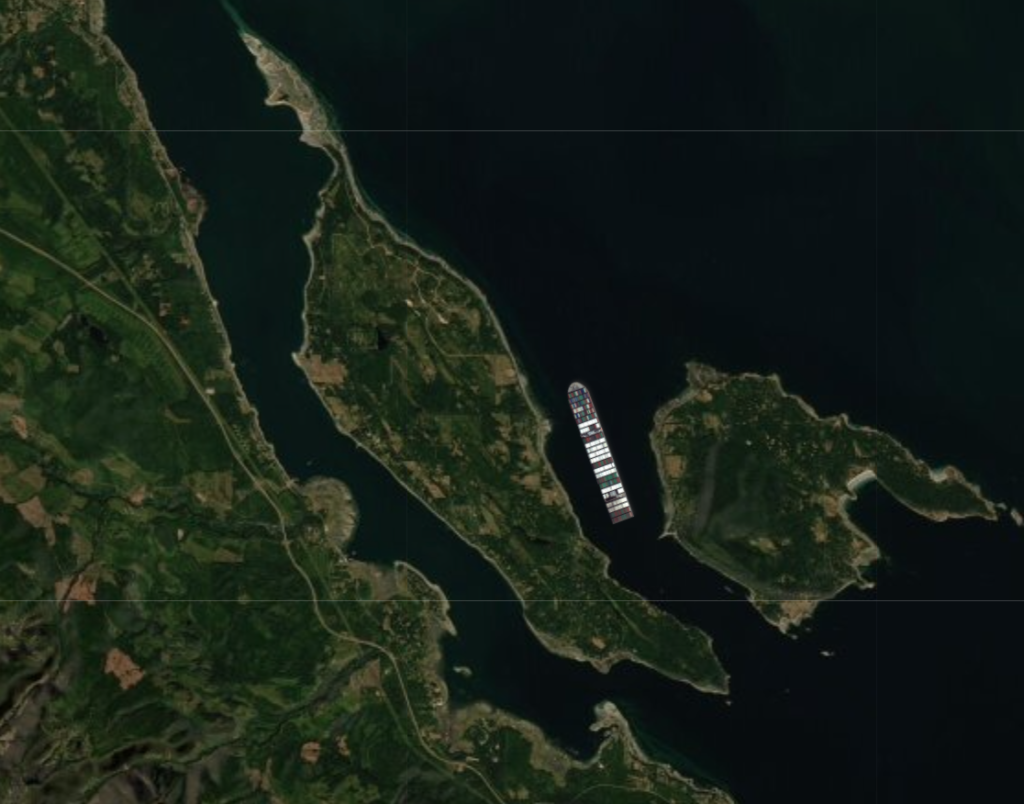
It happens. Forgive yourself for getting stuck. Keep perspective. This stick-your-own-boat image of the boat in Lambert Channel between Denman and Hornby Islands is not to scale. The vessel is much smaller than this and your problem might be too.

Get help. Get good help. Build a team. Work with your team. (and a team of friends and mentors is important to help you keep perspective)

Focus on the small changes that can make a big difference. (think of the brave little digger photos)

Celebrate the small changes. (honk your horn)

Stay curious and stay creative.

Unburden yourself from what you do not need to carry. (cast off unnecessary ballast and cargo)

Believe it or not, there are other people that can successfully replace you in some of the jobs your are doing now. Let them have a go so you can focus on what you need to be doing now.

Prepare to feel unstable as you unburden yourself.

Stay in contact with the natural world. Watching the waxing moon and the tides really help. Think about the impact of the six-foot tide in unsticking the boat.

Consider solutions that will not damage you any further.

After the crisis is over, check yourself for damage and give yourself time to heal.

Reflect on what you learned.

Say thank you to those who helped you get unstuck.

So…

Next time I’m stuck and I will get stuck, it’s part of life, hopefully I’ll remember some of these aphorisms. Happy unsticking if you need it and happy helping those who are.

Filed Under: Uncategorized

Some Things Do Not Translate

February 25, 2021 by Carolyne Montgomery

I’m grateful to have friends that read and share their books with me.

A few weeks ago, I borrowed the English translation of Before the Coffee Gets Cold by Toshikazu Kawaguchi. It is translated from Japanese into English by Geoffrey Trousselot. The author Kawaguchi adapted the book from their play which won the 10th Suginami Drama Festival grand prize.

Some of you may confuse your Murakami (The Wind-Up Bird Chronicle and others – we all have our favourites ) from the Nobel prize and Man Booker prize-winning, Ishiguro (Never Let Me Go and others). Haruki Murakami is Japanese and writes in Japanese but also translates English novels into Japanese. He does not translate his own works into English. Kazuo Ishiguro, although born in Japan was raised in Britain since age five in a Japanese family. He identifies as British and writes in English.

I emphasize these things as I learn more about the challenges of translating a work not only into another language but also into another culture. Some things do not translate.

Since I can only read English and basic French novels, I rely on all those decisions that translators make about content, tone, style, rhythm and pacing. What about the cultural mannerisms and styles, directness, indirectness that are prevalent in each culture?  How does an author work with a translator? How does the translator apply all the implicit and explicit cultural nuances of the native culture into the translated culture? How deeply must a translator understand both cultures?

From the little I found out about Geoffrey Trousselot, the translator of Before the Coffee Gets Cold, his main works have been technical or business translations. (Linked In) Is this his first literary translation? His minimalistic detached tone and style suit the constrained environment of the café and the restrictions of the time travel.

The novel is contained in physical space of small café, called Funiculi Funicula. There are nine seats, one of which is permanently occupied by a character who did not obey the rules of time travel. The five rules of time travel which include returning to the present before the coffee gets cold also restrict the possibilities. The setting and actions feel like a one-scene play with four acts. The door chimes sound “Clang-dong” as characters leave and enter the café like a stage.

The story is constructed into four chapters, each a tale of desire to time travel to reconcile with a loved one. Through spare rituals and repetition, and detached prose we learn of the four losses that motivate time travel. Characters recur and develop over the four chapters. Our assumptions and prejudices are challenged as more is revealed about each of them and their constraints.

The present will not change. And even knowing they cannot change anything, the lover, the spouse, the sibling and the parent still choose to time travel. They choose to manage their regret by spending only the time it takes a freshly brewed coffee to cool with their loved one. I wanted to time how long it takes before a coffee gets cold but there are too many variables. I would have to make it in the exact way described in the book by the character, Kazu.

And while I would also like to try Seven Happinesses Saki that is served, it made me wonder where the name came from. Fukurokuju which means happiness in Japanese is also the name of one the seven lucky gods in Japanese mythology. (this was from a google translated website!)

The last story of the four chapters is the most moving perhaps because it involves a mother and a child. But also because after the previous three stories, the reader more fully understands the relationships among the small cast of characters and the cruel limitations of the time travel. The present will not change.

It was hard for me as a non-Japanese speaker to learn the names and identify the characters and their relationships (sisters, spouses, in-laws and so forth) as they were introduced and re-appeared in each chapter. Like reading my Russian novelists, I had to write out Kazu, Kumi, Kei, Yaeko and Kohtake. And the translation is faithful to the Japanese custom of using last names at times which is even more confusing as the characters are sisters, or sisters-in-law or married.

The main theme in this novel is regret, a horrible but unavoidable human emotion. And the four stories amplify the futility of trying to avoid regret. Management of regret requires reflection and forgiveness and perhaps wishful thinking about time travel.

Read here for Murakami’s thoughts on translating The Great Gatsby into Japanese. He talks about translation as necessarily ephemeral, like dictionaries and language itself. Translation is done in the cultural context of the time and the translator.

What’s New?

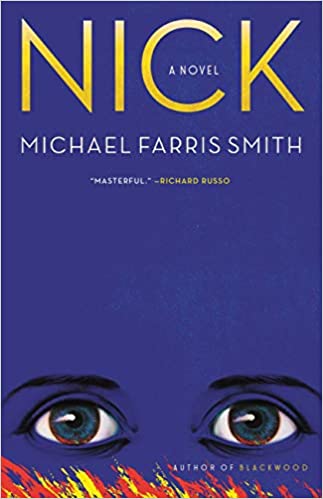
It’s hard me to think about The Great Gatsby without thinking of high school or Robert Redford or more latterly, Leonardo DiCaprio and Carey Mulligan. In the setting of the lapse of the American copyright to The Great Gatsby, I’m looking forward to reading the prequel, Nick by MF Smith.

And soon an Ishiguro release, Klara and the Sun which promises more of that dystopic after-burn of Never Let Me Go.

And for those of you in the Northern Hemisphere, I hope you are all enjoying the longer days.

Happy Reading and Writing.

Filed Under: Uncategorized Tagged With: Ishiguro, Translation

What We Can Imagine And What We Can Create…

December 4, 2020 by Carolyne Montgomery

“…the errands born from the gap between what we can imagine and what we can in fact create.” 

M. Cunningham The Room at the End of the World

It’s been a hard November. On the days when you can see it, the sun sets behind the mountains at four in the afternoon. I have a sense of unease and trudging futility in creating this blog. Who is it for? What does it mean? Do I or anyone else care?

I’m thinking about the gap between what I can imagine and what I can create. That’s the challenge as you learn a new craft. You become cruelly aware of what you don’t know. My writing, formerly intuitive and pleasurable is now under crippling scrutiny. Yet, like a toddler, teetering on a tile floor, I’ll stumble into this piece.

And it is foolish to ignore the effects of COVID on our creative efforts. We are all constrained by the restrictions and uncertainties of this more ominous second wave of infection. And at home, the weight of each repetitive routine rounds my shoulders. I’m reduced to counting.

I count the number of days and months it has been since I hugged certain loved ones and the number of grandchildren’s birthdays I have missed. (Three–A fairy tale number)

I count the new cases, hospitalizations and ICU admissions here on Vancouver Island and they are increasing. I count the number of vaccines in Phase III trials. (Thirteen) and feel the optimism as others are approved. I count the opinions on how the available vaccines should be distributed.

I count the soiled paper masks strewn about the car and crumpled into the pockets of my coats. I count the mask-wearing shoppers in the grocery store line-ups and the wavering spaces among us. I count the times I have been to a restaurant since March. (less than two hands worth) which leads me to count the times I have made yet another uninspired meal.

I count the deaths of people known to me or any of my friends (so far Zero) and I wonder when and for who this number will change? How close will this death be? Will we all know someone who has died?

I count the hours I spend doom scrolling, flicking through the news on my phone and wonder what it’s doing to my brain. I skim short stories without concentration. When I go out for walks. A nice lady reads Jane Eyre to me from my phone and somehow that is soothing. Listening to The Stand, by Stephen King was not.

Using Facetime, I read stories to my grandkids who are 13,000 km away. I count the minutes left in my Zoom meeting with my writing group as my brain begins to wander and I cannot control it. And in my Zoom music lesson, I count the couplets and triplets (Piz-za and Blue-ber-ry) and feel the rhythms relieve my tension.

I count the persons-with-positive-COVID tests flying into Comox from Calgary. Oh, the sorrow in Alberta! I count the times I have thought about various tests and their accuracy and how they might make our lives safer. (and I have to re-read it each time) Incredulously, I count the advertisements in my in-box of cruise lines offering discounts. Can you imagine that, going on a cruise? I’m counting on the members of my community to be as careful as I am.

I count the times when I have been less-than-accountable. Was that trip to the store necessary? I count the eggs and the amount of milk left in the fridge. (lots of both)

I count my blessings that the pool is still open and I can count my laps. I count the empty wine bottles waiting patiently to be taken to the recycling centre.

I’m counting my fears. I can’t understand what 64 million global infections mean. What is not counted? What will our new world be like? What are the global errands that need to be done to close the gap between what we can imagine and what we can create?

I’m counting the whirring hummingbirds at the feeder. (Two) I’m counting those long-necked trumpeter swans sitting in the cornfield today. (Two) I’m counting the scree-screeing eagles perched in the tallest hemlock overlooking the creek. (Two) I’m watching the full-moon high tides that are co-operating with the crashing swells and high winds to re-arrange the shoreline. The natural world is carrying on with its rhythms.

I am not counting the days to Christmas or to 2021 but I am counting the days to December 21st when the days will start to get longer again.(Eighteen)

I’m counting the number of revisions I have made on my recent short story (lots) and am thinking about that gap between what I can imagine and what I can create. I could try to measure the gap. But how? With what instrument and in what units? Would knowing that number make it an any easier or more pleasurable journey to learn how to narrow that gap? Instead, I think about those newly-born errands, those incremental skills that I need to practice to close that gap.

Please stay safe during this challenging time. Keep imagining and keep creating. Thank you for reading with me.

Filed Under: Uncategorized

And Now the Dark Exceeds the Light

October 16, 2020 by Carolyne Montgomery

The reluctant sun sheds its tardy rays on Brooklyn Creek as it wanders across the low-tide mud flat. The light catches the white plumage on the head of my Bald Eagle, splashing in the stream.  I hadn’t seen him for a few weeks.  The gossipy cacophony of the flocks of Brant geese, resting in the harbour from their ridiculous migration from the Arctic, seemed to have pushed him out of his routine.  The Chinook jumping in the Estuary excite the anglers. And after the heavy rains of last week, my mycologist friends tell me it is an outstanding year for Chanterelles. So many things to be grateful for.

Gravid dew drops outline the miraculous spirals and radii of the super-sized spider webs on the porch. I think of Charlotte, the arachnid heroine of E.B. White’s, Charlotte’s Web. (although these days I have been referring more to his The Elements of Style) I remember when I was a young mother watching the video with my two small children – two long decades­ after I had read the book. I remember my leaking sorrow at the thought of Charlotte dying without ever seeing her babies– all 500 or more of them. Her babies would learn of her genius and compassion only from the stories of Wilbur and her other survivors. I’m struggling with similar sorrows today.

Here in the Northern Hemisphere, it is past the autumn equinox, that immutable delimiter from where darkness will exceed lightness.  It’s a time when I count the days to December 21st when the light will return. It’s a time when I wake up with a dry cough and a slight burning in my throat and wonder for a minute if it is now my turn, my turn to have COVID.  And then I remember the smoke that filled the valley over the last few days and darkened the days even further with an hourless monotony. And that reckless bike ride I took despite the smoke.  My sorrow for the loss of summer deepens. And it is easy to wallow helplessly in our global sorrows, political and medical – and the two are not separable.

I am tired. My sorrow is a dignified affair managed with a procession of denials where I rely on distraction and doing to make sense of things – baking of banana bread, breathlessness at the top of the steps at the Spit or after laps in the pool,  – and then immobility in front of Netflix with a glass of wine. And I would prefer to be surrounded by the chaos and the authentic anguish of toddlers in their transitory moments of grief – from an attack by the coffee table, a dropped ice cream or a forbidden iPad – sorrows usually resolved by a hug or a kiss until the next time.

I cannot visit my adult children or my grandchildren. The two-dimensional spaces of Zoom and Facetime and the like will do but they are insufficient. And despite all my privilege and denial of the situation, I am exhausted. 

What to do? Rest. Carry on but permit my grief and allow my sorrow. Find strength in the beauty of the natural world outside my window. Await the arrival of the snow geese and trumpeter swans to the field stubbled with the remains of the corn harvest. Tell stories to my loved ones.   

Sunset over Comox Harbour

Filed Under: Uncategorized

Hatred is always a Sin

July 4, 2020 by Carolyne Montgomery

 “Hatred is always a sin. … One drop of hatred in your soul will spread and discolour everything like a drop of black ink in white milk.” 

Marietta to her daughter Euphemia in the short story, The Progress of Love by Alice Munro.

Perhaps some of you will find the colours in this simile unsettling, but I didn’t want to alter the original quote.  It’s been a difficult few weeks and my discomfort with my own silence is no longer endurable. And while I am a grateful immigrant who became a Canadian citizen in the seventies, this is the first year that I felt uneasy about Canada Day celebrations that ignore the realities of a racist and colonial past.

Yes, we do have racism and a policing problem in Canada. There is no room for our anti-American smugness here. We have our own post-colonial issues to deal with. I’ve read more about killology in American police training and what defunding the police may mean.  I learned what a wellness check is. I donated money to Black Lives Matter, Vancouver. I am continuing to learn how to be an anti-racist, acknowledging my implicit biases. ( see November 2019 Blog)  I am looking out for any minority voices in my community that I can amplify. I am capitalizing Black and White in the context of racial descriptions. I can see the racial caste system that exists in North America.

Suggestions for reading

Ibraham Kendi’s, How to be an Anti-Racist.

Robin DiAngelo’s White Fragility (this book has been critisied for diverting attention from Black issues to White issues)

Buy and read more books by Canadian Indigenous Writers and Black Canadians. Buy and read creative works from any minorities. Some of my recent reads include works by David Chariandry, Alicia Elliot, Richard Wagamese, Eden Robinson and Jordan Abel.

And on a lighter note…

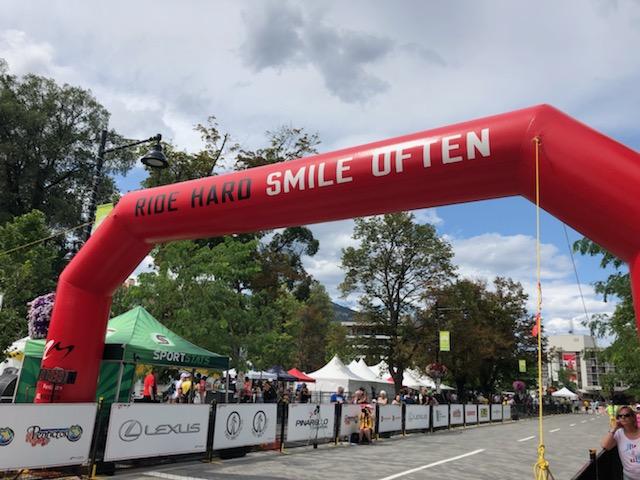
Here is a non-fiction piece, wrote a few years ago about my first road biking event.

Fast and Safe – A story of a Fondo.

I’m descending, bumping, and banking along the curves down the road to Okanagan Falls. I’ve safely pedalled the seventy kilometres to the rest station without stopping. There are still twenty more kilometres to ride before I finish the race.

 I’m high, euphoric – it’s the endorphins.  Team Hawaii, the volunteers decked-out in Hawaiian shirts and leis wave madly at us as the riders gasp into the rest station.  Both my water bottles are empty and I really need to pee. I have to get off my bike. The echoing slams of the fibreglass Porta-Potty doors guide me to the facilities. I pant through my mouth to lessen the reek resenting the time it is taking to disassemble myself as I peel my bike shorts off my sticky body and relieve myself.

“Don’t look down, don’t drop anything and don’t slip on the pee-soaked floor.”

I am competing in the ninety-kilometre road biking event in Penticton.  In my five previous Fondo events, I had ridden for fun, for completion.  This year, however, I am now sixty and I am one of more youthful competitors the sixty to sixty-nine-year-old age group. Maybe I have a chance to do well?  My serious athletic friends at work suggest a coach, Paul.  I hire him and now I have a new part-time job, training fifteen hours a week or more. I discuss this with myself. Yes, it is selfish. No, my actions will not serve a larger purpose. No, I am not taking into account the needs of others. Yes, I am doing it simply because I want to.

Paul teaches me about riding using gadgets that measure heart rate, speed, the cadence, and the pinnacle parameter, power.  It’s high school physics, right here on my bike. I focus on scheduling, performing, completing and recovering from the workouts.  I don’t finish a single session successfully. I don’t really belong in this group of experienced athletes.

 Why am I competing in this ride at sixty? I’m barely a recreational rider. Am I frightened of my ageing? Am I still angry with my doubting and disbelieving mother, a woman who knew that females should not participate in sports?  She didn’t understand the value of sport for anyone of any gender.

            “Go-out-hard,” Paul says.

If I go-out-hard, drafting behind stronger and faster riders will make me go faster. I worry. I always worry. If I go-out-hard, will it be safe for me among those stronger more experienced riders?

“You need to ride non-stop to the seventy-kilometre station.  You will be able to do the race in about three hours.”

 Riding seventy kilometres without stopping?  Without peeing?  I ask myself.

The official name of my event is the Medio Fondo – the shorter ninety-two-kilometre distance. There are over three hundred and fifty women in my event. Thirty-eight of these women are in my group, women over sixty years old.  I wonder what my mother would think about that. And then I wonder why I am still thinking about what my mother would have thought. She’s dead and you’re sixty for God’s sake.

The stores, the restaurants and the sidewalks of Penticton are clotted with athletes, their friends and their families. The streets are filled with small groups of riders that have that specific road biking body, tall and lean, the natural body shape of an athlete with a high strength to weight ratio. Me, I’m a shorter mesomorph, a more chunky type.  We are all marked with the sign of the cult, the plastic wristband with the race number on it. I stare at it and wonder if my mother was right, maybe I don’t belong.

 It’s race day. The streets are filled with cyclists coursing between the buildings to the cordoned-off start areas. The loudspeakers fill the air with dance music and enthusiastic observations from the announcer. The singing crowd proudly performs the national anthem and the electric atmosphere intensifies.

 The countdown to the start begins. The low murmuring of the quieting crowd is extinguished by a wave of metallic clicking washing down the street, the sound of the two thousand riders mounting their biking shoes into the pedal clips. The river of riders oozes forward like cold molasses.

        “Be safe, be safe, please be safe.”

       “Go out hard on the climb.” I hear Paul’s words.

My heart is thudding, I’m panting and my front gear cable is slipping. The chain jumps on the small ring and stays on.  I’m struggling to keep up with the paceline I’m in.

       “Safe and fast. Fast and safe. Safe and fast.”

       This is my mantra.

Cyclists swarm over the width of the road, the faster cyclists dart around the slower ones. I sprint along the section to Summerland, swept along in the draft behind a very steady rider. I’m feeling fast and safe. I wonder if the rider is an event host. He is loaded with extra repair equipment including a tire. I feel him glancing back at me to see if I am keeping up if I am still on his wheel. There is this ethereal connection between us, he is my angel or am I just imagining things? I am being delivered to the steep climb in Summerland.

       “Safe and fast, fast and safe.”

 There is a long climb. I emerge at the top and begin the beautiful winding descent back to the highway along the side of Okanagan Lake. I luck into a paceline of twenty riders or so. We weave in and out as a unit, a machine, slipping past the other riders. The hum from our race wheels and the balletic unison of the clicking from our gear changes unites us. It is magical. The light crosswind has turned into a tailwind. We dance down the East side of Skaha Lake enjoying the view of the glistening lake and the West Bank.

We reach the turnoff to the next climb at Maclean’s Road. I dig in, climbing up the hills and huffing past the wafting scents of hay and manure from the picture book farms and barns.  I am sticking it to the sections with the steep grades.  I nail the winding descent into OK Falls.

After stopping to refill my water bottles, I pass the fork in the road and the waving volunteer showing the route for the longer rides.  Perhaps next year, I think.

       “Push, pull. Push, pull. Push, pull. Left-Right, Left-Right”

I’m puffing, panting and sweating up the hill on the West side of Skaha Lake. No help here. I am on my own.

       “Stay on the bike. Keep turning the crank.”

A stiff headwind greets me at the top of the climb but I manage to catch up to another rider.  I’m guessing she is about forty and from her style, strong and steady, a triathlete, used to working alone. But today, we pull each other along, taking turns leading and eventually catching up with two other guys. All that’s left of this ride is the big descent. We surge forward together.

“Push, push, push. Leave it on the road.”

       “Fast and safe, safe and fast.”

We cross the finish line together. It’s over. I am glowing, pulsing and vibrating with excess adrenaline, adrenaline I no longer need.  I’m safe and fast, faster than last year anyway. 

The clouds have lifted and the day is transformed into a hot July morning with the promise of watermelon, beer and a grease-laden hamburger. I’m feeling all of relief, pride and exhaustion, the complicated and potent potion of emotions like those I experienced after delivering each of my two babies.  I sift through my thoughts and get stuck at disappointment. I’m struggling with the admonishing voice of my mother. If it’s worth doing it’s worth doing well. Maybe I could have done better? I’m confused. The sweat crusts on my skin and my muscles stiffen.

I’m crashed on the bed in the motel when my phone beeps – a text from my friend, Heidi.  What? I have won in my age group for the event?  I scroll madly on my phone to read the results for myself.  It’s true. I did it! I have won, that is to say, I’ve won in my age group and gender categories! I allow myself a moment of satisfaction.

I was safe enough and fast enough for today. I wonder if my mum was still living whether I would have the courage show her the picture of myself in the red polka dot jersey that I won. Would I have invited her to listen to my story and to share in my feelings of triumph? And then, I realize I haven’t really won at all.

Filed Under: Uncategorized

The Oblivious Spring

May 12, 2020 by Carolyne Montgomery

I hoped I would be writing about something else other than the pandemic but it turns out that pandemics are attention-consuming events. After various inspiring Zoom meetings with fellow readers and writers including all the microphone and video faux pas, here are some of my current thoughts.

What about Journaling?

Good old journaling will pull us away from the anxiety-provoking news streams documenting the distressing cult of American exceptionalism, the pursuit of individual rights over the collective and other global social and structural tragedies. Journalling may help us forget about the hair clipper incident. If you need a prompt for your own journal please see Lynda Barry for inspiration. And if you would like to make a comic strip from your digital photos, there is an app for that too.

Writing will help us remember what we did during the “Time of COVID” – a currently an overworked reference to Gabriel Garcia Marquez’s novel. But while I was scrubbing the outdoor furniture, I listened to an excellent audio recording of the book which was much more enjoyable than the 2007 movie despite Javier Bardem (thud, th-thud goes my heart) playing Florentino. 

Opportunity and Adversity

My experience of quarantine so far is that of the smug boomer. I have a house, a garden and a reasonable bank balance. The changing tides, sunrises and sunsets mark each day. I have slowed down enough to better appreciate the Bald Eagles and Great Blue Herons visiting the freshwater of the Baybrook stream at low tide; to enjoy the Rufous hummingbirds whirring about the feeder at dusk. I am content to watch more and wait more.  I wonder about the re-framing of our priorities as we see each day what is really important – clean air, clean water, food, caring and a sense of purpose.

Any adversities I encounter are only inconveniences.   Yes, there is the heartbreak of physical separation from far-flung but safe adult children and grandchildren – children who will only know a post-COVID life.

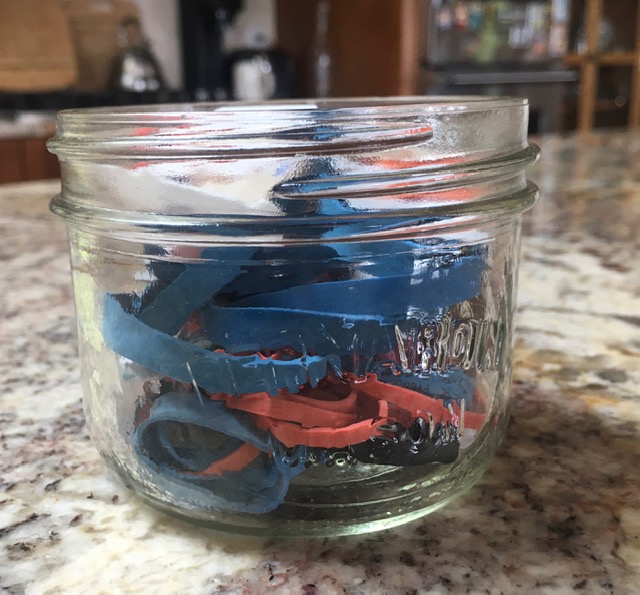
My fingers are remembering how to knit and if I keep my brain out of the process, there will be a sweater for the new baby.  The transient but formative poverty of my student years and the inculcated habits of my parents mean I can cook, clean, mend, save, substitute and do without. That’s if I can remember where I put those rubber bands.

I am part of a considerate and careful community here in Comox feasibility of and compliance to physical distancing for most citizens has resulted in few infections or hospitalizations. My fears of being morally conscripted back into a necessity of intensive care medicine are fading.

Trapper John is still publishing!

I’m supporting my local bookstore Blue Heron Books, the food bank, my swimming club and the BC Liquor Board when I can. I am grateful for the frontline workers at COSTCO and Quality Foods who smile at me from behind plexiglass screens as I rub my hands with a wipe soaked in 1:10 bleach solution (Do Not Use Internally) before, during and after each excursion. It’s not much, but it is important.

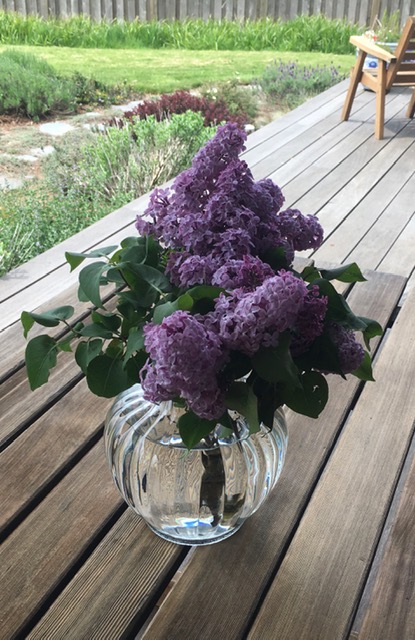
And unlike other provinces, we get outside and can watching the Pacific North-West Spring unfold, indifferent to the global crisis.  The daffodils, tulips, cherry blossoms, Dogwood, lilacs and even the Lily of the Valley that was transplanted from Vancouver last year have all appeared on schedule. So far, this spring is oblivious to the pandemic.

“It is spring again, The earth is like a child that knows poems by heart.” Rainer Maria Rilke

Local lilac blossoms

Some Science Stuff and Staying Safe

And now the challenge of self-regulation during the relaxation of some of the physical distancing guidelines.  Should I really be starting to play tennis again? How severe will the second wave be? Erin Bromage, a comparative immunologist and professor of biology at the University of Massachusetts may help you understand the carnage of the disenfranchised employees of the meatpacking plants (sorry) and the generational genocide occurring in our elder-care system. The website will help you make informed decisions according to your particular situation that will protect you, your loved ones and those around you.

And if you have been confused by misleading or contradictory “facts”, please read just about anything written by Timothy Caulfield who is a Canada research chair in health law and policy at the University of Alberta, Edmonton, Canada. He doesn’t always sound this exasperated.

And self-care…

It is easy to slip into a mood where all I want to do is wallow in a crumb-filled bed munching on Triscuits and cheddar cheese cubes (and possibly slurping a tumbler of wine) while de-coding The Mirror and the Light. But my better days are when I have a little goal – something feasible and small like a walk, an hour of writing or perhaps even finishing that sleeve on the sweater before the baby outgrows it. Meanwhile, spring unfolds obliviously.

Filed Under: Uncategorized

  • « Go to Previous Page
  • Page 1
  • Page 2
  • Page 3
  • Page 4
  • Page 5
  • Page 6
  • Go to Next Page »

Primary Sidebar

Recent Posts

  • Spring Is Sprung …
  • Chapter 4: The Tree
  • Reflecting on Aging and Kathy Page’s Memoir
  • Chapter 3: Alterations
  • Chapter 2: Webbed Feet

Archives

  • April 2026
  • March 2026
  • February 2026
  • January 2026
  • November 2025
  • September 2025
  • May 2025
  • December 2024
  • October 2024
  • July 2024
  • June 2024
  • May 2024
  • November 2023
  • October 2023
  • August 2023
  • November 2022
  • May 2022
  • March 2022
  • December 2021
  • October 2021
  • June 2021
  • April 2021
  • February 2021
  • December 2020
  • October 2020
  • July 2020
  • May 2020
  • March 2020
  • February 2020
  • January 2020
  • November 2019
  • October 2019
  • September 2019
  • July 2019
  • June 2019
  • May 2019
  • March 2019
  • January 2019
  • December 2018
  • October 2018
  • August 2018

Pages

  • A Swim in a Pond in the Rain – A Commentary
  • About Carolyne Jane Montgomery
  • Contact
  • Home
  • Independent Bookstores
  • Privacy Policy
  • Publications, Readings and Other Stuff
    • The Solstice Party
  • Signup

Copyright © 2026 · Carolyne Montgomery · All Rights Reserved | Support by Mastermynde