• Skip to main content
  • Skip to primary sidebar
  • Skip to footer

Carolyne J Montgomery - Reader & Writer

Carolyne Reads and Writes

  • Home
  • About
    • Socials
      • Facebook
      • Instagram
  • Watermarked Series
  • Publications & More
    • Indie Bookstores

Uncategorized

The Greys and Golds of November

November 14, 2022 by Carolyne Montgomery

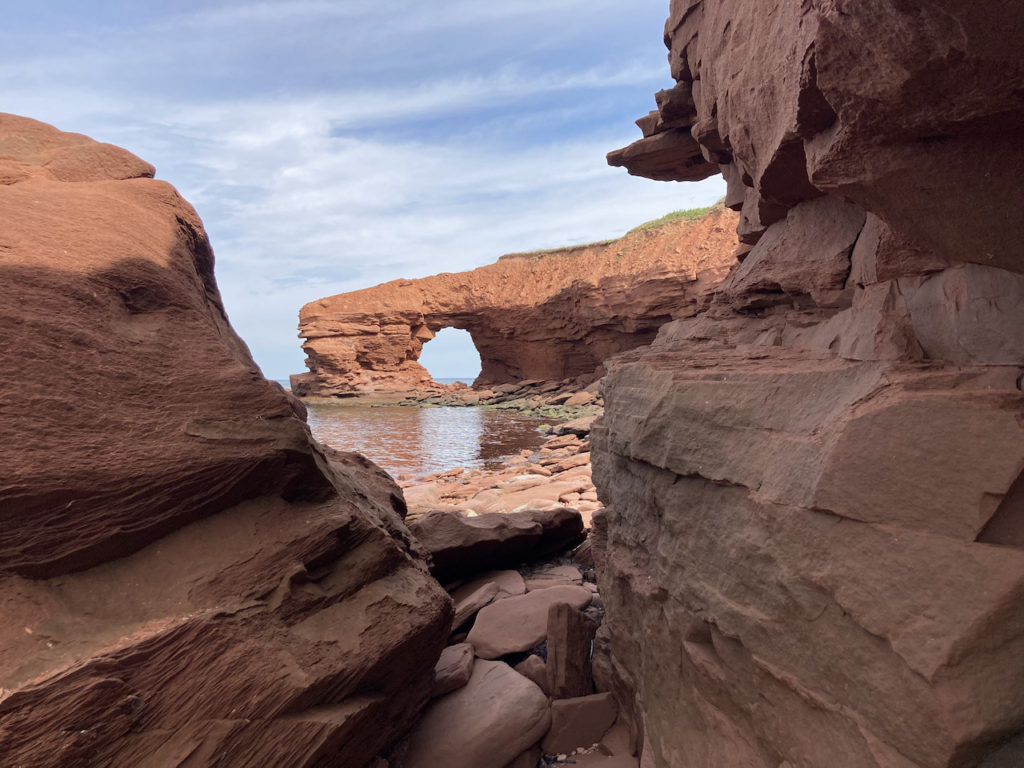
Sandstone Arch in P.E.I. since collapsed after storms, Fiona and Nicole

It’s been an interesting few months here and I’ve been recovering from the unexpected loss of a friend. My footing’s been unsure and I needed weeks to reflect on the situation. I’ve decided to share with you my thoughts from September.

The piece is titled “All My Puny Sorrows” inspired by Miriam Toews’s novel from 2014. And the movie, from 2021 directed by Michael McGowan which I watched on the plane back from Halifax as I was digesting the news is also great. And I nearly always cry on airplanes. This time for sure. And the novel’s title was inspired by a poem by Samuel Taylor Coleridge.

I too a Sister had, an only Sister——
She lov’d me dearly, and I doted on her!
To her I pour’d forth all my puny sorrows,

So we meander on in life, loving and losing and enduring the joy and grief that comes with both.
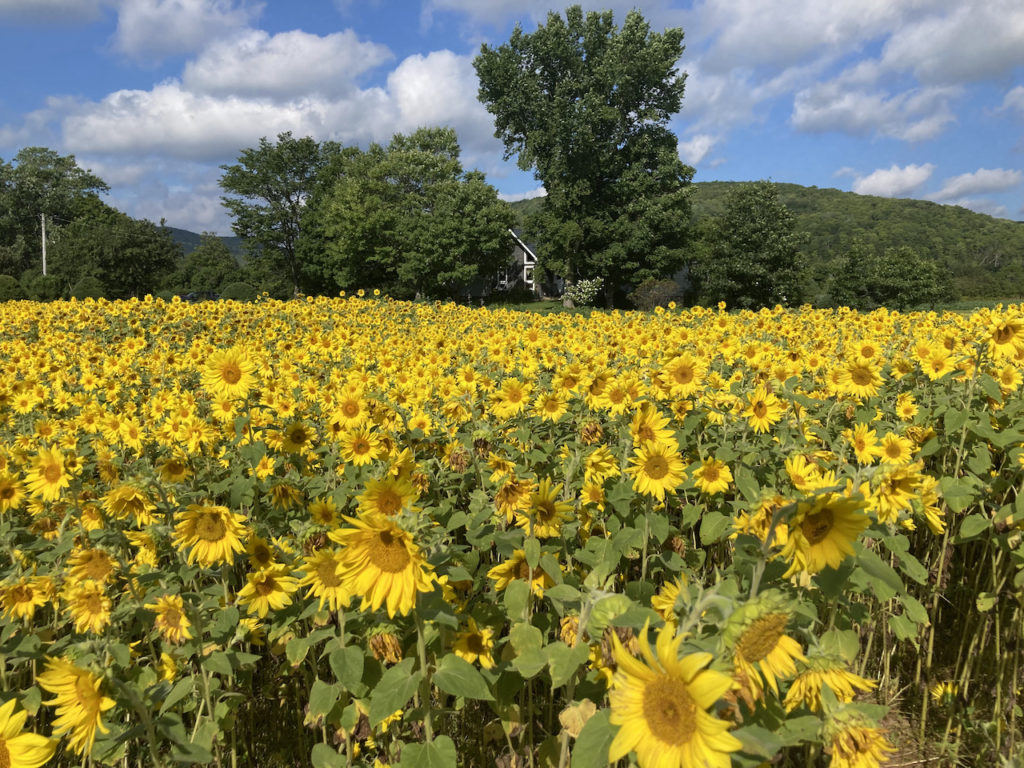
Sunflower Field in Cape Breton

All My Puny Sorrows

The golden October morning light reflects off the water of the estuary here in Comox. Overhead, chevrons of honking Canada geese prepare for their winter migration. A few weeks ago, in less than half a day, I learned about the natural and expected death of Queen Elizabeth II, the safe and expected birth of a granddaughter and the completely unexpected suicide of a friend. It was a lot.

I’d like to talk about my friend and friendship. Those of you who knew her, know her true name but for this reflection, I’ll call her Emily. She was a proud Yorkshire Lass.

The suicide of a friend, an acquaintance or even an unknown person is upsetting. The disturbance of the natural order of things from birth to death alarms us. We feel an uneasiness, even a horror.

Some manage their distress with indignant curiosity and speculation. There is an imperative to know Why and How. There is hope that by knowing more details, by knowing the facts there will be more understanding. There is hope that more understanding might ease the confusion and pain for the survivors of such a loss, the loss of a loved one. The How may become more evident. But the reality is that only Emily knew her Why and the rest of us can only guess.

But who was this extraordinary person? Emily had an energetic glow that she cast on all who associated with her. It was typical for anyone who met her to develop a crush on her and to want to be with her. She was capable, funny, tolerant, kind, thoughtful and generous. Her enthusiasm and playfulness made people happy. And when she laughed, her halo of strawberry blond hair shook about her head.

I remember her beaming face when I eventually pedalled into the parking lot at the top of Mount Washington where she had been waiting for at least an hour. And I remember basking in her belief of my ability to complete the ride (and many others). I remember Emily in the backcountry bounding ahead through the powder like a winter rabbit infinitely fitter than the rest of us older folk. I remember her sharing the remaining mangled power bar in the bug-spit motel on Cortez Island after a long ride, knowing we’d be hungry for the rest of the night. I remember her love of strongly brewed Yorkshire Tea. Other relics of our adventures together–the empty wet suit hanging in the garage, the crumpled tennis skirt in the dresser drawer and her blue pottery mug rest on Denman Island.

But the reality is for the most recent years, I’d seen very little of her. I’d moved away from Vancouver. We still texted occasionally, especially on her birthday which she shared with my partner. I’d heard she was happy with her new job and enjoying the Vancouver lifestyle. I believed that she’d call if she needed me and that she knew she was always welcome here on the island.

Most of my recent visits to Vancouver have been death related–celebrations of life or end-of-life care. That’s normal in your sixties. When I did see Emily on these visits, it was usually by chance in the locker room at the tennis club. I’d be getting out of the pool, or the ocean and she’d be on her way in. We’d hug and laugh and promise to get together soon. She’d found new friends who were better companions–proper athletes, younger, fitter and like her excellent at tennis, biking, skiing, swimming–just about any sport she touched. I was proud of her and certain that she was happy.

The last time I saw her was about eight months ago in that same locker room at the tennis club we both loved. She was with a friend I did not know and was crying. It seemed so intensely private, something that I was not meant to see. But I did. She saw me and we talked. We tried to make a time to meet to talk further but she had to go and I had to go. We slipped past each other. My heart is broken, sorrow, sorrow.

The pillars of friendship are kindness, generosity, and respect. And hindsight requires me to ask what did I give back to Emily? Did I take more than I gave? Was I kind enough, generous enough and respectful enough?

And what if I’d asked more questions? What if I’d insisted that we talk more? What if I’d called? What if I’d been a better friend, kinder, more generous, and more respectful? What if I’d properly understood the enormity of what I’d witnessed?

We all fumble about, tiptoeing along the tightrope of wellness– a combination of the physical, mental and spiritual. It is the combination of luck, fate, and determination that keeps each of us from falling off the tightrope. I’ll never know what was truly going on for Emily, I can only feel a deep sorrow that there was no intervention acceptable to her other than suicide. I wander through the brume of my own pain and my failure as a friend. I’m sorry that I wasn’t paying enough attention. There may be answers to some of the questions but there will never be answers to the most painful ones. What more could I have done to shine some hope into the fog of her despair?

I can’t indulge in the self-deception of closure. There is no closure to suicide. The well of grief is eternal. It waits patiently until something forgotten reminds you of your loved one and then it flows. And my heart is broken my friend, for you and for all your loved ones.
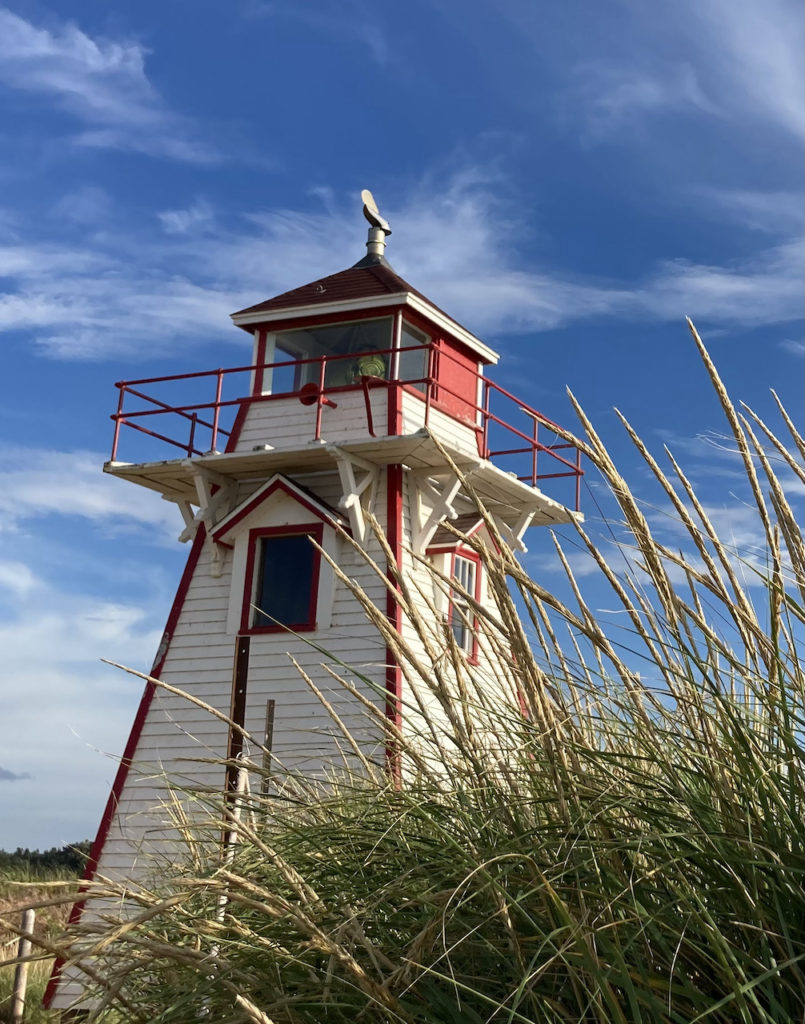
Lighthouse from P.E.I.

So especially on these darker, shorter days please take care of yourselves and those around you. We all need more love.
Filed Under: Uncategorized

These Are A Few Of “My Favourite Things”

May 14, 2022 by Carolyne Montgomery

With the clarion beauty of Julie Andrew’s voice ringing my brain, I don’t want to talk about “Raindrops on Roses” or “Whiskers on Kittens” but rather Wes Anderson, The New Yorker, Substack and Mavis Gallant and the recent pleasant convergence of all these things.

Wes Anderson and The French Dispatch

Director Wes Anderson’s recent film, The French Dispatch is a self-described “love letter to journalism.” Many of you will be familiar or like myself, besotted with his works including The Budapest Hotel, The Life Aquatic with Steve Zissou, The Royal Tenenbaums and Moonlight Kingdom. I enjoy the zany, pastel, intricate sets and his penchant for working with physically atypical actors. His affectionate and humorous studies of human foibles are heartbreaking. Wes Anderson’s films are densely packed with scene and character details and demand re-watching. Check out the soundtrack of David Bowie covers in The Life Aquatic with Steve Zissou performed by the Brazilian musician, Seu Jorge.

The French Dispatch is a collection of vignettes that are un homage to journalism, The New Yorker in particular. The film is set in the fictional town of Ennui-sur-Blasé (I know, so good) and filmed in Angoulême, France. His typical eclectic cast includes Bill Murray, Owen Wilson, Tilda Swinton along with over thirty other actors.

The vignette, “Revisions on a Manifesto” is based on the student riots in Paris 1968 and inspired by Mavis Gallant‘s two-part article “The Events in May: A Paris Notebook” which was published in The New Yorker.

In the “My Favourite Things” department, France McDormand plays the Mavis Gallant-inspired character and mentors the student revolutionary, Timotheé Chalamet, editing his manifesto and sleeping with him.

The New Yorker’s Susan Morrison’s interview with Wes Anderson here.

But what I was most interested in were the short stories, because back then I thought that was what I wanted to do—fiction. Write stories and novels and so on. When I went to the University of Texas in Austin, I used to look at old bound volumes of The New Yorker in the library, because you could find things like a J. D. Salinger story that had never been collected.

Wes Anderson, 2021

  I’m with you, Wes. The New Yorker is a cerebral drip-feed of contemporary short stories by writers such as Miranda July, Lauren Groff, Tessa Hedley, Kevin Barry, Mary Gaitskill, Jennifer Egan, Miriam Toews, Zadie Smith and so on presented weekly with author interviews and currently a podcast of the author reading their work. And then there are the archives…Cheever, O’Connor, Munro, Bradbury, Barthelme and so on. Give up your day job now so that you can stay home and read!

Mavis Gallant (MG) and The New Yorker

MG published the first of her over one hundred short stories, “Madeline’s Birthday” in The New Yorker in August 1951.

“Without finding words for it, Paul knew that her untidiness had something to do with her attitude toward him and the entire household. He wished she would employ a less troublesome method of showing it.”

Mavis Gallant 1951

In 1995, she published her last, “Scarves, Beads and Sandals”. 

“There was a vogue for bright scarves, around the straw hats, around the hair, wound around the neck along with strings of brights beads, loosely coiled–sand-coloured or coral or a hard kind of blue. The beads cast reflections on the skin of the throat or on a scarf of a different shade, like a bead dilluted in water.”

“Scarfless, shoeless, unbound, delivered, they waited for the last wine bottle to be emptied and the last of the coffee to be drunk or spilled before they decided what they specifically wanted or exactly refused.”

Mavis Gallant 1995

MG was a Montrealer, trained and worked as a journalist and in her twenties embarked on a life as an ex-patriate writer in Paris. She was a master of the short story. She died at age ninety-one in February 2014.

From the Deborah Treisman post-script.

“There’s an unapologetic tone to most of Gallant’s stories, as well as to the stories about her. She didn’t apologize for wanting to write at a time when women, Canadian women, as Alice Munro has documented, were not expected to put themselves forward or to speak out. She didn’t apologize for leaving Canada—and leaving her homeland forever in a quandary about the extent to which it could claim her. She lived most of her life as a perpetual foreigner, in France, childless and husbandless (an early marriage ended when she was twenty-five). Had she lived some other way, she would not have been the writer that she was. But it’s easy to underestimate how difficult these decisions may have been for her, or her vulnerability, when she made them.”

D Treisman 2014

Substack and Bill Richardson

Substack is a subscription newsletter app that allows writers to send digital newsletters directly to subscribers with or without a paywall. My current subscriptions include Story Club with George Saunders and The Line, an irreverent independent Canadian current affairs column featuring Jen Gerson, Andrew Potter and Matt Gurney.

And if it wasn’t for Bill Richardson’s Substack, Oh MG: My Mavis Gallant Centennial Diaries, I wouldn’t know that it is the Centenary of Mavis Gallant’s birthday this August 11th or considered writing this piece.

Bill Richardson is a Canadian Broadcaster and Writer who has most recently published a groundbreaking children’s book, Last Week illustrated by Emilie Leduc about a grandparent who chooses Medical Assistance in Dying (MAiD). Come to think of it, access to MAiD is another one of “My Favourite Things.” I digress but if you are interested consider Stephanie Green’s recent book, This is Assisted Dying: A Doctor’s Story of Empowering Patients at the End of Life.”

Bill is writing a daily journal honouring MG, her world and her works. It is funny, clever, insightful and informative. Bravo Bill!

Mavis Gallant (MG)

And now down the MG rabbit hole. MG occupies a large stall in my stable of Canadian female writers–MG, MA and AM. Mavis, Margaret and Alice. (all sporting an M somewhere and contemporaries after a fashion!)  Readers not familiar with MG could refer to the excellent introduction by Francine Prose (nominative determinism, she’s an author of over twenty novels and the excellent How to Read Like a Writer) in the 2016 Everyman Edition of The Collected (but by no means Complete) Stories of Mavis Gallant.

“Her trademarks: the specificity, the density of detail and incident, the control of language and tone and her gift for creating a deceptively comfortable distance between the characters and the reader, then suddenly and without warning narrowing that distance…the equivalent of whiplash…not the neck, but the heart”

 Francine Prose 2016

Prose quotes MG from the preface to her Selected Stories and the afterward of her collection Paris Stories:

“Stories are not chapters of novels. They should not be read one after another, as if they were meant to follow along. Read one. Shut the book. Read something else. Come back later. Stories can wait.”

Mavis Gallant 1996

Yes. The best-written and then closely read short stories leave an “afterburn” in the reader. They incite a reflection and contemplation, perhaps even a reappraisal of the reader’s situation.

From Alberto Manguel in the forward of the 2009 collection Going Ashore:

“The stories of Mavis Gallant are masterpieces of rhetorical stinginesss, of words saved for the right moment, of parsimonious descriptions and strict accounting.”

Alberto Manguel 2009

Truth-seeking characters, often outsiders with understandable, ordinary character flaws drive the plots of MG stories.

“The first flash of fiction arrives without words. It consists of a fixed image, like a slide or (closer still) a freeze frame, showing characters in a simple situation.

Mavis Gallant 1996

Where to begin with or to return to her works?

For an introduction to MG perhaps start with the 1981 Home Truths, a collection of selected Canadian Stories which includes the 1963 ex-patriot love story, “The Ice Wagon Going Down the Street”

“Agnes is the only secret Pete has from his wife, the only puzzle he pieces together without her help.”

Mavis Gallant 1963

Or perhaps the five-story Linnet Muir series which MG described as the most autobiographical of her works? The New Yorker in its monthly Podcast Fiction Series with Deborah Treisman offers Atwood reading “Voices Lost in Snow,” which appeared in the magazine in 1976. and can also be found in the short-story collection Varieties of Exile. This story, from the Linnet series, is a first-person recounting of an obedient, silenced child cataloguing the failings of neglectful parents.

Also featured in New Yorker’s Podcast Fiction Series series are Karen Russell reading “From the Fifteenth District,” Ann Beattie reading “Dédé” and Antonya Nelson reading “When We Were Nearly Young”.

And further down the podcast rabbit hole, The Spoken Web (Kate Moffatt, Kandice Sharren, and Michelle Levy) presents an archival audio-recording of MG.  In 1984, MG read her story, “Grippes and Poche” at the Images Theatre at Simon Fraser University. MG reads from an editorial proof and peppers her presentation with wonderful asides and explanations deviating as necessary from the text. As a bilingual Canadian, living in Paris, she comments on drifting into French or the difficulty of pronouncing French words with an English pronunciation to English audiences.

In the companion episode, the producers speculate that the recording was made on reel-reel tape and then transferred to cassette tape for archiving purposes. For some of us, these technologies were ordinary.

The CBC Compass program archives have an interview with MG in Paris in 1965 around the time of the release of My Heart is Broken. where you can watch her mannerisms and appreciate her wit as she tries to be patient with the interviewer as she describes the essential ingredient of independence being economic freedom.

I read some of these MG stories decades ago with the lens and attitude of a younger, impatient person. The MG 100th Anniversary is a great excuse to re-visit her works. I have a lot to learn from her writing. I missed the 2017 publication of her remaining diaries so that is also on my list of readings. I’ll be keeping up with Bill Richardson’s highlights and suggestions on his Substack and wonder(and wander) along with him.

“As near as I’m aware, there are no plans to put her face on a stamp. There hasn’t been a run on the bunting market to accommodate all the parades and grandstands and so forth.”

Bill Richardson 2022

Maybe Wes Anderson will make a movie?

In the meantime, there’s lots of reading to do!

Filed Under: Uncategorized

Several Things…

March 7, 2022 by Carolyne Montgomery

In the setting of the insane ex-KGB dictator’s invasion of a neighbouring democratic country, there have plenty of both disturbing and inspiring stories. But among the images of armoured vehicles and camouflage-clad combatants brandishing weapons, this was the one that took me out this morning–ordinary Polish citizens, mothers, sisters and grandmothers donated supplies to help the arriving Ukranian refugee families care for their children.

Polish mothers left baby strollers at the train station for Ukrainian mothers traveling with their children.
Heart-warming photo ❤️#StandWithUkraine️
🇵🇱🇺🇦 pic.twitter.com/Ui5lfkxGmq

— State of Poland 🇵🇱 (@StateOfPoland) March 6, 2022

I’ve been brushing up on my Eastern European history, politics and geography. I lay awake thinking of other Soviet and Russian-inspired invasions–Czechoslovakia, Hungary and more recently Syria. I found this article, Stay Calm, America in the Atlantic detailing the very history I needed. I needed to understand more about what NATO should and shouldn’t do. And as we are overwhelmed with opinions from various sources it’s important to know who wrote what and why. And for a little lighter reading, here is a satire from McSweeney’s about that who is that guy on the internet?

Meanwhile, it turns out that Chrystia Freeland, our Deputy Prime Minister is of Ukrainian heritage and speaks Ukrainian and Russian in addition to English, French and Italian. After launching her career in journalism as a Ukraine-based freelance correspondent for the Financial Times, The Washington Post, and The Economist, 

Ms. Freeland has written two books: Sale of the Century: The Inside Story of the Second Russian Revolution (2000); and Plutocrats: The Rise of the New Global Super-Rich and the Fall of Everyone Else (2012).  More reading for me.

And why didn’t I know any of that before? That’s my inattention to civics and the operations of our Democracy in Canada.

This could lead me to a rant about the “Freedom Convoy” and their trespasses on fellow citizens’ liberties. Did you know the average air horn produces at least 125 dB of sound which is much higher than the 85 dB associated with acoustic nerve injury? And how about the inadequate understanding of how our Canadian democracy works? Is that a failure of our primary and secondary education system or an effect of amplification of un-democratic activities of our neighbours to the south? But I digress. If you want to read more check out this article in The Walrus.

What Happened in Ottawa? Separating the Discontent from the Darker Elements

We are all tired and morally injured. I now flinch when I hear an air horn or see a vehicle displaying a Canadian flag.

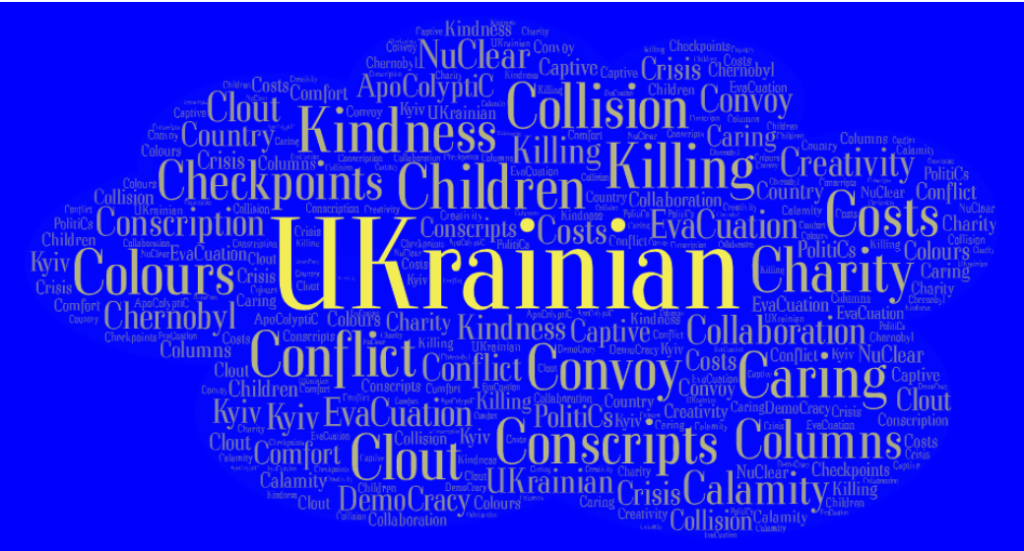
But instead, without forgetting the Syrians, it is time to think about the Ukrainians and our Canadian Ukrainians. In the spirit of creativity and the sounds of words, I offer this word cloud of my thoughts while I find something more concrete and effective to do. And did you know that the yellow in the Ukrainian flag represent wheat and the blue, the sky?

Filed Under: Uncategorized

How does your reading history influence your writing?

December 22, 2021 by Carolyne Montgomery

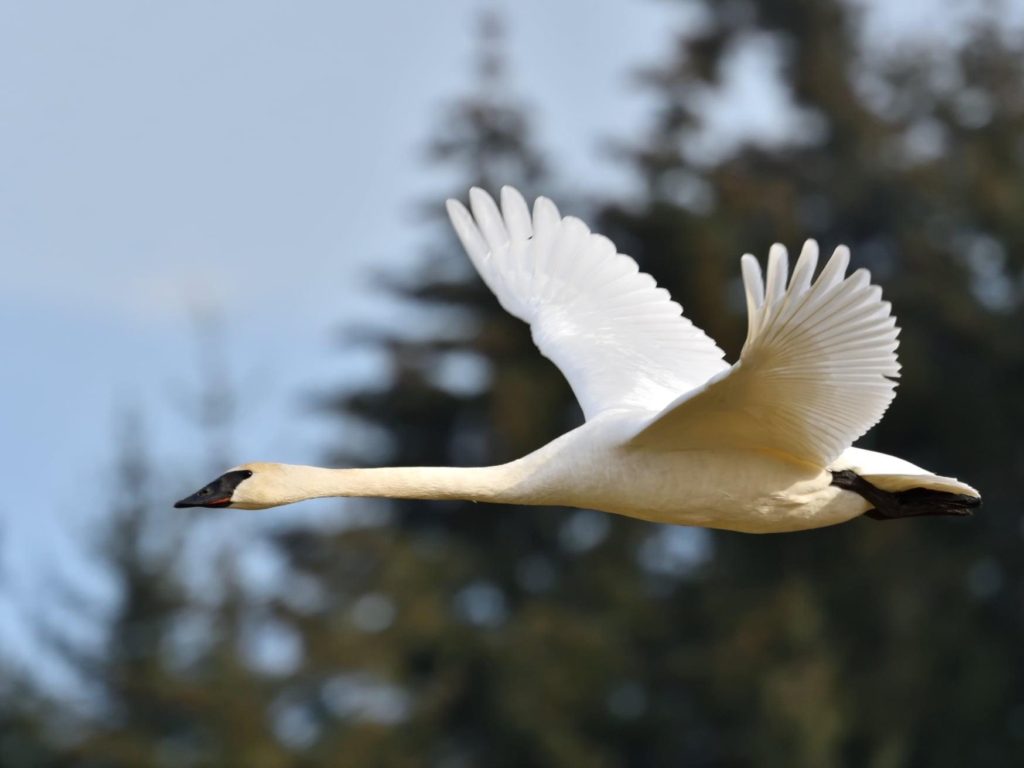
There’s lots to worry about right now including that the Trumpeter Swans have not come back to the Comox Valley in their usual numbers yet this year. I have only seen one pair of birds in contrast to the hundreds that overwinter in the local farm fields. I hope this is a transient phenomenon.

Trumpeter Swan with permission of Gerry Ambury

But it is also the year-end and time for BEST OF lists.

As part of a recent writing exercise, I was asked to think of my life in five-year blocks and to recall (misremember) what fiction I was reading that most affected me at the time.

It would be great to say I was reading ancient Greek philosophers, or any of Quixote, Shakespeare, Milton and so on but I wasn’t. Do Classic Comics count?

I’ve made a list to see out old 2021.

And to make it harder, I couldn’t refer to my bookshelves or any other sources to twig my memory or correct dates, spellings, titles, and authors. And I wanted to do it over a short period as one memory seems to release others and I wanted the list to reflect what comes up first and was possibly the most formative. I have no evidence for this thought. So, for your enjoyment and editing pleasure my list from less than 24 hours.

Age Under Five

I was lucky to have had parents that read and sang to me. And I do remember the first time I realized I could read. I was on the upper level of a double-decker bus in Edinburgh and saw the blue and white (or was it green and gold) sign for Greyfriars Bobby’s Bar. I saw the letters BAR and said to whoever was with me, “Bar, just like Barbara,” which is my sister’s name. I digress.

All sorts of anthropomorphic adventures of bunnies, foxes, hedgehogs, badgers and the like dressed in waistcoats and aprons and other Victorian costumes.

The Tales of Beatrix Potter with their soft and detailed illustrations

When We Were Very Young and The Adventures of Winnie the Pooh, AA Milne

Nursery Rhymes I can still recite wholly.

Presbyterian Prayers

Age Five to Ten

(This age category was the most fun thinking about)

Now We Are Six

The Wind in the Willows

A Child’s Garden of Verse – “I should like to rise and go Where the golden apples grow.” And later as a teenager, Treasure Island.

Grimm’s Fairy Tales with grim woodcut drawings of children in peril

Hans Christian Andersen Fairy Tales, less grim

(and both books were crumbling antique editions that seemed to add to the seriousness of the situations that the children contending with)

Enid Blyton’s Noddy and Big Ears series and many others

Tintin series

Children’s Annuals–Rupert Bear, The Bunty Book

Heidi, Black Beauty, Little Women (tears after each)

Swallows and Amazons

Age Ten to Twenty

(Here the age categories are challenging, the journey from children’s literature to more adult interests)

Tales from Narnia, CS Lewis (but never The Last Battle)

Jane Eyre, Charlotte Bronte

And this may be cheating but some movies that affected me profoundly:

            Easy Rider and A Clockwork Orange and later Trainspotting and although I tried I was never able to read Anthony Burgess or Irving Welsh.

Mary Renault books

The Once and Future King, TH White

And believe it or not, as I took Greek and Latin in high school, I read the Penguin Editions of the Iliad and the Odyssey. But have yet to read the Aeneid or the modern derivative novels.

The dystopias.

Fahrenheit 451, Ray Bradbury, Orwell’s 1984 and Animal Farm,

Day of the Triffids and The Chrysalids. (I’m not allowed to look up the author)

All Quiet on the Western Front

DH Lawrence Sons and Lovers and others

Catch 22

And in my 20’s to 30’s.

Doris Lessing’s The Golden Notebook and others

Mavis Gallant short stories (I want to look up the name of the collection)

Early Alice Munro (same, Lives of Girls and Women?)

The Deptford Trilogy and others, Roberson Davies

Stephen Finlay, The Wars, Famous Last Words, the one about the bird plague?

I won’t get the dates right but Margaret Atwood’s The Edible Woman, The Cat’s Eye, Surfacing and later The Handmaid’s Tale.

Crying of Lot 49, Pynchon.

Conrad, Heart of Darkness after having seen the movie, Apocalypse Now

30’s to 40’s and probably mixed up with my 50’s

Lots of children’s books for small children. Peepo, Goodnight Moon and so on

Carol Shields, Larry’s Party and others, which reminded me of

Mordecai Richler, Barney’s Version and others

More Atwood, the futuristic dystopias, Oryx and Crake and others

More Lessing, the futuristic dystopias

Drabble and Byatt, Possession (I’d have to look the others up)

More Munro

Salman Rushdie, Midnight’s Children which brought me to

Anita Rau Badami, Tamarind Mem

Arundhati Roy, The God of Small Things

Vikram Seth, A Fine Balance and A Suitable Boy

The English Patient and others, Michael Ondaatje

Ann Marie MacDonald, Fall on Your Knees

Tim O’Brien, The Things We Carried

Annie Proulx, The Shipping News and her short stories including Brokeback Mountain

Michael Crummy, The Wreckage

Shirley Hazzard, The Transit of Venus

Grahame Green, The Quiet American, The Heart of the Matter

Steven Galloway, The Cellist of Sarajevo

John Vaillant, The Tiger and The Golden Spruce

Half a Yellow Sun and I need to look up the author’s spelling Adiche?

And now in my 60’s, I finally got to

Tolstoy, Anna Karenina

Melville, Moby Dick

And I am otherwise busy reading short story collections by many of these authors and others.

So, a fun exercise to see what you one does recall and why. And it was most helpful that the word-processing program spell checked many authors names.

I think if I looked at this list again tomorrow, I would remember even more but it’s more interesting to see what comes up without much thought.

And even if I had looked at my bookshelf, since I usually foist whatever I have loved reading on someone else so I wouldn’t even have kept a copy of a favourite book.

What do we remember and why? What was your most formative fiction?

I wish you all a safe and joyful holiday as we navigate this next episode of uncertainty.

Post Script

Since I wrote this a few hours ago, I realize I forgot On the Beach, Nevil Shute and Cormac McCarthy’s The Road but even better, when I drove by the field where the Trumpeter Swans feed, there are now at least a dozen of them.

Filed Under: Uncategorized

An Idea, an Image and a Feeling

October 9, 2021 by Carolyne Montgomery

After a hot and dry summer here in the Comox Valley, it’s indoor writing season. Time to drag out the notebooks with point form ideas and see what I can make of it all. I’ve spent some of the summer thinking about the things I have learned so far about the craft of Short Story Writing. I’ve learned that successful writing creates strong images in the reader’s mind. And who better to learn about creating strong images than a visual artist.

Painting by David Hockney

I’ve been inspired by the painter, David Hockney’s two collaborations with Martin Gayford, Spring Cannot Be Cancelled and A History of Pictures. Most of you will know David Hockney, the British modernist who’s shacked up his converted farmhouse in Normandy painting variously on his iPad and also with more traditional media–acrylic, ink, charcoal.

Martin Gayford is the art critic for The Spectator and has known Hockney for twenty-five years. The discussion format of the Spring Cannot Be Cancelled via shared emails and telephone calls between the two makes for informal and informative reading. The book is illustrated in hopeful, energetic greens and blues of rural spring scenes, trees budding or blossoming in partial abstraction.

A History of Pictures is an excellent survey of art history from the shared point-of-view of an artist and a critic. It was a great journey for me guided by the opinions and knowledge of these experts. From each discussion, I learned more about what to look for, what to see and how to see what was absent. And I think the same could be said about learning how to write fiction. It is an exercise in learning how to create effective mental images in scenes, learning what to put in and what to leave out.

There are several discussions about what makes a good painting. I would like to paraphrase and summarize what I think they were saying and apply the comments as a method for making a good short story.

Writing like Painter – Some ideas

Painters and writers can still get better at any age. This is reassuring to a late starter.

Don’t get filled up with ideas of what you think you should do or what someone else thinks you should be doing.

There must be a sense of something that has happened before the work and something that is going to happen after. (I love this one. A good short story has a past and a future)

The reader is looking for motion but they need to know who is doing what and where.

A single Point of View (POV, vanishing point in paintings) may not be the best choice. Consider parallel POV. Hockney is mad about parallel POV.

Consider the empty side of the table. Think of Da Vinci’s The Last Supper here. The fourth wall in theatre. Should you have a narrator or character that talks to the reader?

Characters need to be clothed in subtle costumes with credible postures and emotions. This requires understanding ambiguity

Each scene in a story must create an image.

And what is in that image?

There must be layers of light and shadow and movement.

Some movement is central and some movement is peripheral.

There should be structure and repetition.

Some things are revealed and some things are partially concealed.

The image must evoke a feeling.

The feeling must have meaning to the character and the reader.

The meaning provokes memory in the reader that will deepen the experience of reading.

When the work has layers, each re-reading of the work gives the reader a deeper experience.

So going forward

I’m looking forward to a productive writing “season”, thinking of David Hockney’s ideas and re-working my own.

What short stories am I reading?

My new short story crush is David Barthelme. It is quirky original stuff with great structure. Here is a link to his piece The School

I’m reading Australian writer, Shirley Hazzard’s collection of short stories and studying her contrasting sentences.

And, last spring I read A Swim in a Pond in the Rain, which is George Saunders’ close read of four Russian novelists. It’s loaded with wisdom I have yet to understand and requires multiple re-readings.

Happy reading and writing.

Filed Under: Uncategorized

The First Time I listened to Bob Dylan

June 13, 2021 by Carolyne Montgomery

A flurry of articles like cherry blossoms falling celebrated Bob Dylan’s 80th birthday in May. Enthusiasts poured over lists of the best songs, and the best albums, considering what should have been included or excluded. I was reminded of the first time I listened to Bob Dylan. Forget about when Kennedy was shot or 9-11, where were you when you first listened to Bob Dylan?

How to know if what I remember is true? You won’t. For sure, I was late to the Bob Dylan party. I came to “Blowing in the Wind” via Girl Guides and Peter, Paul and Mary and “Mr. Tambourine Man” via the Byrds radio hit cover version.

Top 40’s music poured out of my bedside teal-green plastic AM radio, tuned to CHUM 1050 Toronto. “In Toronto, it’s number one!” the catchy jingle rang out. Dylan’s 1969 hit was Lay Lady Lay and the thirteen-year-old me thought it was a pretty ballad with creepy lyrics. “His clothes are dirty but his hands are clean…” Did I know it was a Bob Dylan composition? I’m not sure.

In the summer of 1971, my brother and I and talked our dad into buying my sister a record player for her fourteenth birthday. It had a turntable and two detachable speakers with long spindly wires for better sound separation. Stereo sound was a new feature on LP’s. (long-playing records). I think the record player cost forty dollars, well over our budget. We didn’t bother asking my sister if she wanted a record player for her birthday. We needed a way to play our music at the cottage. What albums were we listening to that summer? Cat Stevens, Tea for the Tillerman; Janis Joplin, Pearl; The Band, The Band. We poured over the cover art and liner notes to find every detail we could find about the artists. The lyrics were rarely printed, we learned them or mislearned them (a mondegreen), by listening to the same track over and over and over.

My sister loved the Moody Blues, Days of Future Passed and the concept album, Tommy by the Who. We all listened to the Beatles’ Abbey Road and I wished that I owned Blue by Joni Mitchell. And when the cottage floor shook from our leaping up and down during “Jumping Jack Flash” or “Honky Tonk Woman” from The Stones, Through the Past Darkly vol II, we kept the stylus tracking on the vinyl by taping pennies to the top of the tonearm.

But that was usually weekend stuff. For most of that summer, mid-week, my sister and I were on our own in the wooden cottage with plywood walls and worn linoleum floors. The cottage had all the modern conveniences, running water, flush toilets and electricity but was on a large island in a lake in the Kawarthas in Ontario. The store and the payphone were a mile away on the mainland. We would gently paddle the canoe or roar across the water in “The Tin Can,” our aluminum boat with a 9.6 HP motor. Why 9.6 and not 10 HP? I never knew. Our parents were newly divorced–Dad, in town an hour away by car and Mom, in another country.

One the day I listened to Bob Dylan, my sister and I had crossed the water to go to the store to get maple walnut ice cream cones. We were wearing our summer uniform–T-shirts and cut-offs over our bikinis and calloused bare feet. It was my summer of Sun-In hair lightener. Blonds had more fun.

We met these two guys at the government dock. They were friendly and clad in the expected uniform of tight Levis 501 jeans, flapping plaid flannel shirts over tight T-shirts and steel-toed work boots. Their hair was long and shaggy. They were older, maybe even out of high school. Tall and skinny. Did they have names? Sure–single-syllable English names like Ken, Al, or Jeff or maybe even Bob–something like that.

“Do you like Bob Dylan?” one of them asked holding up the album he was carrying. And I knew I was supposed to, so I said yes but I would have been guessing if he asked me to name one of his songs. Which Dylan album was it? I can’t say for sure. But we invited them back to the cottage to play it. We clambered into The Tin Can and buzzed back across the lake to the cottage. It must have been a sunny day with calm water. It was a long crossing when the weather was bad.

One of them put Bob’s record on the turntable of my sister’s stereo system with the fake green leather covering and those separated speakers. They may have smoked a joint before they met us. They talked in slow, low tones. They sat together on one couch and my sister and I sat on the other one. We listened in silence to that rasping voice and those mournful harmonica sounds. I pretended to understand the lyrics.

And after fifteen minutes or so, one of them got up and turned the album over to the B-side. I don’t know that for sure. Maybe he played the B-side first? Not everyone is a purist. I’m not sure I recognized even one of the tracks. But I knew from how they nodded and listened that this music was important. It was like listening to a hymn in church. And that’s all we did. We listened.

Did we offer chips or pop or even beer? No. We wouldn’t have any beer until the weekend when my brother or father would arrive. Did they offer us a toke? I expect so. Did we take one? Maybe. And they stayed for the time it took to play the album. We didn’t dare suggest that they listen to our music. And then we ferried them back to the mainland and said goodbye. The whole event was just listening to music on my sister’s record player.

Since then, I’ve tried to figure which one of Dylan’s albums it might have been. By 1971, he’d released eleven studio albums and one compilation album, Bob Dylan’s Greatest Hits, the only Bob Dylan album I ever bought. He composed a lifetime’s work of enduring pieces in under ten years. And at least five of those years were spent recovering from a serious motorcycle accident. Maybe the album that day was Nashville Skyline with “Lay Lady Lay”? But surely, I would have remembered that song with the creepy lyrics and been awestruck by his duet with Johnny Cash in “The Girl from the North Country,” with its old British ballad, Scarborough Fair sound and shared lyrics.

And a few years later, Dylan played with The Band in Toronto’s Maple Leaf Gardens. At age seventeen, concerts in hockey arenas seemed like a good idea. I was a fan of both Dylan and The Band’s musical confluence of folk, country, blues, and rock. I’d found Music from Big Pink. “The Weight” and “I Shall be Released” are hymns to me.

Musicologists from the 2010 Rolling Stone Magazine list of 500 greatest songs credit “Like a Rolling Stone” from 1965’s Highway 61 Revisited as the number one greatest rock song of all time. (beating number 2, also from 1965, The Stones, “Satisfaction”). Dylan has fifteen songs on this list. And yes, this list was likely created by ageing white males who speak only English. What makes a greatest song? According to the hip-hop artist Jay-Z, “it just is”.

It’s fifty years later. Patti Smith has sung “A Hard Rain’s Gonna Fall” in Sweden at the Nobel prize ceremony in 2016. Bob and I both have grey hair. He’s sold his back catalogue and I’m mortgage-free. Does he fight of old age by pedalling a Peléton as he tours? And fifty years later, I’m still only familiar with those early years of his work and my favourite piece remains “The Girl from the North Country.”

Do you have a Bob Dylan story?

The Girl from the North Country

So, if you’re travelin’ in the north country fair

Where the winds hit heavy on the borderline

Remember me to one who lives there

She once was a true love of mine

Filed Under: Uncategorized

  • « Go to Previous Page
  • Page 1
  • Page 2
  • Page 3
  • Page 4
  • Interim pages omitted …
  • Page 6
  • Go to Next Page »

Primary Sidebar

Recent Posts

  • Spring Is Sprung …
  • Chapter 4: The Tree
  • Reflecting on Aging and Kathy Page’s Memoir
  • Chapter 3: Alterations
  • Chapter 2: Webbed Feet

Archives

  • April 2026
  • March 2026
  • February 2026
  • January 2026
  • November 2025
  • September 2025
  • May 2025
  • December 2024
  • October 2024
  • July 2024
  • June 2024
  • May 2024
  • November 2023
  • October 2023
  • August 2023
  • November 2022
  • May 2022
  • March 2022
  • December 2021
  • October 2021
  • June 2021
  • April 2021
  • February 2021
  • December 2020
  • October 2020
  • July 2020
  • May 2020
  • March 2020
  • February 2020
  • January 2020
  • November 2019
  • October 2019
  • September 2019
  • July 2019
  • June 2019
  • May 2019
  • March 2019
  • January 2019
  • December 2018
  • October 2018
  • August 2018

Pages

  • A Swim in a Pond in the Rain – A Commentary
  • About Carolyne Jane Montgomery
  • Contact
  • Home
  • Independent Bookstores
  • Privacy Policy
  • Publications, Readings and Other Stuff
    • The Solstice Party
  • Signup

Copyright © 2026 · Carolyne Montgomery · All Rights Reserved | Support by Mastermynde