• Skip to main content
  • Skip to primary sidebar
  • Skip to footer

Carolyne J Montgomery - Reader & Writer

Carolyne Reads and Writes

  • Home
  • About
    • Socials
      • Facebook
      • Instagram
  • Watermarked Series
  • Publications & More
    • Indie Bookstores

Uncategorized

Visualizing Positive Outcomes

September 24, 2019 by Carolyne Montgomery

I am back at my writing desk thanks to the relentless deluges of the past few days. It’s that wonderful time of the year when the moon is full when you can see it during the cloud break and the mornings are dark and cool. I have three modestly-sized burnt-orange pumpkins emerging from the withering canopy of vines. I am negotiating with the deer whether it is worthwhile planting a few daffodils or not. They look at me quizzically when I bring up the subject.

It is the time to atone for the indulgences of the summer. I have made a list of penances: The outdoor furniture must be cleaned and stored. My summer whites, after all, it is well past Labour Day need to be properly folded and put out of sight. It is time to find all the woollen, fleecy, puffy and waterproof items that were stuffed in old suitcases last Spring.

It is time to make a realistic plan to maintain all that hard-earned fitness from tennis, swimming and riding. Oh God, that might have to include spinning. It is time for the soups and stews that I never make in the Summer.

It is time to start finishing some of my short stories instead of just blasting out a new idea and abandoning it in a fetal form. It is time to start the harder work of revision and the follow-through of submission. It is time to set a realistic deadline for the completion of a collection of stories that can be discussed with a publisher. Sigh…

How to make all these things happen? Many of you have been enjoying the successes of our new national heroine, Bianca Andreescu – the teenaged winner of the Women’s US Open – who,  in a two-set thriller conquered (sorry for the battle metaphor here) Serena Williams who is completing her athletic-comeback campaign from her difficult childbirth. 

#shethenorth doesn’t really resonate with me so I call her Bianca Borealis. She is a nineteen-year-old athlete who didn’t qualify for last year’s US Open and is now ranked number five in the world. Her composure and maturity under both athletic and media pressures are extraordinary. She attributes her successes to her habit of visualization, the mental rehearsal of successful outcomes.

What exactly visualization means is variable and not as yet scientifically defined. Visualization can mean creating a multi-modal cognitive simulation (mental video) of something that is not actually happening but that you would like to accomplish in the future. Like writing, this can be done from the point-of-view of first person or the third. (where you are a spectator of your performance) 

 Performance characteristics that can be modified include such things such as how you actually do the whole task or a specific component of the task. Aidan Moran, an Irish psychologist lists the areas where visualization may improve task outcomes: learning, practising, planning, arousal control (anxiety), confidence, (reprogramming of negative beliefs), attention focusing, error correction, interpersonal issues and recovery and healing. While this video link is golf based, the concepts are generalizable to any area where you can set a target. I liked having to think about what is a positive routine versus a superstition. Some limited studies in specific sports (golf was easy to find) show increased confidence, more rapid and comprehensive mastery. The neurophysiological mechanism of these positive effects has not been defined but that has never held us up before. ( think about counselling psychology) Repetitive mental rehearsal of tasks can improve the actual performance in areas as diverse as surgery (simulator performance) or golf.

The keys to a successful practice are to be in a relaxed state and in a detailed and positive way rehearse and visualize a positive outcome. Like writing, the realistic state is achieved by using all five senses and to monitor for and substitute any negative emotions such as doubt, fear, and futility with feelings competence, confidence and purpose. It helps if your visualizations are underpinned by the extraordinary competencies that come from talent and years of practice. Bianca’s detailed and positive visualization allows her to use her competencies and not be shackled by self-doubt. 

Me, I’m still at the Skill Acquisition Phase but the takeaways are to be positive, stay in the present, have a routine and have an immediate target. (word count, small task completion and so on)

And back to reading. Here is a list of the Guardian’s 100 Best Books of the 21st century.  It’s always fun to see what’s in and what’s out. The list includes both fiction and non-fiction. Do you agree with the choices? Have you read #1?


Filed Under: Uncategorized Tagged With: Visualization, Writing

Denman in July

July 31, 2019 by Carolyne Montgomery

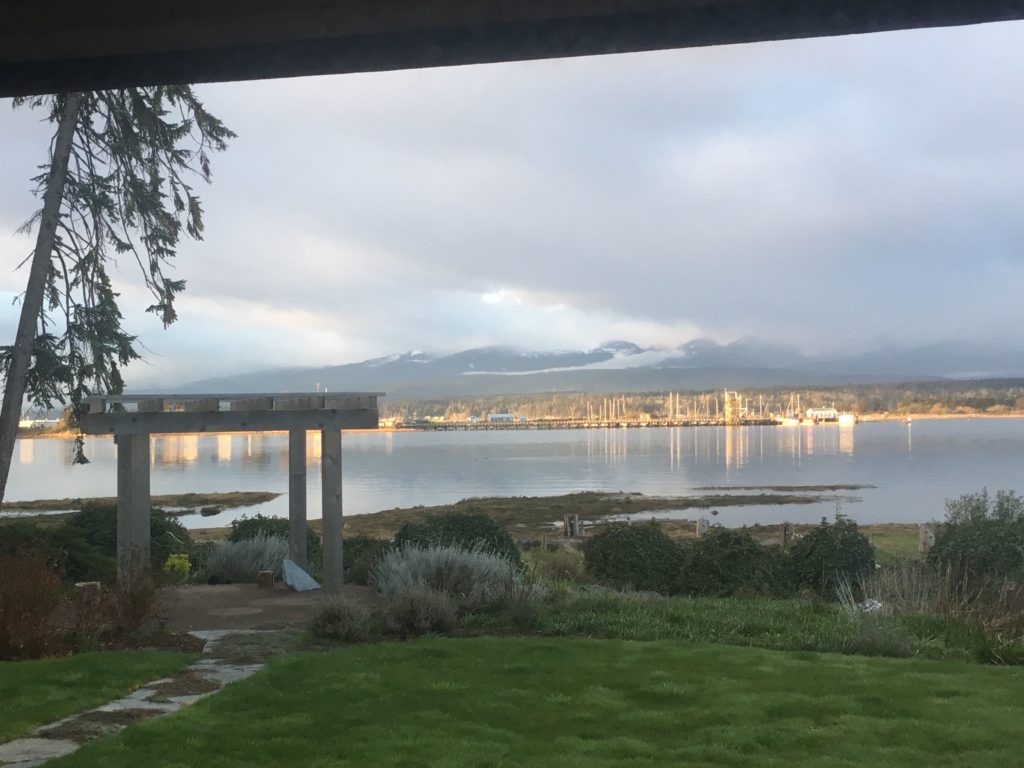
After a few tentative days, July descended with hot sultry afternoons, warm seas for swimming and surreal sunsets over Baynes Sound. It is my twenty-first year watching the sunset from here and each one is a new experience.

Sunset over Mount Washington

I have settled into the rhythms and traditions of the summer weeks at the cabin. This year I attended the Denman Island Readers and Writers Festival.  I asked one of the organizers how many years the Festival has been running. It depends on what you mean. There is good evidence of a Festival since 2002, so perhaps the 17th one?

When I was working full time and when holiday time was more precious, while enjoying this event, its intimate format and nationally renowned speakers, part of me would resent spending my precious free summer hours indoors at the Denman Activity Centre or missing my evening swim and sunset watching by attending the event at the Community Hall. This year was different and I had the luxury of fitting in all the pleasure without any pressure. 

The delights of the Festival include the intimate venues, often with less than two hundred attendees. There are the intelligent and energetic volunteers and organizers many of whom are writers themselves. Readers and writers mill about chatting in informal and animated groupings.

This year, I had the pleasure of listening to Beverley McLachlin share her process of the writing her first novel, the legal thriller Full Disclosure (not to be confused with Stormy Daniels Full Disclosure) and later in an insightful interview by Des Kennedy where I learned of her childhood in Pincer Creek and eventual ascension to Chief Justice of the Supreme Court of Canada. I was able to thank her for navigating the legal waters from Rodriguez in 1993 (5-4 against)  to the Carter decision in 2015 (unanimous for) which paved the way for Bill C-14 and the legalization of Medical Assistance in Dying (MAiD) in June 2016. Beverly alluded to “imposter syndrome” as she was a female forerunner in a male world for most of the achievements in her career. She also alluded to her impatient character. I say working for twenty-two years to achieve the legalization of MAiD suggests tremendous patience and savvy. 

I met Kathy Page, a fiction writer who lives on Salt Spring Island. Kathy is an understated eloquent powerhouse with neat short grey-toned hair. At the evening panel, she wore an elegant black jersey dress accessorized with a beautiful long blue scarf. She skillfully manoeuvers along on the wavering slackline that separates memoir and fiction with her descriptive precision and sense of humour in her recent eighth novel Dear Evelyn. This is a whole life yet chronoclasmic story that follows the emotional and painful trajectory of a seventy-year long marriage. It was inspired by a collection of letters from her father to her mother. She read a passage from Dear Evelyn where Miles the elderly husband is now confined to a care home. He is dependent on carers to perform the intimate act of shaving, an important ritual for him that defined his masculinity and sense of self. His increasingly difficult wife is oblivious to his distraught state at his loss of independence. Ms Page’s prose compellingly conveys the frustration, shame, indignity and helplessness of this character, Harry Miles. I don’t think I will ever watch a man shaving or unshaven again without thinking of this passage.

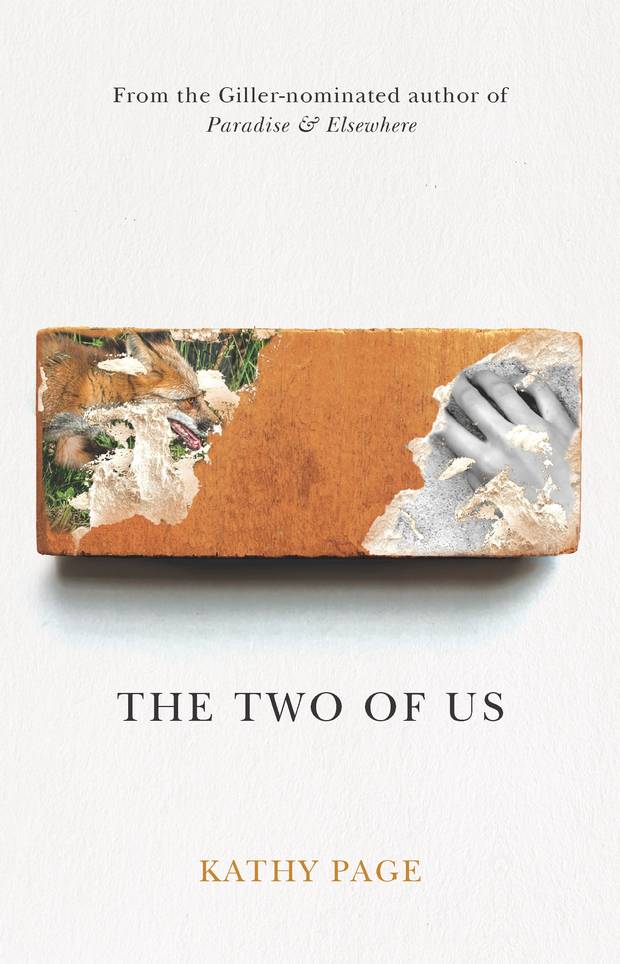
I am enjoying her recent book of short stories, The Two of Us a Globe and Mail Best Book from 2016 and then I’ll get to Dear Evelyn.

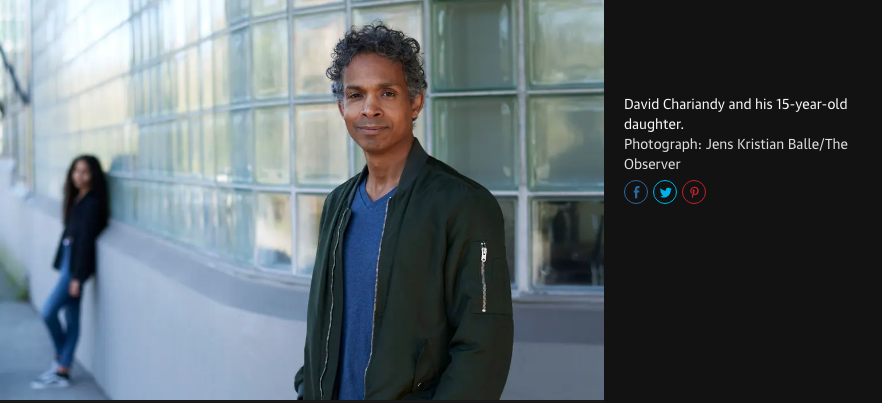
David Chariandry, author of Brother read from his latest book, I’ve Been Meaning to Tell You, a letter to my daughter. David is a diminutive brown-skinned man whose dark curly hair is covered with a faint mesh of fine grey strands. He is of South Asian and African heritage and identifies as Black.  He shared a hideous joy-robbing vignette of everyday racism that he encountered with his daughter when she was three. He was inspired by the work of James Baldwin. I was reminded of Ta-Nehisi Coates essay to his teenage son, Between the World and Me.

From the Observer Piece

I asked him about the conversation that he had with his thirteen-year-old daughter as he sought permission to publish his story. How did he ensure that she understood what she was consenting to? David explained in his humble, polite and thoughtful way that they had talked at length about the issues of the publication. His daughter insisted that she would have final editorial authority about the content. 

We talked further about the generation divides in concepts of privacy with the pervasion of globally accessible media. Perhaps my definition of privacy is no longer attainable? He talked about the importance of preserving one’s name and story. He considered the criminal historical instances where name and personhood were forcibly removed. For these reasons, his daughter is not named in the book nor is there an identifiable likeness of her provided in the book or any of the press associated with it. He hopes that when she is ready she will share her own story. 

There was lots more, so many more stories and personalities, all those Readers and Writers. Consider looking at the website or Facebook page for more information. Maybe consider attending next year? And now I have to return to my own neglected writing projects.      

Filed Under: Uncategorized

Gila’kasla

June 29, 2019 by Carolyne Montgomery

Comox Valley
EJ Hughes

Gila’kasla (Gay-la-key-us-la) means welcome in the K’òmoks language.  I moved to the Comox Valley in April and I respectfully acknowledge that I live and work on the unceded traditional territory of the K’òmoks First Nation. It’s the time of year when there are long sunny evenings and the longest day, June 21st which is also National Indigenous Day.

The Comox Valley is a beautiful and special place that seems to attract artists, foodies and athletes. Famous residents include the writers Alice Munro and Jack Hodgins and the artist EJ Hughes among others.

Farm near Courtenay
EJ Hughes
Snowbirds at the Powell River Ferry Terminal

 I’ve met a lovely group of tennis friends from all walks of life.  I ride my bike along farm-lined roads under the stern gaze of the magnificent Comox glacier. The local riding routes are filled with peek-a-boo views of the Salish Sea and only a few courteous cars.

For a few weeks, the Snowbirds who were training out of the Comox Airforce Base gave morning acrobatic performances.


I am living on the shores of Comox Harbour and the site of an ancient midden, the Great Comox Midden. When the tide is low there is evidence of First Nation fishing weirs from over 1000 years ago at the Courtenay river (the confluence the Tsolum and Puntledge rivers). Archaeologists estimate the  Coast Salish have been in the Courtenay River Valley for over 4000 years.

Goose Spit

My new neighbour tells me that the resident eagle that I see daily has been nesting in the tree overlooking the house for over twenty years. Sadly he hasn’t seen the eagle’s partner in a few years.

Each morning, white-tailed deer wander through the garden and forage about.  Two small white spotted fawns occasionally gambol across the lawn unmindful of their anxious mother. The fragrance of lavender and the drone of bees fill the air.  It is a delight to have a garden again and I have been waging war on holly, morning glory, thistle, brambles, ivy and vetch.  The cats busily murder a daily vole or rat and sadly on occasion a small brown bird.

I spend hours watching the ancient estuary tide go up and down and the parade of sailboats, kayaks and SUPs milling about the harbour. Ecstatic voices ring across the water on the still evenings. On a rare big wind day, the swooping kiteboarders hurtle across the white caps. The Bybrook stream runs by the house and my eagle visits there nearly every evening at sunset to fish. He is often accompanied by a Great Blue Heron.

 I have been unpacking the artefacts of my own life – clothing, china, books, linens and keepsakes from my own childhood and my children’s – items that have been stored away for the last ten years. I’ve been setting up what I hope is my last home. That Abbey Road album I’ve unearthed is fifty years old now and I can’t remember who bought it. Is it mine or my brother’s? The Moody Blues one is definitely my sister’s.

Meanwhile, my internal and external writing spaces are in complete disarray. Or perhaps they are in transition?  I hope to regain my stride and visit with you all again soon.

Filed Under: Uncategorized

Cathedrals, Abbeys and things

May 5, 2019 by Carolyne Montgomery

St Giles Cathedral, Edinburgh

I spent my early years in Scotland marinating in the shadow of Castle Rock, gazing up at Edinburgh Castle and surrounded by ancient buildings. My first cathedral experience was St. Giles Cathedral. Despite being a monument to Presbyterianism, the Church of Scotland, the steeple is a richly ornamented crown and the Thistle Chapel brims with detailed and often whimsical wooden carvings. It is a testament to ingenuity and craftsmanship. (craftspersonship?) 

I have always been a fan of religiously inspired architectural marvels such as Notre Dame de Paris, the Hagia Sophia or the Gurudawara Sahib (The Golden Temple). Due to their prime geographical locations and fluctuating cultural relevance, these buildings often have complicated histories of disaster, restoration, consecration and desecration.

As a teenager, I kept a list of the monumental Gothic cathedrals and abbeys of Europe that I had seen. I was proud there were more than twenty.

I first saw Notre Dame de Paris, the most visited of France’s eighty-seven cathedrals in 1974 as a teenager during my trip to Europe in the summer after high school and before the start of university.  Unbelievably, I did not discover the adjacent and lovelier Ste Chapelle until I was over forty.

Flying Buttresses of Notre Dame de Paris

I drew from the limited knowledge of my Grade 11 art history course and studied the architecture of the naves, transepts, choirs and rose windows. I searched for Romanesque versus Gothic features and examined the fanned stone ceilings. I explained to anyone who would listen about the architectural miracle of the flying buttresses that allowed the stretching of these buildings to unprecedented heights. I thought about the skills and optimism of the thousands of stonemasons and carpenters employed in the creation of these monuments.

Being a weary, impoverished backpacking teenager, these cool damp spaces illuminated with the jewel-like reds, blues and greens from the stained glass windows and scented with the ritual incense and wax from the votive candles were timeless places of refuge and contemplation.  As I grew older, it seemed that every decade or so I would revisit Paris and take stock of my life since the previous visit. What had worked? What had failed? Where, why and with whom was I going next?

In the aftermath of the Notre Dame fire, some have justifiably commented on the unrepentant evils of the Catholic corporation (distinct from personal Catholic faith) and the patriarchal, evangelical and colonial values that these monuments represent. Humanities achievements and failings are best understood in their historical context and without resorting to retrospective condescension.

Notre Dame de Paris was built eight hundred years ago in Medieval Europe, a time when the most revered female, the Virgin Mary was celebrated for the impossible combination of chastity and maternity. The remainder of female mortals were restricted to any of the subordinate positions of spinster, wife, mother, queen, widow, repentant temptress or martyr. The role of the female was defined by her relationship to a more powerful male.

I think of it as a time when women achieved agency through deception, manipulation, cross-dressing and behaving for acceptance into the male world or by retreating into a nunnery. For many women, the veneration of the Virgin Mary replaced the divine worship of God. These Marians prayed for fertility, the health of their children and release from oppression. I like to remember all the women and other oppressed minorities who found solace and hope in the sacred spaces of these cathedrals.  

Chartres Cathedral

My favourite cathedral is Notre Dame de Chartres. Chartres Cathedral also has survived multiple restorations, reconstructions and three major fires.  Its distinctive asymmetrical spires rise above the cornfields that flash past the windows in a Van Gogh painting sort of way as the train hurtles towards Chartres from Paris.

I walked the labyrinth, the geometrically precise pattern inlaid in the floor of the cathedral.

The Labyrinth Pattern

By tracing the half-kilometre path to the centre and back to the perimeter of the labyrinth, believers experience a contemplative and restorative state. Walking the labyrinth as a hopeful newlywed in the early eighties,  I felt a powerful connection with the previous centuries of pilgrims who had paced the same path. To find a labyrinth near you and celebrate World Labyrinth Day on May 4th, please visit The Labyrinth Society.

My second favourite cathedral is Antoni Gaudi’s, La Sagrada Familia in Barcelona.

The building was started in 1882 and the projected year of completion is 2026, a long-term project. The structure is a mash-up of botanical, branching designs, fractals rendered in Gothic and Art Nouveau styles. The distinctive Gaudiesque coloured tiles decorate many surfaces.

Disasters are a test of our resilience and humanity. The shared grief after the fire at Notre Dame de Paris underscores our commonalities in a time when current political cultures are trying to highlight our differences. Notre Dame, the Medieval monument to this humanity is a state asset and will require public and private funds for restoration. To understand more about the relationship between France, the Catholic Church and the maintenance of religious monuments read here.

While it would have been nice to see this scale of concern and generosity with some of our other recent humanitarian disasters, I welcome the extraordinary philanthropy and redistribution of wealth that has been offered to reconstruct this monument.

Filed Under: Uncategorized

Adulting

March 31, 2019 by Carolyne Montgomery

After last month’s reflections on Parenting, I have been thinking about Adulting. The OED definition of adulting is the practice of behaving in a way characteristic of a responsible adult, especially the accomplishment of mundane but necessary tasks. The American Dialect Society cites a tweet from 2008 as the first documented use.  Twitter is now a recognized source for first-usage citations of neologisms.

 I searched #adulting on Twitter and scanned the topics that surfaced. They clustered around finances (not enough money), fatigue (not enough time), eating habits (wanting to do better) and celebrating the completion of or the challenges associated with various domestic tasks. These included items such as meal preparation, paying taxes, cleaning and organizing domestic items.

I tried to find a Google source that provides a definition of an adult beyond the chronological milestones (eighteen or twenty-one years old) or the ability to complete mundane or necessary tasks. Was there a measuring device such as an Adultometer or list of competencies that could be tested? 

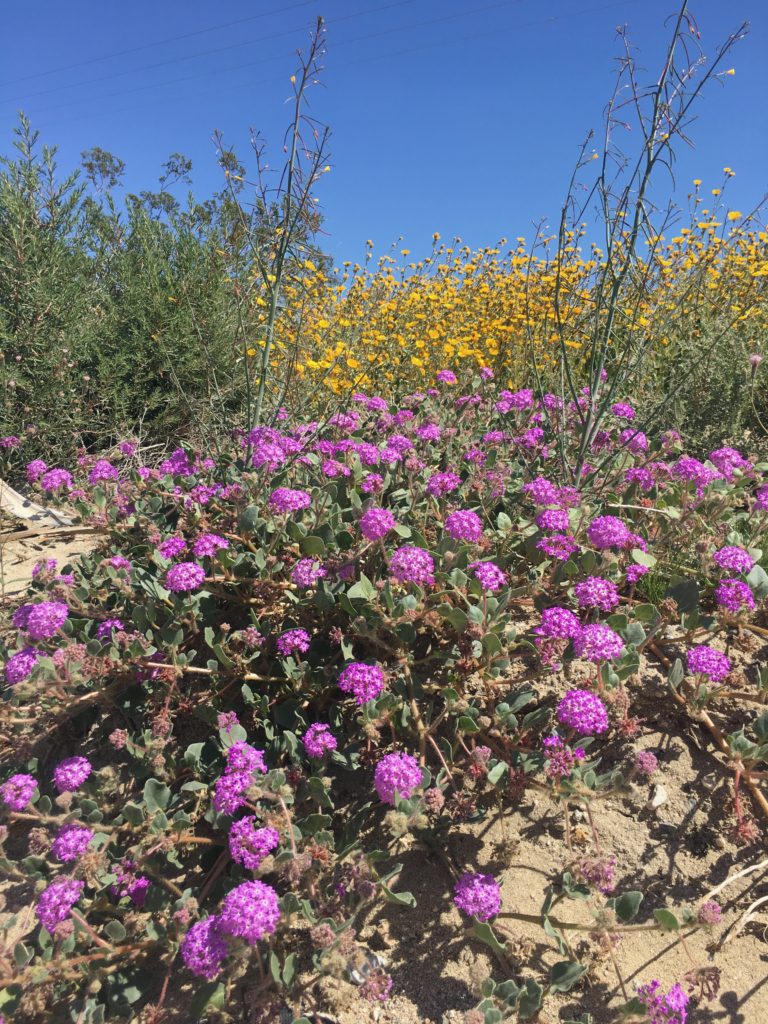
San Gorgonio Mountain and Desert Lupins
Desert Verbena

Meanwhile, I was in Palm Springs enjoying the fresh lemons from my neighbour’s tree and the superbloom of desert flowers after the wet and cool spring.  I was also watching the invasion of three teenage Canadian tennis players into the Indian Wells Tennis tournament – Andreescu, Auger-Alliasime and Shapovalov. After the eighteen-year-old Felix Auger-Alliasime narrowly lost his match in the third game tie-breaker, he posted the following tweet.

If you can meet Triumph and Defeat and treat those two imposters just the same 

Most of you will recognize this as a quotation from Rudyard Kipling’s poem If, published in 1910. ( link to the poem is below) Rudyard Kipling was a man of his time – an era of imperialism, colonialism and white male supremacy. This poem was inspired after a bungling of leadership in the Boer war and written as advice to his son. I parsed it for the recommended adult attributes and found this list:

Calm, Confident, Cooperative, Patient, Honest, Accommodating, Understanding, Humble, Optimistic yet Realistic, Creative, Resilient (Stoic), Practical, Decisive, and Compassionate. 

You might be able to find others? I would add that self-compassion, accurate self-appraisal, tolerance of ambiguity and understanding the necessity of forgiveness are also crucial to adulting.

We used to have a cartoon on the fridge when my kids were teenagers that went something like this.

“Why does my Mum always know how to push-my-buttons.”

“She installed them.”

Maybe the journey from child to adult requires the uninstalling of all the bad buttons from childhood that interfere with self-regulation?

A successful adult knows their strengths and weaknesses . They can identify, differentiate and manage the most primal feelings such as fear, sadness and anger. They have developed a repertoire of appropriate positive behaviours that can be draw upon to manage these strong negative emotions in themselves and others.

There is more and more evidence that contented successful mature adults have developed skills that allow them to self-regulate their emotions in most contexts. They are better at self-advocacy and the optimization of their personal potential. Educators are examining methods to teach emotional literacy – the ability to understand yourself, read others and choose the behaviours that will improve social interactions.

Felix Auger-Alliasime at age eighteen in his first major tennis tournament had the wisdom to accept and learn from his defeat. He then went on to become the youngest male player to reach the semi-finals of the next major tournament in Miami. He is mature beyond his years in triumph or defeat.

Being an adult is not a chronological state and adulting is not only completing tasks such as managing your finances, getting to work on time or eating well.   Adulting is the continuous evolution of desirable characteristics and emotional skills that allow individuals to reach their personal potential. 

If  Rudyard Kipling

If you can dream—and not make dreams your master;
If you can think—and not make thoughts your aim;
If you can meet with Triumph and Disaster
And treat those two impostors just the same;

If you can bear to hear the truth you’ve spoken
Twisted by knaves to make a trap for fools,
Or watch the things you gave your life to, broken,
And stoop and build ’em up with worn-out tools:

Filed Under: Uncategorized

Parenting and Adulting

March 10, 2019 by Carolyne Montgomery

This piece started out as a meditation the verbs, parenting and adulting, both examples of when a word that is historically used as a noun (eg: parent or adult) is transformed into a working word, a doing word, a verb, to parent – the activity of bringing up a child as a parent.

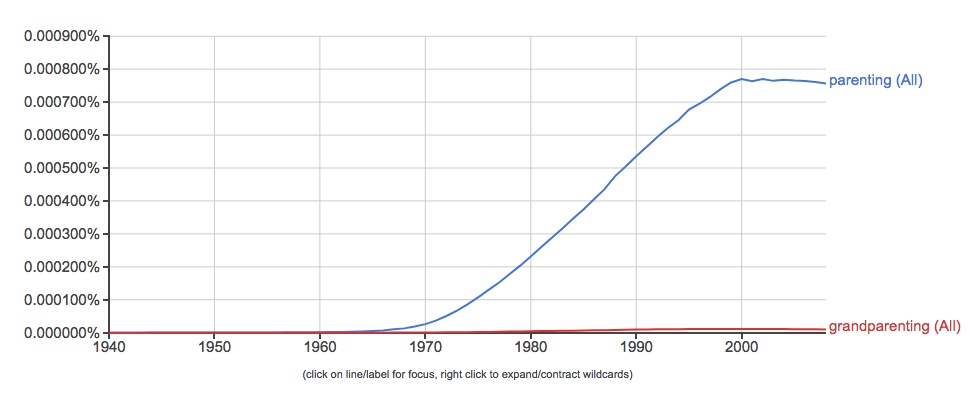
For the babyboomers, the parenting expectations and opportunities were different from their parents’ generation. With the advent effective birth control for women in the 60’s, motherhood could be postponed to allow for career development. Both parents could have careers and third-party childcare became the norm.  (Extended childcare with family and friends was routine in families of lower economic circumstances where both parents had to work.)   Although the word parenting was first coined in 1930, its usage took off in 1959.

PARENTING Google Ngram

Society, families and individuals struggled with what type of care would be best for the their children. Concepts of the ideal family, gender and gender roles became more plastic. I think the increased use of the verb to parent acknowledges the unpaid work that is required to raise children.

Women in the late ’60s and ’70s, were encouraged to pursue careers outside the home by the second-wave feminists such as Germain Greer and Betty Friedan, neither of whom had children.  Meanwhile, new feminist mothers were challenged and criticized by everybody else including their spouses and stay-at-home mothers for being negligent by outsourcing the parenting responsibilities.

There was also reverse criticism by working parents of the stay-at-home parent. The  stay-at-home was often seen as inferior, subservient, underdeveloped or unsuccessful to those who had fought for professional recognition outside the home. This disrespect was even more dire for male partners who stayed at home, where they were untrusted by both working and stay-at-home mothers.

Our post-war parents were disdainful of our child-rearing angst regardless of what choice was made.

“She’s killing herself. Why doesn’t she just stay home. They’ve got the money.”

“After all that training and now she is just staying at home with the kids.”

“How does he do it? Staying at home with the kids now. He was a computer programmer you know.”

“I don’t know why they had kids. They just park them at the daycare all the time.”

“That nanny they have holed up in the basement can barely speak English. How are those kids going to turn out.”

“How does she think she is ever going to keep her skills up if she takes all that time off with her baby?”

Most shamefully, often women professionals, doctors and lawyers and so on, were the greatest critics of our co-workers. The punishing intolerant system that we were somehow surviving by doing it all seemed to make it too hard to be compassionate. The combination of committed professionalism and competent parenting had not been engineered into the system. If a colleague was absent or couldn’t do the work competently due to a family emergency, the rest of us, often resentfully, had to pick up all the pieces. There were no redundancies.

Looking back at my struggle to do it all – and I truly believed it was doable, if only I was organized enough and worked hard enough – I could have it all – family, work-life balance, career, friends, hobbies and a healthy partnership. If I wasn’t successful then it meant I was insufficient, simply not good enough.  My success in the work place was predicated on a gender performance that was modeled on existing masculine ideals. This was decades before Sheryl Sandberg wrote Lean In.

None of us confessed to each other how crazy it was or how tired we were.  I lived under a cloud of guilt about inadequacy at both work and at home. I joined in the cruel criticism of those who weren’t doing it all. I had no self-compassion so how could I be compassionate to struggling colleagues.

Thankfully, this societal position has evolved somewhat and for the most part, the kids have turned out just fine. These kids are now young adults, millennials who are insisting that the culture change. Did they benefit from dual working parents and outsourced childcare? Are they more self-sufficient or more likely to pursue careers outside the home? Is parenting being shared more equally? Will they use a sequential model with a stay-at-home phase for each parent? Will they be less effective parenting due to the pervasive distractions of technology?

The physiological obligations of parenting such as pregnancy, labour, delivery and breastfeeding (excluding medical miracles) remain nearly exclusively female work.  We can choose to support, supplement, attenuate and remunerate this burden at both societal and legislative levels.

We may be approaching the feminist value of choice for all – to be able to participate in a society that respects each individual’s right to parent in a way that suits their children and their family structure. For most family units, these choices are significantly influenced economic considerations. They should not be limited by societal expectations. 

I think that the hardest part of the job of parenting is unpredictability. An effective employer or organization is one that allows enough flexibility for all its employees to parent well.  As a society, we need to address systemic issues such as access to childcare, job security and parental leave to allow parenting in all family structures to come first.

Meanwhile, I’m grateful to have survived it all.

I refer you to Anne Marie Slaughter from 2012 talking about why women still can’t have it all and a quote from Madeleine Albright in conversation with Anne Marie Slaughter in 2013.

 “I do think women can have it all, but not all at the same time. Our life comes in segments, and we have to understand that we can have it all if we’re not trying to do it all at once.”

I’ll be talking about the verb adulting next month or maybe not.

Filed Under: Uncategorized

  • « Go to Previous Page
  • Page 1
  • Interim pages omitted …
  • Page 3
  • Page 4
  • Page 5
  • Page 6
  • Go to Next Page »

Primary Sidebar

Recent Posts

  • Spring Is Sprung …
  • Chapter 4: The Tree
  • Reflecting on Aging and Kathy Page’s Memoir
  • Chapter 3: Alterations
  • Chapter 2: Webbed Feet

Archives

  • April 2026
  • March 2026
  • February 2026
  • January 2026
  • November 2025
  • September 2025
  • May 2025
  • December 2024
  • October 2024
  • July 2024
  • June 2024
  • May 2024
  • November 2023
  • October 2023
  • August 2023
  • November 2022
  • May 2022
  • March 2022
  • December 2021
  • October 2021
  • June 2021
  • April 2021
  • February 2021
  • December 2020
  • October 2020
  • July 2020
  • May 2020
  • March 2020
  • February 2020
  • January 2020
  • November 2019
  • October 2019
  • September 2019
  • July 2019
  • June 2019
  • May 2019
  • March 2019
  • January 2019
  • December 2018
  • October 2018
  • August 2018

Pages

  • A Swim in a Pond in the Rain – A Commentary
  • About Carolyne Jane Montgomery
  • Contact
  • Home
  • Independent Bookstores
  • Privacy Policy
  • Publications, Readings and Other Stuff
    • The Solstice Party
  • Signup

Copyright © 2026 · Carolyne Montgomery · All Rights Reserved | Support by Mastermynde