• Skip to main content
  • Skip to primary sidebar
  • Skip to footer

Carolyne J Montgomery - Reader & Writer

Carolyne Reads and Writes

  • Home
  • About
    • Socials
      • Facebook
      • Instagram
  • Watermarked Series
  • Publications & More
    • Indie Bookstores

Uncategorized

How to be an Antiracist

November 14, 2019 by Carolyne Montgomery

Nearly sixty years ago, I received a Golliwog for Christmas. It was a large cloth black-face doll that I had seen in a toy store window that December. I desperately had wanted the brightly coloured doll that was dressed in a red felt jacket, black and white striped pants and a matching bow-tie. The doll had a tangle of black wool hair that was sculpted into an exuberant Afro. I was six and this was a enticing toy like a new princess doll or a teddy bear.

Cultures and attitudes change.  I now understand that my ignorance or lack of intent to denigrate racialized groups does not excuse my ownership of this toy. What was intended as an innocent doll is a crude and insulting caricature of a Black person. Over the last four decades, Golliwog imagery has been rightly relegated to history museums and cardboard boxes in basements.

It is important to realize that you can be an unintentional racist. Many of us are outraged when we are reminded by our children and peers that our comments or actions are racist. The frequent indignant retort is “I’m not racist. That’s not what I meant” and so on.

This leads me to Ibram X Kendi’s new book, How to be an Antiracist. The main premise of this book is that it is not enough to be un-racist. It is better to be an antiracist which requires more awareness and involvement.  

Mr Kendi is a thirty-seven-year-old author and Black historian who teaches at American University. He won the 2016 National Book Award for Nonfiction for his book Stamped from the Beginning: The Definitive History of Racist Ideas in America.

One of the compelling chapters in his latest book is his own recognition of his internalized racism toward Blacks. His indoctrination as a child by his family and culture to concepts that Black failure was personal and due to inherent traits such as laziness and criminality had framed his thinking. He thought that Black failures were due to personal shortcomings versus systemic subjugating policies. This is similar to the since retracted “Lean In” theory proposed to aspiring executive females explaining that their failings to succeed in the corporate world were personal, not systemic and could be overcome if only they would try harder.

Racism is a belief that race is the primary determinant of human traits and capacities. Racists believe that racial differences produce an inherent superiority of a particular race.

Racism is a result of both individual behaviours and systemic policies. Individual racism is behaviour based on internalized negative stereotypes and prejudices. Systemic racism is a result of policies designed to control, subjugate, assimilate or annihilate individuals based on racial difference. A racist sees difference as a deficiency where as an antiracist sees equality and a way to nurture difference among groups. A racist sees power and economic opportunity in exploiting difference. A racist blames people different from themselves for their own failures and hardships.

Mr Kendi offers several steps to examine and combat racism. Here are the steps for becoming an antiracist (slightly edited) from his book. (see pg. 226-7)

  • Stop saying “I’m not racist.” Ask yourself, why are you being defensive?
  • Examine and accept the definition of racist – someone who is supporting racist policies or expressing or acting on racist ideas
  • Instead, look for and acknowledge the racist policies and ideas that you express.
  • Examine the sources of your own racist ideas including negative stereotyping and prejudices – question your biases and look for systemic biases.
  • Acknowledge the definition of an antiracist – someone who supports antiracist policies and expresses antiracist ideals.
  • Stand up for antiracist power and policy in your spaces.
  • Understand your racism needs to be intersectional. This means re-evaluating how you look at gender, religion, ethnicity, culture, sexuality, bodies, ages, economic class and others.
  • Intervene when you are confronted by your own or others racist thoughts or actions.

Here in Canada, we are sometimes smug about the successes of our multicultural society. I think we can question this.

I ask you take a hard look at some of your thoughts about the recommendations of the Truth and Reconciliation Commission. Have you read them? Have you taken up any of the calls-to-action? What are your attitudes towards immigrants and minority religions? What about in the province of Quebec, where two-thirds of the population support the secularism bill that bans religious symbols in the public sector? 

What are your attitudes to other racialized or marginalized people –  your neighbours, your oral surgeon, your new colleague at work or the staff at the nail bar?

Are you accepting of cultural differences and traditions? How do you feel when you are talking to a woman wearing a hijab or a man wearing a turban? Do you participate in perpetuating negative generalizations about Syrians or Asians or others? If you are White have you reflected on your privileges? If you are male and White is there even more to acknowledge? Do you believe that your racial or cultural group is superior? Do you secretly believe that a man, a White man in particular would be more competent in a particular leadership situation? Are you nostalgic for the era of the Commonwealth and colonialist values?

Being an antiracist is an ongoing process requiring individual and institutional intervention. It requires reflection and acknowledgment of outmoded and dangerous stereotypes and prejudices. It requires the courage to speak out and possibly offend someone who has not considered that their comment or action is racist. Denying the rights of one individual puts the rights of all individuals at risk. When you choose to be antiracist, you are preserving your own dignity and respect for yourself. 

It is hard work not take an individual negative experience and generalize it to a group – from the singular “they do this” to the plural  “they do this”. It is easy to be seduced into a generalization – These type of people, this group of people” always do this – Othering (think of Don Cherry here)

Perhaps having a nice cup of tea and a re-reading of Dr Seuss’ The Sneetches might be a good way to reflect on some of these ideas. Note how Dr Seuss also understood the link between racism and capitalism. Racism is an exploitive for profit way for thinking.

Addendum: I started this post a few days before Don Cherry was fired from Coaches Corner and triggered another National discussion on racism. This piece has not been reviewed by a racialized reader and I apologise in advance if I have got something wrong and invite you to comment below.

Filed Under: Uncategorized

No Nobel Prize but a Second Booker!

October 16, 2019 by Carolyne Montgomery

Well if you are a Margaret Atwood acolyte, it has been a busy few weeks. Her new novel, The Testaments was released in September and resulted in record Canadian sales. The Independents and the box stores are loaded with lime green and black piles of her book.  It’s a page-turning stand-alone story but is also the long-awaited sequel to The Handmaid’s Tale which she wrote in 1985.

This year, I was in Halifax and her reading of The Testaments at the Halifax Central Library was immediately sold out. We gathered around the smart TV and watch the Live Streaming of the interview. She was her usual erudite, irreverent and funny self.  And remember, this is a woman doing a gruelling international book tour whose husband, Graeme Gibson recently died in September when she was in London. Yes, I am a shameless fan.

Her book is a testament to the subversive powers of the oppressed. My favourite character and this may be generational bias was, of course, Aunt Lydia. In particular, one of the sections that rang true for me was addressing generational privilege around page 287.

“struggles had ground off the softness that might have once been there.”

It is the burden of forebearers to be judged by their followers by the measures that are available to the followers. Perhaps we pre-internet, older feminists are searching for a little recognition and gratitude for the paths we have smoothed for subsequent generations of women? It is hard to be grateful for unknown experiences but more respect and tolerance and seeking to understand intergenerational differences might be more useful than criticism.

There are few other female contemporary writers with such knowledge of Christian scripture, its literary importance and how it can be interpreted and distorted. For every dictate, there is a contradiction. She likes to play with these conflicts and develops them in her three main characters. Just as I had finished the breathless reading of this page-turner and recovered from the announcement of the 2019 Nobel Prize winner for literature, (not Atwood) when the 2019 Booker Prize winners were announced. I have posted a Flash Fiction piece below that I wrote a while back about an imaginary Nobel Prize Literature Award winner.

This is the third time that the Booker judges have awarded a shared prize. Bernadine Evaristo is Atwood’s co-winner with her work, Girl, Woman, Other. This is Atwood’s second Booker.  She first received the prize in 2000  for the Blind Assassin.

I attended a few readings at the inaugural The AfterWords Literary Festival in Halifax and look forward to going again next year. The Festival is supported by the independent book store, Bookmark. 

On a historical note, I visited the Maritime Museum of the Atlantic where there are displays of the marine disaster trifecta: The Franklin Expedition, The Sinking of the Titanic and the Halifax Explosion. 

Denman Island’s own Hilda Mary Lacon (neé Slayter) whose gravesite in the Camp Hill Cemetery and former house are included in the Titanic tour. She was a survivor of both the sinking of the Titanic (on lifeboat 13) and the Halifax explosion. And if you are interested in more explosions and local history you can watch the DuPont video about the 1958 engineered explosion that removed the twin-peaked Ripple Rock navigation hazard from the waters of Seymour channel between Campbell River and Quadra Island.

It is perfect weather for writing and attending all-candidates meetings. Hoping that you all exercise your right to vote next week.


She Goes to the Nobels

Hello!

The reporters keep pestering me with inane questions. I know it’s rude but I can’t take them seriously. I know that at most they have only skimmed a few pieces of my work.  I’ve acquired a few platitudes that keep them and myself contented.

 
        Yes, my childhood days in Ontario were influential. Yes, raising children and divorce were difficult. Writing is just a matter of instinct and hard work, lots of hard work. The best way you can become a writer, the only training is to read.

            You were right, those patent shoes did crush my toes but I didn’t dare scuff them off under the table. I was drowning in a sea of spectacled, paunchy greying men compressed into naphthalene-scented tuxedos, men who were accompanied by glossy, taffeta gowned, bejewelled companions.

            The banquet settings were astonishingly elaborate. There were six sets of cutlery and five different sizes of crystal goblets.  The dessert was a frothy fruity meringue thing.

As I was furtively adjusting the stretchy waistband of my gown, I noticed the gentleman seated beside me pick up the delicate gold teaspoon off the table and slip it into the pocket of his white waistcoat. How could he dare to do such a thing at the Nobel Prize dinner?

He introduced himself.  It was impossible to hear what he said over the loud conversations and the chinking and tinkling of all the glasses and china. My hearing aid packed it in during last night’s dinner.  I had forgotten to bring the little kit with all the supplies and extra batteries.

Physics, I think he said but then I remembered there was another fellow who was also physics…particles or something. He seemed to be at a loss for conversation particularly after I identified myself as a short-story writer from Canada. It was difficult for me to talk to him without staring at the food stains on his tie.

Then before I could stop myself, I blurted out, “Did I just see you steal a teaspoon?”

He glared at me with his wide grey eyes from behind the smudged gold-rimmed spectacles that were propped beneath his two furrowed bushy white eyebrows.  

“ Didn’t you take one? Everybody does. They expect us to.”

Turning away from his stare, I flushed and stammered. “They do?”

I clutched the gold-stemmed crystal goblet and focused on the tiny bubbles rising up in the remainder of my champagne. We sat in silence while I worried about what I should talk to him about next.

I wondered whom Doris had sat beside when she attended? Did she steal a spoon?  And if she did, did she list it in her will for a particular grandchild? And what about Nadine or Toni? What did they do? And then I thought that perhaps I should like to keep a spoon too.

Can’t wait to get back home. See you then.

G. 

Filed Under: Uncategorized

Visualizing Positive Outcomes

September 24, 2019 by Carolyne Montgomery

I am back at my writing desk thanks to the relentless deluges of the past few days. It’s that wonderful time of the year when the moon is full when you can see it during the cloud break and the mornings are dark and cool. I have three modestly-sized burnt-orange pumpkins emerging from the withering canopy of vines. I am negotiating with the deer whether it is worthwhile planting a few daffodils or not. They look at me quizzically when I bring up the subject.

It is the time to atone for the indulgences of the summer. I have made a list of penances: The outdoor furniture must be cleaned and stored. My summer whites, after all, it is well past Labour Day need to be properly folded and put out of sight. It is time to find all the woollen, fleecy, puffy and waterproof items that were stuffed in old suitcases last Spring.

It is time to make a realistic plan to maintain all that hard-earned fitness from tennis, swimming and riding. Oh God, that might have to include spinning. It is time for the soups and stews that I never make in the Summer.

It is time to start finishing some of my short stories instead of just blasting out a new idea and abandoning it in a fetal form. It is time to start the harder work of revision and the follow-through of submission. It is time to set a realistic deadline for the completion of a collection of stories that can be discussed with a publisher. Sigh…

How to make all these things happen? Many of you have been enjoying the successes of our new national heroine, Bianca Andreescu – the teenaged winner of the Women’s US Open – who,  in a two-set thriller conquered (sorry for the battle metaphor here) Serena Williams who is completing her athletic-comeback campaign from her difficult childbirth. 

#shethenorth doesn’t really resonate with me so I call her Bianca Borealis. She is a nineteen-year-old athlete who didn’t qualify for last year’s US Open and is now ranked number five in the world. Her composure and maturity under both athletic and media pressures are extraordinary. She attributes her successes to her habit of visualization, the mental rehearsal of successful outcomes.

What exactly visualization means is variable and not as yet scientifically defined. Visualization can mean creating a multi-modal cognitive simulation (mental video) of something that is not actually happening but that you would like to accomplish in the future. Like writing, this can be done from the point-of-view of first person or the third. (where you are a spectator of your performance) 

 Performance characteristics that can be modified include such things such as how you actually do the whole task or a specific component of the task. Aidan Moran, an Irish psychologist lists the areas where visualization may improve task outcomes: learning, practising, planning, arousal control (anxiety), confidence, (reprogramming of negative beliefs), attention focusing, error correction, interpersonal issues and recovery and healing. While this video link is golf based, the concepts are generalizable to any area where you can set a target. I liked having to think about what is a positive routine versus a superstition. Some limited studies in specific sports (golf was easy to find) show increased confidence, more rapid and comprehensive mastery. The neurophysiological mechanism of these positive effects has not been defined but that has never held us up before. ( think about counselling psychology) Repetitive mental rehearsal of tasks can improve the actual performance in areas as diverse as surgery (simulator performance) or golf.

The keys to a successful practice are to be in a relaxed state and in a detailed and positive way rehearse and visualize a positive outcome. Like writing, the realistic state is achieved by using all five senses and to monitor for and substitute any negative emotions such as doubt, fear, and futility with feelings competence, confidence and purpose. It helps if your visualizations are underpinned by the extraordinary competencies that come from talent and years of practice. Bianca’s detailed and positive visualization allows her to use her competencies and not be shackled by self-doubt. 

Me, I’m still at the Skill Acquisition Phase but the takeaways are to be positive, stay in the present, have a routine and have an immediate target. (word count, small task completion and so on)

And back to reading. Here is a list of the Guardian’s 100 Best Books of the 21st century.  It’s always fun to see what’s in and what’s out. The list includes both fiction and non-fiction. Do you agree with the choices? Have you read #1?

Filed Under: Uncategorized Tagged With: Visualization, Writing

Denman in July

July 31, 2019 by Carolyne Montgomery

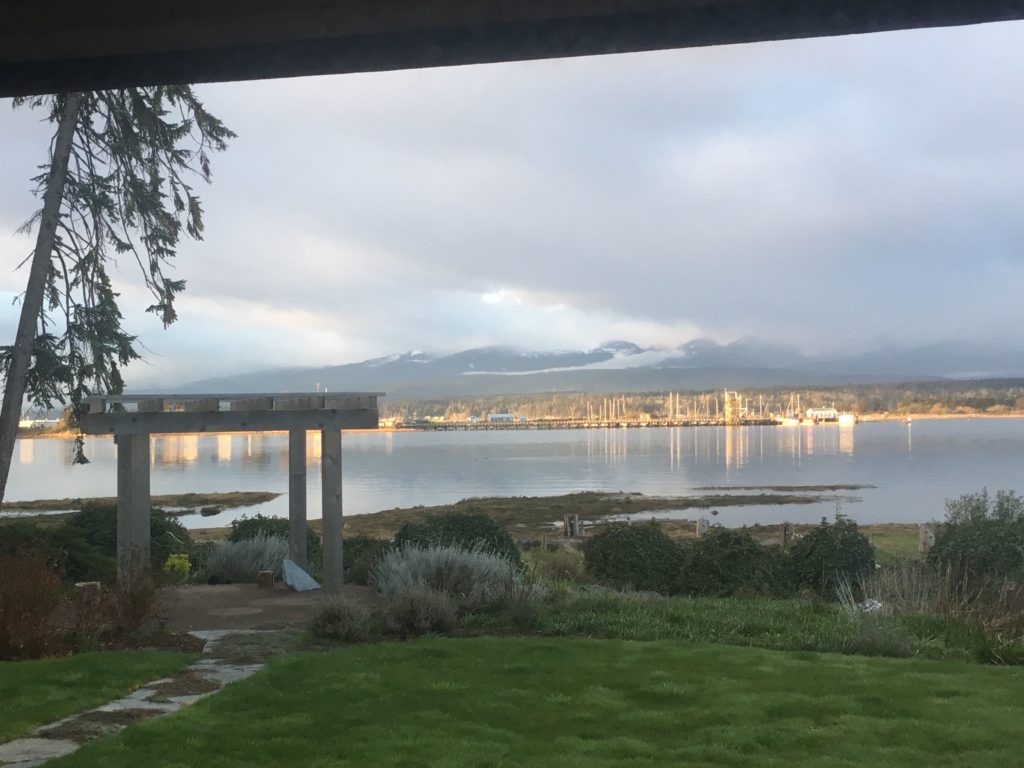
After a few tentative days, July descended with hot sultry afternoons, warm seas for swimming and surreal sunsets over Baynes Sound. It is my twenty-first year watching the sunset from here and each one is a new experience.

Sunset over Mount Washington

I have settled into the rhythms and traditions of the summer weeks at the cabin. This year I attended the Denman Island Readers and Writers Festival.  I asked one of the organizers how many years the Festival has been running. It depends on what you mean. There is good evidence of a Festival since 2002, so perhaps the 17th one?

When I was working full time and when holiday time was more precious, while enjoying this event, its intimate format and nationally renowned speakers, part of me would resent spending my precious free summer hours indoors at the Denman Activity Centre or missing my evening swim and sunset watching by attending the event at the Community Hall. This year was different and I had the luxury of fitting in all the pleasure without any pressure. 

The delights of the Festival include the intimate venues, often with less than two hundred attendees. There are the intelligent and energetic volunteers and organizers many of whom are writers themselves. Readers and writers mill about chatting in informal and animated groupings.

This year, I had the pleasure of listening to Beverley McLachlin share her process of the writing her first novel, the legal thriller Full Disclosure (not to be confused with Stormy Daniels Full Disclosure) and later in an insightful interview by Des Kennedy where I learned of her childhood in Pincer Creek and eventual ascension to Chief Justice of the Supreme Court of Canada. I was able to thank her for navigating the legal waters from Rodriguez in 1993 (5-4 against)  to the Carter decision in 2015 (unanimous for) which paved the way for Bill C-14 and the legalization of Medical Assistance in Dying (MAiD) in June 2016. Beverly alluded to “imposter syndrome” as she was a female forerunner in a male world for most of the achievements in her career. She also alluded to her impatient character. I say working for twenty-two years to achieve the legalization of MAiD suggests tremendous patience and savvy. 

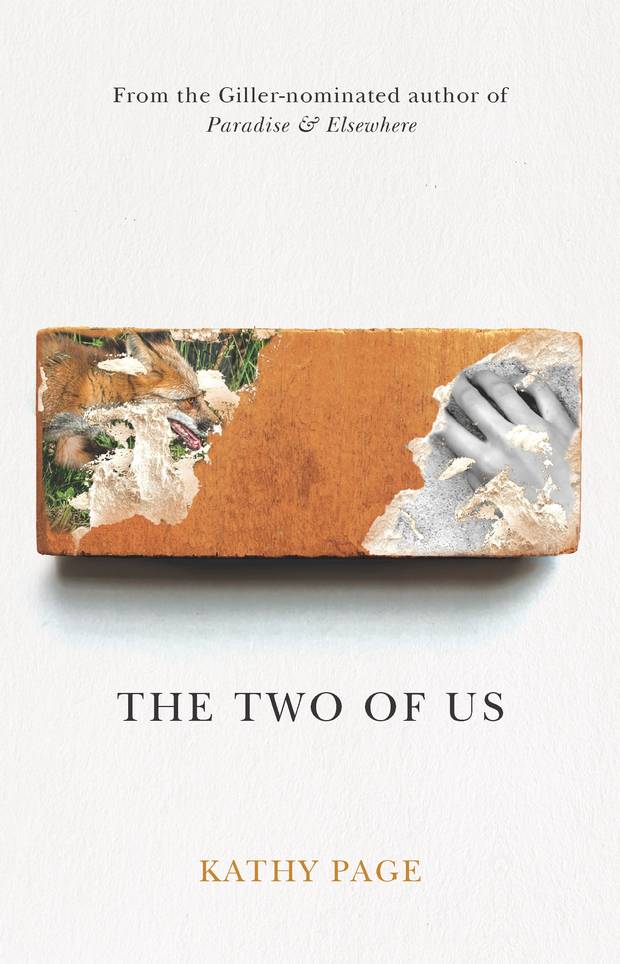
I met Kathy Page, a fiction writer who lives on Salt Spring Island. Kathy is an understated eloquent powerhouse with neat short grey-toned hair. At the evening panel, she wore an elegant black jersey dress accessorized with a beautiful long blue scarf. She skillfully manoeuvers along on the wavering slackline that separates memoir and fiction with her descriptive precision and sense of humour in her recent eighth novel Dear Evelyn. This is a whole life yet chronoclasmic story that follows the emotional and painful trajectory of a seventy-year long marriage. It was inspired by a collection of letters from her father to her mother. She read a passage from Dear Evelyn where Miles the elderly husband is now confined to a care home. He is dependent on carers to perform the intimate act of shaving, an important ritual for him that defined his masculinity and sense of self. His increasingly difficult wife is oblivious to his distraught state at his loss of independence. Ms Page’s prose compellingly conveys the frustration, shame, indignity and helplessness of this character, Harry Miles. I don’t think I will ever watch a man shaving or unshaven again without thinking of this passage.

I am enjoying her recent book of short stories, The Two of Us a Globe and Mail Best Book from 2016 and then I’ll get to Dear Evelyn.

David Chariandry, author of Brother read from his latest book, I’ve Been Meaning to Tell You, a letter to my daughter. David is a diminutive brown-skinned man whose dark curly hair is covered with a faint mesh of fine grey strands. He is of South Asian and African heritage and identifies as Black.  He shared a hideous joy-robbing vignette of everyday racism that he encountered with his daughter when she was three. He was inspired by the work of James Baldwin. I was reminded of Ta-Nehisi Coates essay to his teenage son, Between the World and Me.

From the Observer Piece

I asked him about the conversation that he had with his thirteen-year-old daughter as he sought permission to publish his story. How did he ensure that she understood what she was consenting to? David explained in his humble, polite and thoughtful way that they had talked at length about the issues of the publication. His daughter insisted that she would have final editorial authority about the content. 

We talked further about the generation divides in concepts of privacy with the pervasion of globally accessible media. Perhaps my definition of privacy is no longer attainable? He talked about the importance of preserving one’s name and story. He considered the criminal historical instances where name and personhood were forcibly removed. For these reasons, his daughter is not named in the book nor is there an identifiable likeness of her provided in the book or any of the press associated with it. He hopes that when she is ready she will share her own story. 

There was lots more, so many more stories and personalities, all those Readers and Writers. Consider looking at the website or Facebook page for more information. Maybe consider attending next year? And now I have to return to my own neglected writing projects.      

Filed Under: Uncategorized

Gila’kasla

June 29, 2019 by Carolyne Montgomery

Comox Valley
EJ Hughes

Gila’kasla (Gay-la-key-us-la) means welcome in the K’òmoks language.  I moved to the Comox Valley in April and I respectfully acknowledge that I live and work on the unceded traditional territory of the K’òmoks First Nation. It’s the time of year when there are long sunny evenings and the longest day, June 21st which is also National Indigenous Day.

The Comox Valley is a beautiful and special place that seems to attract artists, foodies and athletes. Famous residents include the writers Alice Munro and Jack Hodgins and the artist EJ Hughes among others.

Farm near Courtenay
EJ Hughes
Snowbirds at the Powell River Ferry Terminal

 I’ve met a lovely group of tennis friends from all walks of life.  I ride my bike along farm-lined roads under the stern gaze of the magnificent Comox glacier. The local riding routes are filled with peek-a-boo views of the Salish Sea and only a few courteous cars.

For a few weeks, the Snowbirds who were training out of the Comox Airforce Base gave morning acrobatic performances.


I am living on the shores of Comox Harbour and the site of an ancient midden, the Great Comox Midden. When the tide is low there is evidence of First Nation fishing weirs from over 1000 years ago at the Courtenay river (the confluence the Tsolum and Puntledge rivers). Archaeologists estimate the  Coast Salish have been in the Courtenay River Valley for over 4000 years.

Goose Spit

My new neighbour tells me that the resident eagle that I see daily has been nesting in the tree overlooking the house for over twenty years. Sadly he hasn’t seen the eagle’s partner in a few years.

Each morning, white-tailed deer wander through the garden and forage about.  Two small white spotted fawns occasionally gambol across the lawn unmindful of their anxious mother. The fragrance of lavender and the drone of bees fill the air.  It is a delight to have a garden again and I have been waging war on holly, morning glory, thistle, brambles, ivy and vetch.  The cats busily murder a daily vole or rat and sadly on occasion a small brown bird.

I spend hours watching the ancient estuary tide go up and down and the parade of sailboats, kayaks and SUPs milling about the harbour. Ecstatic voices ring across the water on the still evenings. On a rare big wind day, the swooping kiteboarders hurtle across the white caps. The Bybrook stream runs by the house and my eagle visits there nearly every evening at sunset to fish. He is often accompanied by a Great Blue Heron.

 I have been unpacking the artefacts of my own life – clothing, china, books, linens and keepsakes from my own childhood and my children’s – items that have been stored away for the last ten years. I’ve been setting up what I hope is my last home. That Abbey Road album I’ve unearthed is fifty years old now and I can’t remember who bought it. Is it mine or my brother’s? The Moody Blues one is definitely my sister’s.

Meanwhile, my internal and external writing spaces are in complete disarray. Or perhaps they are in transition?  I hope to regain my stride and visit with you all again soon.

Filed Under: Uncategorized

Cathedrals, Abbeys and things

May 5, 2019 by Carolyne Montgomery

St Giles Cathedral, Edinburgh

I spent my early years in Scotland marinating in the shadow of Castle Rock, gazing up at Edinburgh Castle and surrounded by ancient buildings. My first cathedral experience was St. Giles Cathedral. Despite being a monument to Presbyterianism, the Church of Scotland, the steeple is a richly ornamented crown and the Thistle Chapel brims with detailed and often whimsical wooden carvings. It is a testament to ingenuity and craftsmanship. (craftspersonship?) 

I have always been a fan of religiously inspired architectural marvels such as Notre Dame de Paris, the Hagia Sophia or the Gurudawara Sahib (The Golden Temple). Due to their prime geographical locations and fluctuating cultural relevance, these buildings often have complicated histories of disaster, restoration, consecration and desecration.

As a teenager, I kept a list of the monumental Gothic cathedrals and abbeys of Europe that I had seen. I was proud there were more than twenty.

I first saw Notre Dame de Paris, the most visited of France’s eighty-seven cathedrals in 1974 as a teenager during my trip to Europe in the summer after high school and before the start of university.  Unbelievably, I did not discover the adjacent and lovelier Ste Chapelle until I was over forty.

Flying Buttresses of Notre Dame de Paris

I drew from the limited knowledge of my Grade 11 art history course and studied the architecture of the naves, transepts, choirs and rose windows. I searched for Romanesque versus Gothic features and examined the fanned stone ceilings. I explained to anyone who would listen about the architectural miracle of the flying buttresses that allowed the stretching of these buildings to unprecedented heights. I thought about the skills and optimism of the thousands of stonemasons and carpenters employed in the creation of these monuments.

Being a weary, impoverished backpacking teenager, these cool damp spaces illuminated with the jewel-like reds, blues and greens from the stained glass windows and scented with the ritual incense and wax from the votive candles were timeless places of refuge and contemplation.  As I grew older, it seemed that every decade or so I would revisit Paris and take stock of my life since the previous visit. What had worked? What had failed? Where, why and with whom was I going next?

In the aftermath of the Notre Dame fire, some have justifiably commented on the unrepentant evils of the Catholic corporation (distinct from personal Catholic faith) and the patriarchal, evangelical and colonial values that these monuments represent. Humanities achievements and failings are best understood in their historical context and without resorting to retrospective condescension.

Notre Dame de Paris was built eight hundred years ago in Medieval Europe, a time when the most revered female, the Virgin Mary was celebrated for the impossible combination of chastity and maternity. The remainder of female mortals were restricted to any of the subordinate positions of spinster, wife, mother, queen, widow, repentant temptress or martyr. The role of the female was defined by her relationship to a more powerful male.

I think of it as a time when women achieved agency through deception, manipulation, cross-dressing and behaving for acceptance into the male world or by retreating into a nunnery. For many women, the veneration of the Virgin Mary replaced the divine worship of God. These Marians prayed for fertility, the health of their children and release from oppression. I like to remember all the women and other oppressed minorities who found solace and hope in the sacred spaces of these cathedrals.  

Chartres Cathedral

My favourite cathedral is Notre Dame de Chartres. Chartres Cathedral also has survived multiple restorations, reconstructions and three major fires.  Its distinctive asymmetrical spires rise above the cornfields that flash past the windows in a Van Gogh painting sort of way as the train hurtles towards Chartres from Paris.

I walked the labyrinth, the geometrically precise pattern inlaid in the floor of the cathedral.

The Labyrinth Pattern

By tracing the half-kilometre path to the centre and back to the perimeter of the labyrinth, believers experience a contemplative and restorative state. Walking the labyrinth as a hopeful newlywed in the early eighties,  I felt a powerful connection with the previous centuries of pilgrims who had paced the same path. To find a labyrinth near you and celebrate World Labyrinth Day on May 4th, please visit The Labyrinth Society.

My second favourite cathedral is Antoni Gaudi’s, La Sagrada Familia in Barcelona.

The building was started in 1882 and the projected year of completion is 2026, a long-term project. The structure is a mash-up of botanical, branching designs, fractals rendered in Gothic and Art Nouveau styles. The distinctive Gaudiesque coloured tiles decorate many surfaces.

Disasters are a test of our resilience and humanity. The shared grief after the fire at Notre Dame de Paris underscores our commonalities in a time when current political cultures are trying to highlight our differences. Notre Dame, the Medieval monument to this humanity is a state asset and will require public and private funds for restoration. To understand more about the relationship between France, the Catholic Church and the maintenance of religious monuments read here.

While it would have been nice to see this scale of concern and generosity with some of our other recent humanitarian disasters, I welcome the extraordinary philanthropy and redistribution of wealth that has been offered to reconstruct this monument.

Filed Under: Uncategorized

  • « Go to Previous Page
  • Page 1
  • Interim pages omitted …
  • Page 3
  • Page 4
  • Page 5
  • Page 6
  • Page 7
  • Go to Next Page »

Primary Sidebar

Recent Posts

  • Watermarked Series
  • January in Comox
  • A Swimming Adventure in Barbados
  • How I spent my summer vacation
  • Finding Your Soul Speed: The Power of Poetry Memorization

Archives

  • January 2026
  • November 2025
  • September 2025
  • May 2025
  • December 2024
  • October 2024
  • July 2024
  • June 2024
  • May 2024
  • November 2023
  • October 2023
  • August 2023
  • November 2022
  • May 2022
  • March 2022
  • December 2021
  • October 2021
  • June 2021
  • April 2021
  • February 2021
  • December 2020
  • October 2020
  • July 2020
  • May 2020
  • March 2020
  • February 2020
  • January 2020
  • November 2019
  • October 2019
  • September 2019
  • July 2019
  • June 2019
  • May 2019
  • March 2019
  • January 2019
  • December 2018
  • October 2018
  • August 2018

Pages

  • A Swim in a Pond in the Rain – A Commentary
  • About Carolyne Jane Montgomery
  • Contact
  • Home
  • Independent Bookstores
  • Privacy Policy
  • Publications, Readings and Other Stuff
    • The Solstice Party
  • Signup

Copyright © 2026 · Carolyne Montgomery · All Rights Reserved | Support by Mastermynde