Watermarked
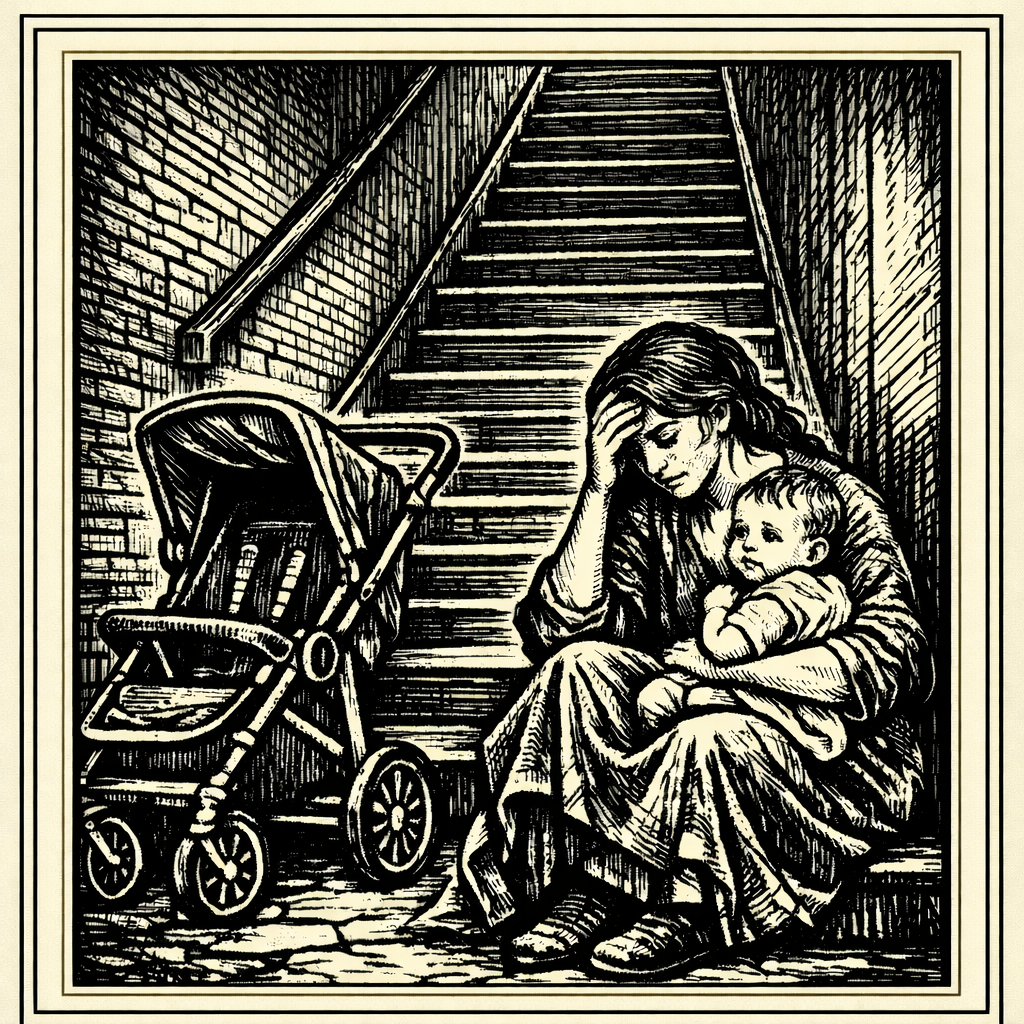
Welcome to the March edition of my short story collection, Watermarked. This month’s story, “Alterations,” is a tale of a grandmother wondering what she owes her daughter and her new grandchild. I hope you enjoy this installment. Please feel free to share it with anyone who might be interested.
Navigating the Challenges of Aging
Aging brings with it a well-known set of demands and challenges. Recently, I found myself disheartened by the time and energy required to address the various physical needs of getting older. My days now include regular appointments to optimize my vision and hearing. I’m wearing a brace for sports to support a knee ligament injury. I faithfully cooperate with cancer screenings of my breasts, bowels, and cervix. While I sometimes resent these responsibilities, I am grateful that retirement gives me more time and flexibility to attend to my health.
Kathy Page’s In This Faulty Machine
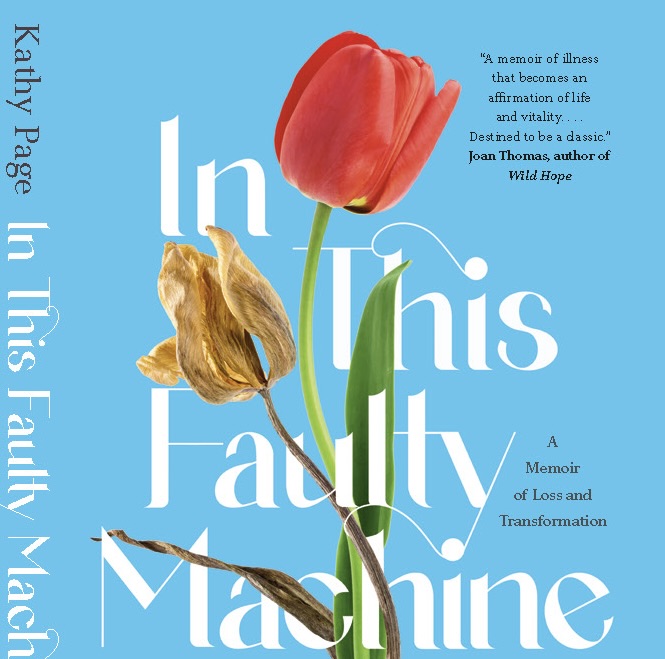
Last week, I picked up Kathy Page’s memoir, In This Faulty Machine. In her memoir, Page details her experiences transitioning from an accomplished writer and educator—having authored eleven books and most recently served as faculty at Nanaimo University—to a person living with Parkinson’s. (PWP) She recounts this transformation—the adaptations and losses—with candour, wit, and insight. The book is dedicated to her sister in New Zealand, who I assume, is a major source of support for her.
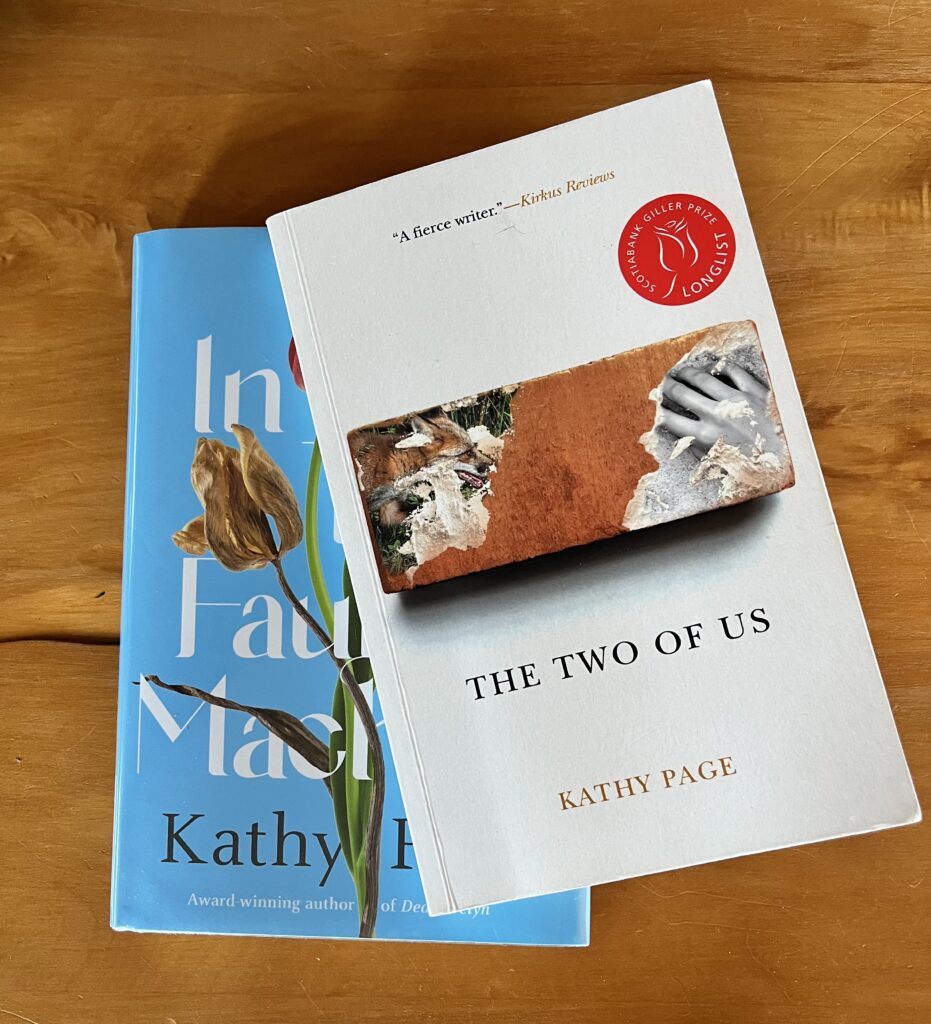
A few years ago, I met her at the Denman Island Readers and Writers Festival, and bought her short story collection, The Two of Us. This collection was recognized as a best book of 2016 and long-listed for the Giller Prize. In the title story, a pregnant English instructor is deeply affected by an elder student’s piece questioning the morality of bringing a child into an unpredictable and often harsh world—a warning delivered too late. The story raises the question of how to continue despite all we know and all we have yet to learn. For those who enjoy swimming, “Open Water” offers another compelling narrative: it follows a coach with a complicated past as he mentors a swimming prodigy and navigates the complexities of the prodigy’s family.
If you are familiar with Kathy Page’s fiction, you’ll know that her works are driven by character and relationships. Her novel Dear Evelyn won the 2018 Rogers Writers’ Trust Fiction Prize.
In This Faulty Machine, Page describes her transition from a vibrant, busy life—where she balanced her creative pursuits, academic responsibilities, and homesteading on Salt Spring Island—to adapting to her life as a PWP. The memoir, structured in twenty chapters, provides unvarnished, detailed observations about her transformation, deliberately avoiding the term “journey.
Page writes openly about her losses and the ongoing effort to find meaning, skilfully blending her clear-eyed perspective with humour. She provides context about the history and current medical understanding of Parkinson’s disease. She describes the difficulty of leaving her beloved home on Salt Spring Island and adjusting to a new home and life in Victoria. The book explores the realities of chronic illness, including a chapter on the rigours and indignities of managing severe constipation. Page considers the potential advantage of her loss of smell—anosmia—which was an early sign of her Parkinson’s.
Page grew up under the influence of a strong-willed, hyperbolic mother who influenced her writing style and her interest in conflict in relationships. One of the memoir’s most poignant moments is her relief at not having to share her diagnosis with her mother, knowing her mother would have blamed her for her illness, attributing it to some personal shortcoming. The complexities of the mother-daughter relationship endure, even after a mother’s passing.
Page takes a pragmatic look at concepts like positivity, meditation, and the search for meaning in the face of adversity. She admits that meditation is not for her. Her narrative includes frank accounts of the deaths of fellow members in her PWP group and explores the emotional and physical burdens that progressive chronic illness places on caregivers. In This Faulty Machine is essential reading for anyone (medical or otherwise) who cares for people with Parkinson’s disease.
A Word from Caroline Adderson
Caroline Adderson offers high praise for Page’s memoir, stating: “In This Faulty Machine is one of those rare books that compels you to rethink your life.”
Until Next Time
Happy reading and writing and rethinking your life. I look forward to any comments. I hope the comments section is working properly this month. I’m off to the Words on the Water conference in Campbell River this weekend. See you in April for the fourth installment of my collection.
Leave a Reply